If you have been reading the Bible, you may have noticed that circumcision appears in several important passages.
God commanded Abraham to practice it, the Israelites followed it as part of their covenant identity, and the apostle Paul later explained its deeper spiritual meaning. But what does it mean in the Bible to be circumcised, and why does this subject matter to Christians today?
In the Old Testament, circumcision was a physical act in which the foreskin of a male’s penis was removed. God established it as a sign of His covenant with Abraham and his descendants.
It represented their special relationship with God and their responsibility to live as His covenant people.
The New Testament also speaks about circumcision in a spiritual sense. Paul describes the importance of having a heart that turns away from sin and responds to God in faith.
This teaching helps readers understand the difference between an outward religious sign and an inward relationship with the Lord.
In this guide, we will explore the biblical meaning of circumcision, its history, important Scripture passages, and the lessons Christians can learn from it today.
Did You Know? 🔍
Genesis 17:11 explicitly calls circumcision a sign of God’s covenant with Abraham. Centuries later, Paul used the expression “circumcision of the heart” to explain that a person’s relationship with God involves more than an outward physical mark (Romans 2:29).
What Does It Mean in the Bible to Be Circumcised? 📖
In the Bible, to be circumcised means, literally, to have the foreskin of the penis removed. God commanded this practice as a sign of His covenant with Abraham and his male descendants (Genesis 17:9–14). In the New Testament, circumcision can also describe an inward spiritual change in which a person turns from sin and seeks to follow God faithfully. Physical circumcision was an important covenant sign in ancient Israel, while circumcision of the heart emphasizes genuine faith and obedience.
Biblical Meaning of Circumcision ✨
1. The Hebrew Meaning of Circumcision
The Hebrew verb commonly translated as “circumcise” is mûl (מוּל), meaning to circumcise or cut off the foreskin. The related Hebrew noun is mûlâ (מוּלָה), referring to circumcision.
In Genesis 17, God instructed Abraham to circumcise the males in his household. The command was not presented as a random ritual. It was connected to God’s covenant promises and the identity of Abraham’s descendants.
The Hebrew language also uses the image of circumcision figuratively. Deuteronomy 10:16 tells the Israelites to circumcise their hearts and stop being stubborn. The verse is not asking them to undergo another physical procedure. It calls them to remove the hardness that keeps them from obeying God.
2. The Literal Meaning
Physically, circumcision is the removal of the foreskin covering the head of the penis. In the biblical account, God commanded Abraham to circumcise himself, his household, and the males born into his family.
Genesis 17:12 says that male infants were to be circumcised on the eighth day after birth. This practice became a defining covenant sign for the people of Israel.
It is important to distinguish the literal meaning from the spiritual symbolism. When Scripture describes Abraham’s physical circumcision, it refers to an actual bodily act. When Paul speaks of circumcision of the heart, he uses the same concept to explain an inward spiritual reality.
3. The Spiritual Meaning of Circumcision
The spiritual meaning of circumcision is closely connected to a heart that is willing to follow God. Scripture describes people as stubborn, resistant, or spiritually unchanged even when they possess outward religious signs.
Deuteronomy 30:6 promises that the Lord will circumcise the hearts of His people so they can love Him wholeheartedly. Jeremiah 4:4 similarly calls Judah to remove the foreskin of their hearts and turn away from evil.
These passages teach that God desires more than outward appearances. He calls people to sincere love, repentance, faith, and obedience.
However, spiritual circumcision should not be treated as a separate physical procedure. It is a biblical picture of inner transformation and a renewed response to God.
4. The Biblical Significance of Circumcision
Circumcision had several important roles in the Old Testament:
- Covenant identity: It identified Abraham’s male descendants as members of the covenant community.
- Obedience: Abraham responded to God’s command by carrying it out.
- Family responsibility: The practice was passed on through generations.
- Spiritual symbolism: Later biblical writers used circumcision as an image of removing stubbornness and turning toward God.
The sign itself did not mean that every circumcised person would automatically live faithfully. The prophets repeatedly challenged people who maintained religious customs while disobeying God.
This distinction becomes especially important in Romans 2:25–29, where Paul emphasizes the importance of inward faithfulness rather than relying on an outward sign alone.
5. A Key Scripture Reference
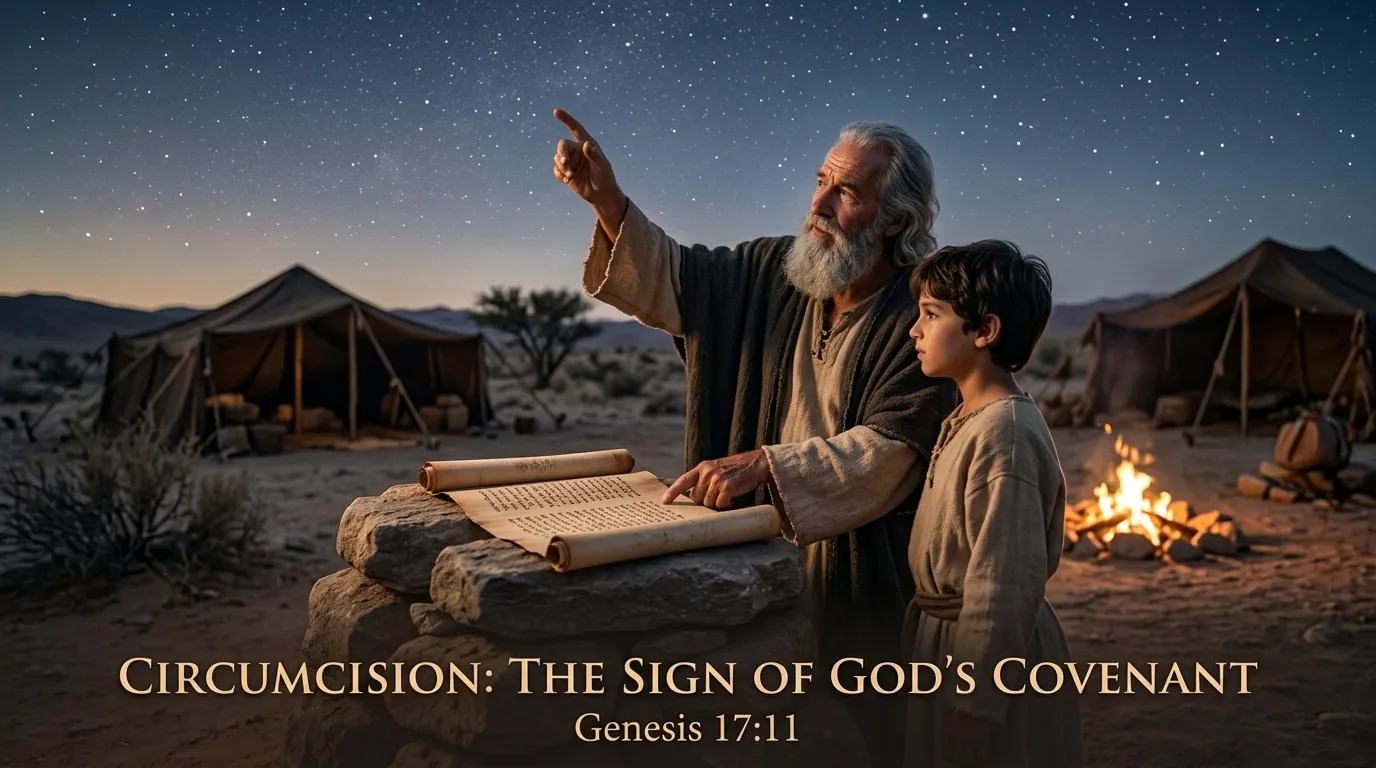
Genesis 17:11 is one of the clearest verses explaining the original purpose of circumcision. God tells Abraham that circumcision will serve as a sign of the covenant between them.
This passage should be read in its historical context. God was establishing a covenant with Abraham and his descendants, and circumcision became a visible mark associated with that covenant.
Romans 2:29 adds another important perspective: Paul describes circumcision of the heart through the Spirit. Together, these passages help readers understand both the original physical practice and its later spiritual application.
Historical and Biblical Context 🏺
Circumcision in the Old Testament
Circumcision first receives a major covenant explanation in Genesis 17. God changed Abram’s name to Abraham and promised that he would become the father of many nations. God also promised to establish His covenant with Abraham’s descendants.
As part of this covenant, Abraham was commanded to circumcise every male in his household. Abraham obeyed, and the practice became a lasting feature of Israel’s covenant life.
Later passages show how seriously the Israelites were expected to regard this command. In Exodus 12:43–49, circumcision is connected with participation in the Passover meal under the regulations given to Israel. The details reflect the covenant and worship practices of that community.
Yet the Old Testament does not focus only on the physical sign. Deuteronomy 10:16 and 30:6, along with Jeremiah 4:4, use the language of circumcision to address the heart. These passages show that God also wanted His people to turn away from stubbornness and love Him sincerely.
Circumcision in the New Testament
In the New Testament, circumcision became an important question as the message of Jesus spread among non-Jewish people.
Some early believers argued that Gentile converts needed to be circumcised and follow the Law of Moses to become full members of God’s people. Acts 15 records a major meeting in Jerusalem that addressed this dispute.
The apostles and elders considered whether Gentile believers should be required to undergo circumcision. The decision described in Acts 15 did not impose circumcision as a requirement for Gentile conversion.
Paul also addressed the issue in Galatians 5:2–6. He warned Gentile believers against accepting circumcision as a requirement for being made right with God. He emphasized faith expressing itself through love.
In Romans 2:28–29, Paul explains circumcision of the heart. In Colossians 2:11–12, he describes a spiritual transformation associated with Christ. These passages do not erase the historical meaning of Jewish circumcision. They explain how Christian faith relates to the physical sign and the deeper concern for a transformed life.
Circumcision in Ancient Culture
Circumcision was known in parts of the ancient world, so it was not a practice unique to Israel in every historical setting. What makes the biblical account distinctive is the specific meaning God gives it in His covenant with Abraham.
For Israel, circumcision was tied to covenant membership, family identity, and obedience to God’s command. It was not simply a general cultural custom or a personal symbol chosen without religious significance.
Understanding this context prevents readers from reducing the practice to a vague symbol of spirituality. In Genesis, it was a concrete physical act with a defined covenant purpose.
Is Circumcision Mentioned in the Bible? 📚
Yes. Circumcision appears throughout the Old and New Testaments. Genesis 17 establishes it as a sign of God’s covenant with Abraham. Other passages explain how it shaped Israel’s religious identity and how later biblical writers used the concept to teach about the heart.
Three important examples are:
- Genesis 17:10–14: God commands Abraham and the males in his household to be circumcised.
- Deuteronomy 10:16: Moses calls the Israelites to circumcise their hearts and stop being stubborn.
- Romans 2:28–29: Paul contrasts outward circumcision with circumcision of the heart through the Spirit.
The main lesson is that Scripture uses circumcision in both a literal and a figurative sense. Its meaning depends on the passage being studied.
Readers should not assume that every mention of circumcision refers to spiritual symbolism. Nor should they ignore the spiritual meaning when a passage clearly addresses the heart.
Spiritual Meaning and Symbolism of Circumcision ❤️
An Outward Sign and an Inward Heart
Physical circumcision was a visible covenant sign. Circumcision of the heart describes a person’s inward response to God.
The difference matters because religious appearance does not always reveal what is happening inside a person. Someone may know religious teachings and take part in religious practices while still resisting correction, acting unjustly, or refusing to love others.
The biblical call is to let faith shape the heart and conduct. This does not mean outward actions are worthless. Rather, outward religious actions should not be used as a substitute for sincere devotion.
Turning Away From Sin
The image of cutting away also communicates separation from what keeps people from obeying God. In spiritual passages, this idea points to rejecting sinful habits, pride, stubbornness, and resistance to God’s guidance.
Colossians 3:5 tells believers to put sinful practices to death. Although this is not a literal circumcision command, it fits the New Testament’s wider call to leave sinful ways behind.
The practical lesson is to examine attitudes and actions honestly. Spiritual growth includes repentance and a willingness to change.
A Heart That Loves God
Deuteronomy 30:6 connects circumcision of the heart with loving God wholeheartedly. This is a vital part of the biblical meaning.
God does not merely call His people to follow rules outwardly. He calls them to love Him and live in a way that reflects that love. In Christian teaching, this transformation is connected with God’s grace and the work of the Holy Spirit.
Faith Expressed Through Love
Galatians 5:6 says that what matters in Christ is “faith working through love.” Paul’s point is that circumcision is not the basis of a person’s standing with God.
Faith should produce a life shaped by love, service, patience, and obedience. These qualities do not purchase God’s grace; they express a living faith.
Physical Circumcision vs. Circumcision of the Heart ⚖️
| Feature | Physical circumcision | Circumcision of the heart |
| Meaning | Removal of the foreskin | Spiritual image of inward change |
| Main biblical context | God’s covenant with Abraham and Israel | Calls to repentance, faith, and obedience |
| Key references | Genesis 17:9–14 | Deuteronomy 10:16; Romans 2:29 |
| Nature | Physical act | Spiritual transformation |
| Central lesson | Covenant sign in its original context | Genuine devotion matters beyond outward appearance |
The two concepts are related in biblical language, but they are not identical. Understanding the difference helps readers interpret Scripture in context.
9 Biblical Verses About Circumcision 📖
1. Genesis 17:10 — God’s Covenant Command
Genesis 17:10 records God’s command that every male among Abraham’s descendants be circumcised. The instruction was part of the covenant God established with Abraham and his household.
The verse shows that circumcision was not merely a private custom. It was an act of obedience within a specific covenant relationship. Abraham’s descendants were expected to preserve this sign across generations.
Practical lesson: Read biblical commands in their original setting. Before applying a command to Christians today, consider whom God addressed, what covenant was in view, and how the rest of Scripture develops the subject.
2. Genesis 17:11 — A Sign of the Covenant
In Genesis 17:11, God identifies circumcision as the sign of His covenant with Abraham. This explains its central purpose in the passage.
The sign pointed to a relationship established by God’s promise. Abraham’s family did not invent the covenant; God initiated it and gave the command. Circumcision became a visible marker of the responsibilities associated with that covenant.
Practical lesson: God’s promises and people’s responses belong together in the biblical story. When studying a religious practice, ask what it signifies and what God says about its purpose.
3. Genesis 17:12 — The Eighth Day
Genesis 17:12 specifies that male infants were to be circumcised on the eighth day after birth. The timing formed part of God’s instructions to Abraham’s descendants.
This detail illustrates how the covenant sign was incorporated into family life and passed from one generation to the next. It also reminds readers that biblical circumcision was a concrete physical practice, not only a spiritual metaphor.
Practical lesson: Pay attention to specific details in Scripture. They can help clarify how a command worked in its original historical and religious context.
4. Deuteronomy 10:16 — Circumcise Your Heart
Deuteronomy 10:16 calls the Israelites to circumcise their hearts and stop being stubborn. Here, Moses uses circumcision as a picture of inward change.
The people needed more than an outward covenant sign. They needed to remove the resistance that kept them from responding faithfully to God. This verse is an important bridge between physical circumcision and its spiritual meaning.
Practical lesson: Ask God to reveal areas of stubbornness, pride, or disobedience. A sincere relationship with Him involves a heart willing to listen and change.
5. Deuteronomy 30:6 — Love God Wholeheartedly
Deuteronomy 30:6 promises that the Lord will circumcise the hearts of His people so they can love Him with all their heart and soul. The verse connects inner transformation with wholehearted love.
The emphasis is not on a physical procedure. It is on God’s work in changing the people’s hearts so that their relationship with Him is marked by genuine devotion.
Practical lesson: Spiritual growth is more than outward conformity. Ask God to deepen your love for Him and shape your choices, priorities, and relationships.
6. Jeremiah 4:4 — A Call to Repentance
Jeremiah 4:4 uses the image of circumcision of the heart while calling Judah to turn back to the Lord. The surrounding message warns of judgment if the people continue in evil.
The prophet’s language challenges the idea that a covenant sign can make disobedience unimportant. The people needed genuine repentance rather than confidence in outward identity alone.
Practical lesson: Do not use religious identity as an excuse to ignore wrongdoing. Listen to correction, turn away from harmful behavior, and seek to live faithfully.
7. Romans 2:29 — Circumcision of the Heart
Romans 2:29 is one of the clearest New Testament passages about spiritual circumcision. Paul describes circumcision of the heart as something accomplished by the Spirit rather than merely by the written code.
His argument challenges people who rely on outward religious status while failing to live according to God’s will. The verse does not deny the historical significance of Jewish identity. It emphasizes the importance of inward faithfulness before God.
Practical lesson: Let your faith shape your character. Seek God’s approval through a sincere heart rather than relying only on outward recognition or religious appearance.
8. Galatians 5:6 — Faith Working Through Love
Galatians 5:6 teaches that in Christ, neither circumcision nor uncircumcision is what counts; what matters is faith expressing itself through love.
Paul was addressing a dispute over whether Gentile believers had to accept circumcision as a religious requirement. His answer directs attention away from using the physical sign as a basis for acceptance before God.
Practical lesson: Faith should be visible in how you treat people. Show love through patience, honesty, forgiveness, generosity, and service rather than using religious practices to judge others.
9. Colossians 2:11 — Circumcision Without Human Hands
Colossians 2:11 describes believers as having received a circumcision “not performed by human hands.” Paul connects this image with the removal of the sinful self through Christ.
The passage presents spiritual transformation as something deeper than an external bodily mark. The following verse connects the discussion with burial and resurrection with Christ through faith.
Practical lesson: Christian growth involves more than changing outward habits. It means trusting Christ and allowing that relationship to reshape your attitudes and conduct.
A Biblical Case Study: Abraham’s Obedience 🌿
Abraham’s story provides the clearest example of physical circumcision in Scripture. In Genesis 17, God appeared to Abraham and renewed His covenant promises. Abraham was told that he would become the father of many nations, and God gave him the name Abraham.
God then commanded Abraham to circumcise the males in his household. Genesis 17:23–27 describes Abraham carrying out the instruction, including circumcising himself and the males of his household.
The story highlights the connection between God’s promise and Abraham’s response. Circumcision became the covenant sign God had appointed, and Abraham obeyed the command.
Yet the wider biblical story also presents Abraham as a man associated with faith. Genesis 15:6 says that Abraham believed the Lord, and it was credited to him as righteousness. Paul later refers to this passage in Romans 4 while discussing faith and circumcision.
The lesson is not that a physical act earns God’s favor. Rather, the story must be read within the full biblical account of God’s promise, Abraham’s faith, and the covenant sign God gave him.
Life Lessons for Christians Today 🙏
1. Look Beyond Outward Appearance
Religious habits can be meaningful, but they cannot replace a sincere relationship with God. Examine whether your daily choices reflect the faith you profess.
2. Welcome Inner Transformation
Circumcision of the heart provides a picture of letting go of stubbornness and sin. Be willing to accept correction and grow in character.
3. Practice Obedience With Understanding
Abraham responded to God’s command within his covenant. Christians should also take Scripture seriously while considering the historical context and the teachings of the New Testament.
4. Let Faith Produce Love
Galatians 5:6 directs believers toward faith that works through love. Let your beliefs shape how you treat family, friends, strangers, and people with whom you disagree.
5. Avoid Judging People by Religious Markers
Paul challenged the use of circumcision as a basis for spiritual superiority. Christians should not treat outward customs or physical characteristics as proof that someone is closer to God.
Common Misunderstandings About Circumcision ⚠️
Misunderstanding 1: Circumcision Automatically Makes Someone Right With God
The Bible does not teach that the physical act automatically guarantees a faithful heart. Romans 2:25–29 warns against relying on the outward sign while ignoring obedience and inward devotion.
Misunderstanding 2: Circumcision Is Only a Symbol
In Genesis 17, circumcision was a real physical practice commanded as a covenant sign. Its spiritual symbolism develops alongside, rather than replacing, that original meaning.
Misunderstanding 3: Every Christian Must Be Physically Circumcised
The New Testament does not require Gentile Christians to undergo circumcision as a condition of salvation. Acts 15 and Galatians 5 address this question directly. Christian traditions may differ on some related theological details, but physical circumcision is not presented as a universal requirement for becoming a Christian.
Misunderstanding 4: Circumcision of the Heart Is a Physical Operation
The expression is figurative. It describes inward change, repentance, and a heart that responds to God. It is not a command to perform a physical procedure on the heart.
Misunderstanding 5: The Old Testament Practice Had No Meaning After Jesus
The New Testament changes how circumcision relates to Gentile believers and salvation, but it does not erase the practice’s historical role in God’s covenant with Abraham and Israel. Understanding both Testaments helps readers avoid oversimplifying the subject.
Expert Insight 💡
When studying circumcision, read the surrounding passage before deciding whether the word is literal or symbolic. In Genesis 17, it refers to a physical covenant sign. In Deuteronomy 10:16 and Romans 2:29, the language points to the heart and a person’s response to God.
Also compare related passages rather than building a conclusion around one verse. Genesis 17, Acts 15, Romans 4, Galatians 5, and Colossians 2 each contribute to a fuller understanding of the topic.
FAQs
1. What does it mean spiritually to be circumcised?
Spiritually, circumcision can describe a heart that turns away from stubbornness and responds to God in faith and obedience. Deuteronomy 30:6 and Romans 2:29 use this imagery to emphasize inward transformation rather than relying on an outward religious sign alone.
2. Why did God command Abraham to be circumcised?
God commanded Abraham to practice circumcision as a sign of His covenant with Abraham and his descendants. Genesis 17 connects the practice with God’s promises, Abraham’s household, and the covenant identity that would continue through future generations.
3. Does circumcision save a person according to the Bible?
The New Testament does not teach that physical circumcision earns salvation. Romans 4 discusses Abraham’s faith, while Acts 15 and Galatians 5 reject making circumcision a requirement for Gentile believers to be accepted by God.
4. What does the circumcision of the heart mean in Romans 2:29?
Romans 2:29 describes an inward spiritual reality associated with the work of the Spirit. Paul contrasts genuine inward faithfulness with reliance on outward religious status. The verse calls readers to consider the condition of the heart, not merely visible religious identity.
5. Do Christians need to be circumcised today?
Christians are not required by the New Testament to undergo physical circumcision to receive salvation or become members of Christ’s people. Acts 15 addresses the question of Gentile converts, and Galatians 5 warns against treating circumcision as a requirement for being made right with God. Medical decisions are separate from this biblical question.
Conclusion 🌟
The biblical meaning of circumcision begins with God’s covenant with Abraham.
In Genesis 17, it was a physical sign that marked the covenant relationship between God and Abraham’s descendants. It became an important part of Israel’s religious identity and covenant life.
As Scripture develops, circumcision also becomes a powerful picture of inward change. The prophets called the people to circumcise their hearts, and Paul taught that genuine faithfulness involves more than an outward sign.
The New Testament directs Christians toward faith in Christ, a heart transformed by the Spirit, and a life shaped by love.
For Christians today, the central lesson is not to confuse outward religious practices with the condition of the heart.
Read the passages in their historical context, trust God’s grace, and seek to live with humility, repentance, and love. May your study of Scripture help you grow in understanding and draw closer to God.

Hello, I’m Samuel Carter. My interest in biblical studies comes from a lifelong desire to understand the wisdom and teachings contained within Scripture. I particularly enjoy researching biblical numbers, patterns, and themes that appear throughout God’s Word.