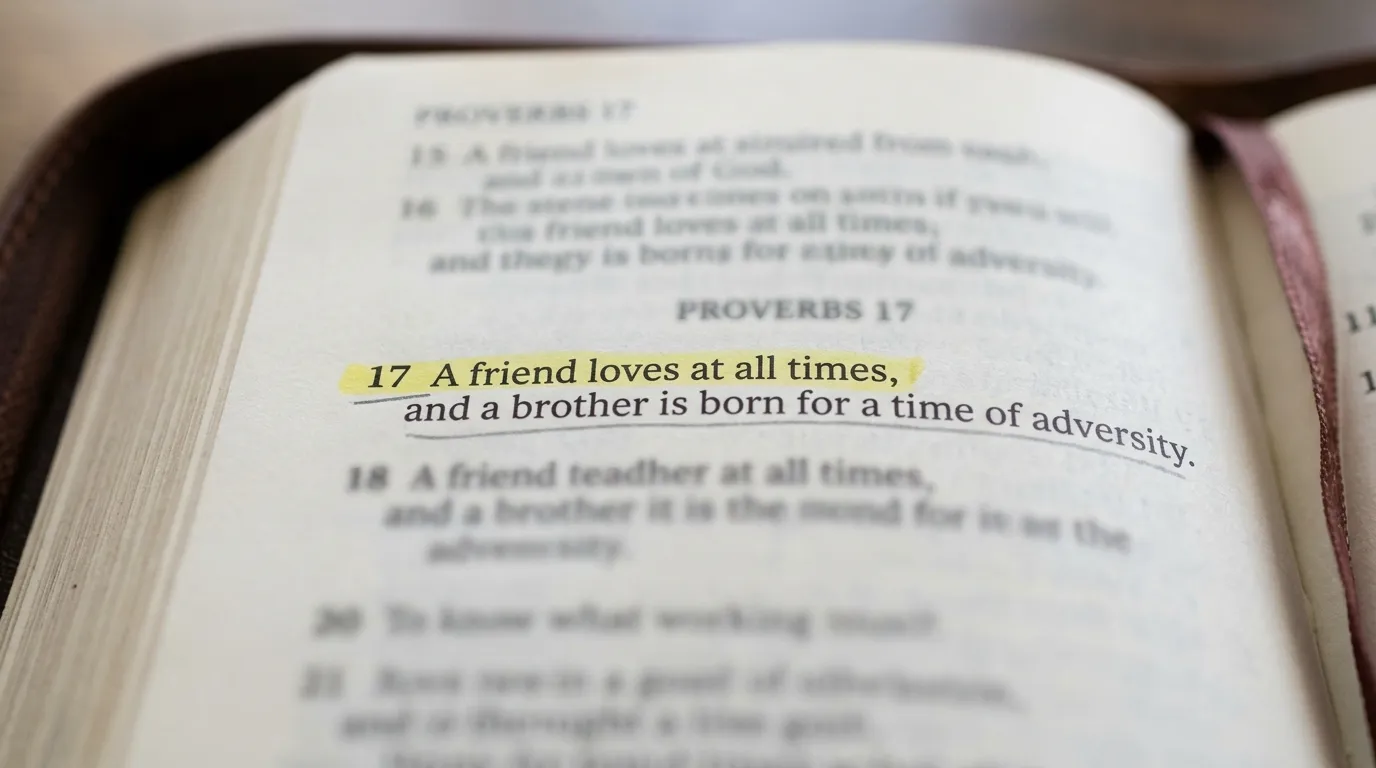
Friendship is one of God’s gifts that can bring joy, comfort, and encouragement into our lives.
A good friend listens when we feel overwhelmed, celebrates our happiness, and offers support when life becomes difficult.
But not every friendship helps us grow in the right direction. Some relationships encourage wisdom and kindness, while others can lead us away from our values.
The Bible offers timeless guidance on building healthy, faithful friendships. It teaches us to love others, speak honestly, offer help, forgive, and choose companions who encourage what is good.
These lessons apply to childhood friendships, close adult relationships, church communities, and the people we meet in everyday life.
If you are looking for Bible verses about friendship, Scripture offers more than comforting words to share with a friend.
It shows us what true friendship looks like and how we can become better friends ourselves.
Let’s explore ten meaningful passages, their biblical context, and practical ways to live out their lessons.
Did You Know? 🔍
The Bible presents friendship through several related ideas, including love, loyalty, companionship, wise counsel, and mutual support. Proverbs 17:17 connects a friend’s steady love with support during adversity, while Proverbs 27:17 describes how people can help sharpen one another’s character. These passages show that biblical friendship involves more than spending enjoyable time together.
Quick Answer: What Do Bible Verses About Friendship Mean? 📖
Bible verses about friendship teach that true friendship should reflect love, loyalty, honesty, encouragement, and selfless care. Scripture encourages us to support others during hardship, choose wise companions, offer truthful advice with kindness, and build relationships that help us grow in goodness and faithfulness to God.
Biblical Meaning of Friendship 🤝
What Is the Hebrew Meaning of Friendship?
The Old Testament was written mainly in Hebrew, with some portions in Aramaic. Biblical friendship does not depend on just one Hebrew word. The language uses words and expressions connected with companions, neighbors, love, loyalty, and close relationships.
For example, the Hebrew word rea can refer to a friend, companion, fellow person, or neighbor, depending on the context. The precise meaning depends on the passage, so it should not be treated as a single word that explains every kind of friendship in the Bible.
The Hebrew Scriptures also describe love and loyalty through actions. Proverbs presents a faithful friend as someone whose care remains steady, especially when trouble comes. This teaches us to look beyond affectionate words and consider how a person treats others.
What Is the Greek Meaning of Friendship?
The New Testament uses Greek words related to love and friendship. One important word is philos, which can mean a friend or someone who is loved. The related term philia is commonly used to describe friendship or affectionate love.
These words help explain the language of friendship, but they do not mean that every biblical passage about friendship uses the same Greek term. In John 15:13–15, Jesus speaks about His friends and connects friendship with love, obedience, and sharing what He has received from the Father.
The central Christian lesson is not simply knowing the original words. It is understanding how each passage describes love, trust, faithfulness, and responsibility.
What Does Friendship Mean Spiritually?
From a Christian perspective, friendship is an opportunity to practice love and care for another person. A godly friend encourages what is right, offers help in times of need, and speaks truth without trying to shame or control someone.
Healthy friendship can also support spiritual growth. Friends may pray for one another, discuss Scripture, give wise advice, and encourage each other to make good choices. However, a friend is not a replacement for God, and no human relationship is perfect.
Biblical friendship is best understood through the character it produces: love, wisdom, honesty, patience, and care for others.
Why Is Friendship Important in the Bible?
Friendship matters because people need companionship, support, and wise counsel. Ecclesiastes 4:9–10 describes the benefit of having someone who can help when another person falls. Proverbs 27:17 shows that relationships can shape and improve our character.
Scripture does not teach that every person must have a large circle of friends. A few trustworthy relationships can be deeply valuable. The goal is not popularity but relationships marked by love, wisdom, and mutual care.
Historical and Biblical Context 🏺
Friendship in the Old Testament
In the Old Testament, friendship appears in stories, wisdom teachings, and relationships between people. David and Jonathan are a well-known example. First Samuel 18:1–4 describes the close bond between them, while later chapters show Jonathan protecting David when Saul sought to harm him.
The wisdom books also teach about friendship. Proverbs warns readers to choose companions carefully and praises friends who offer loyal support and thoughtful advice. Ecclesiastes emphasizes the practical value of companionship when a person faces hardship.
These passages reflect a world in which family ties, community relationships, hospitality, and loyalty played important roles. Still, the lessons remain relevant: friendship can offer support, but it also calls for integrity and responsibility.
Friendship in the New Testament
The New Testament presents love for others as a central Christian duty. Jesus tells His disciples to love one another as He has loved them (John 15:12–15). He describes sacrificial love and calls His disciples friends.
The early Christian communities also practiced mutual care. Believers were encouraged to support one another, share burdens, offer encouragement, and live in peace when possible.
Christian friendship therefore involves more than shared interests. It should reflect love in action. That does not mean friends will always agree or avoid conflict. It means they should seek truth, kindness, forgiveness, and each other’s good.
How Friendship Was Understood in Biblical Times
Friendship in the ancient world could involve strong bonds of loyalty, shared responsibilities, hospitality, and protection. The exact expectations varied by setting and relationship, so it would be misleading to assume that every ancient friendship followed one fixed pattern.
Biblical stories show both the blessings and risks of close relationships. Jonathan’s loyalty to David illustrates courage and faithfulness. Other passages warn that harmful companions can influence a person’s choices.
The broad lesson is clear: relationships matter, and the people we trust can influence our actions, judgment, and character.
Is Friendship Mentioned in the Bible? 📜
Yes. Friendship is discussed throughout Scripture, especially in Proverbs, Ecclesiastes, the historical books, and the teachings of Jesus.
Here are some key passages:
- Proverbs 17:17: A faithful friend continues to love, including during difficult times.
- Proverbs 18:24: The passage contrasts numerous companions with a friend who remains especially close and dependable.
- Proverbs 27:17: People can sharpen or strengthen one another, like iron sharpening iron.
- Ecclesiastes 4:9–10: Companionship brings practical help when someone falls.
- John 15:12–15: Jesus connects friendship with love, obedience, and sharing His teaching.
Together, these passages show that friendship is not a minor subject in the Bible. Scripture uses it to teach about loyalty, wisdom, service, and the importance of choosing relationships carefully.
Spiritual Meaning and Symbolism of Friendship ❤️
Friendship as a Picture of Love
Biblical friendship gives people a practical way to show love. A friend may listen patiently, offer help, speak kindly, or remain present during a hard season. These actions make love visible.
First Corinthians 13:4–7 describes qualities of love, including patience, kindness, and perseverance. Although the passage is not limited to friendship, these qualities provide a helpful guide for close relationships.
Friendship and Accountability
A trustworthy friend does not simply agree with everything we say. Sometimes, love requires an honest conversation about a poor choice or harmful behavior.
Proverbs 27:5–6 speaks about open correction and the wounds that can come from a faithful friend. This does not give anyone permission to be cruel. Instead, it shows that caring honesty can be more helpful than praise that hides the truth.
Friendship and God’s Guidance
Friends can offer counsel, but Christians should test advice against Scripture, wisdom, and the likely effects of a decision. A friend’s confidence does not automatically make that person’s advice right.
God’s guidance should not be reduced to following whatever a friend says. Healthy Christian relationships help people seek wisdom, pray, think carefully, and take responsibility for their choices.
Friendship Does Not Mean Accepting Harm
Loyalty does not require someone to tolerate threats, manipulation, abuse, or repeated mistreatment. Forgiveness and love do not mean pretending that harmful behavior is acceptable.
A person may need boundaries or distance from an unsafe relationship. Seeking help from trusted people, church leaders, or appropriate professionals can be wise. Biblical love values people’s well-being and dignity.
Biblical Friendship Compared With Other Relationships ⚖️
| Relationship or behavior | Main feature | Biblical lesson |
| True friendship | Love and dependable care | Stay supportive in difficult seasons |
| Wise friendship | Honest advice and encouragement | Help one another grow in character |
| Harmful companionship | Pressure toward wrongdoing | Choose close influences carefully |
| Casual acquaintance | Friendly but limited connection | Not every relationship needs deep trust |
| Controlling relationship | Fear, pressure, or manipulation | Love does not require surrendering healthy boundaries |
| Christian fellowship | Shared encouragement and faith | Build one another up in what is good |
This table is a practical summary, not a list of formal biblical categories. Real relationships can be complicated, and people may show both strengths and weaknesses. Look at repeated behavior rather than judging a friendship by one moment alone.
10 Bible Verses About Friendship and Their Meaning 📖
1. Proverbs 17:17 — A Friend Loves at All Times
Proverbs 17:17 teaches that a friend loves at all times and that a brother is there for adversity. The verse praises steady care rather than friendship that appears only when life is easy.
A faithful friend may not be able to solve every problem, but they can listen, offer practical help, and remain kind during a difficult season. The passage does not promise that every friend will always respond perfectly. Instead, it presents loyal love as a quality worth seeking and practicing.
Practical lesson: Be the kind of friend who offers support during hardship, not only during celebrations. A simple message, a thoughtful visit, or a willingness to listen can matter.
2. Proverbs 18:24 — A Friend Who Stays Close
Proverbs 18:24 contrasts having many companions with having a friend who stays closer than a brother. The wording differs slightly among translations, but the central idea is that the number of people around us does not determine the depth of our relationships.
A person may know many people and still lack someone they can trust. By contrast, one dependable friend can provide meaningful support. This verse encourages discernment rather than popularity. It also reminds us that trust develops through consistent care, honesty, and respect.
Practical lesson: Value dependable relationships over the desire to impress others with a large social circle. Be patient as trust grows, and show that you can be trusted too.
3. Proverbs 27:17 — Friends Help Each Other Grow
Proverbs 27:17 says that iron sharpens iron, and one person sharpens another. The image suggests that interaction can improve or strengthen someone, much as sharpening tools requires contact.
In friendship, this may happen through thoughtful advice, honest questions, encouragement, or learning together. A good friend can help us notice habits we need to change. The verse does not mean friends should constantly criticize one another. Growth happens best when honesty is joined with humility, care, and respect.
Practical lesson: Choose friends who encourage good judgment and be willing to learn from them. When you need to correct a friend, speak with kindness instead of trying to win an argument.
4. Ecclesiastes 4:9–10 — Friends Help When We Fall
Ecclesiastes 4:9–10 explains that two are better than one because they can help each other. If one person falls, the other can help them get up. The passage uses an everyday picture to show the value of companionship.
Its lesson applies to practical problems as well as emotional struggles. A friend may help with a task, offer encouragement after disappointment, or remind someone that they do not have to face every burden alone. The passage does not say that people must depend only on friends; it shows why supportive relationships matter.
Practical lesson: Pay attention when a friend is struggling. Ask what kind of help they need, and offer what you can without promising more than you are able to give.
5. John 15:12–13 — Love That Is Willing to Sacrifice
In John 15:12–13, Jesus commands His disciples to love one another as He has loved them. He then describes the greatest love as laying down one’s life for one’s friends.
Jesus points to love that places another person’s good above selfish interest. His words have a deep Christian meaning because His own life and death are central to the Gospel. The passage should not be used to pressure someone into dangerous situations or to excuse abuse. Sacrificial love is not the same as allowing another person to control or harm you.
Practical lesson: Show love through generous actions, time, patience, and care. Put a friend’s genuine well-being ahead of selfish advantage while still using wisdom.
6. Proverbs 27:9 — The Value of a Friend’s Advice
Proverbs 27:9 describes the joy that comes from a friend’s heartfelt counsel. The verse presents wise advice as something that can refresh the heart.
Good counsel is not simply telling people what they want to hear. A wise friend listens, considers the situation, and speaks with care. At the same time, no friend knows everything. Important decisions may require prayer, careful thought, Scripture, and advice from people with relevant knowledge.
Practical lesson: Be someone who listens before giving advice. When you need guidance, seek people who are honest, thoughtful, and willing to admit what they do not know.
7. 1 Samuel 18:1–4 — David and Jonathan’s Friendship
First Samuel 18:1–4 describes the close bond between David and Jonathan after David meets Saul’s household. Jonathan gives David clothing and other items, expressing the seriousness of their relationship. Their story continues through later chapters, when Jonathan supports David despite the danger created by Saul’s hostility.
Their friendship illustrates loyalty that carries a cost. Jonathan does not treat David as a rival to defeat at any price. Instead, he acts with courage and care. The story also shows that genuine friendship can be tested by difficult circumstances and competing pressures.
Practical lesson: Celebrate a friend’s good fortune rather than treating every success as a threat. Loyalty may require courage, honesty, and choosing what is right even when it is not easy.
8. Proverbs 13:20 — Walk With the Wise
Proverbs 13:20 teaches that walking with the wise can make a person wise, while associating with fools brings harm. This proverb highlights the influence of close companions.
It does not mean that Christians should despise people who make mistakes or refuse to help anyone outside their circle. Instead, it asks us to think carefully about whose choices and attitudes shape our own. Frequent exposure to harmful behavior can slowly affect our judgment, while wise friends can encourage better decisions.
Practical lesson: Consider the patterns in your closest relationships. Look for friends who respect others, take responsibility for their actions, and encourage you to live according to your values.
9. Job 6:14 — Show Kindness to Someone in Distress
Job 6:14 appears in Job’s response during his suffering and conversations with his companions. The verse speaks about the need for kindness toward a person who is in distress. Translations phrase the line differently, so it is helpful to read the surrounding passage.
Job’s friends initially come to sit with him, but later their speeches add to his pain. Their story warns us that being physically present is not enough if our words lack understanding. A hurting person may need patient listening more than quick explanations.
Practical lesson: When a friend suffers, do not rush to judge or explain everything. Offer compassion, listen carefully, and avoid claiming to know exactly why the hardship happened.
10. 1 Thessalonians 5:11 — Encourage and Build One Another Up
First Thessalonians 5:11 tells believers to encourage one another and build each other up. Paul writes to a Christian community, so the instruction extends beyond private friendships to the way believers treat one another.
Encouragement is not empty praise. It can mean reminding someone of their strengths, helping them take a wise next step, or standing beside them when they feel discouraged. Words can either deepen a person’s burden or help them regain hope. Christian friendship should aim to strengthen rather than tear down.
Practical lesson: Speak words that are truthful and helpful. Thank friends for their good qualities, notice their efforts, and offer encouragement that respects the reality of what they are facing.
A Biblical Case Study: David and Jonathan 🛡️
David and Jonathan offer one of Scripture’s clearest examples of friendship tested by difficult circumstances. Their relationship begins in 1 Samuel 18 and develops during a period of conflict within Saul’s household.
Jonathan’s loyalty becomes especially clear when Saul turns against David. In 1 Samuel 20, Jonathan helps David understand the danger and acts to protect him. His choices put him in a difficult position because David’s safety conflicts with his father’s hostility.
The story is not saying that every friendship requires dramatic sacrifice. Rather, it shows that loyalty involves more than convenience. Jonathan treats David with care even when doing so carries a personal cost.
Their example also reminds readers that friendship and honesty belong together. Jonathan and David communicate about danger rather than pretending that everything is fine.
What Christians can learn: A faithful friend wants what is good and right for the other person. Such a friend does not use jealousy, pressure, or dishonesty to keep control. They offer support while seeking wisdom and truth.
5 Life Lessons for Christians 🌱
1. Be Present During Difficult Times
Friendship becomes meaningful when support is needed. You may not have the right words, but listening and offering practical help can show sincere care.
2. Speak the Truth With Kindness
A good friend does not have to agree with every decision. Honest advice can protect someone from a harmful choice, especially when it is offered with humility and respect.
3. Choose Your Close Companions Wisely
The Bible warns that our relationships can influence our character. Seek friends who encourage honesty, responsibility, kindness, and spiritual growth.
4. Practice Forgiveness Without Ignoring Harm
Friendships sometimes include misunderstandings and mistakes. When appropriate, a sincere apology and forgiveness can help repair trust. Still, repeated harm may require clear boundaries or distance.
5. Become the Friend You Hope to Find
It is easy to focus on whether other people are loyal, patient, or supportive. Scripture also calls us to show these qualities. Ask yourself whether you listen well, keep appropriate confidences, and offer help without expecting a reward.
Common Misunderstandings About Biblical Friendship ⚠️
“A True Friend Must Always Agree With Me”
Biblical friendship includes honesty. Proverbs 27:17 shows that people can help sharpen one another. A friend may disagree because they care about your well-being. The important question is whether the disagreement is respectful and grounded in sound judgment.
“Forgiveness Means I Must Trust Someone Again Immediately”
Forgiveness and trust are related, but they are not identical. Forgiveness does not automatically restore a relationship to its former state. Trust may need time, changed behavior, and clear boundaries to grow again.
“A Christian Must Stay in Every Friendship”
Scripture values love and peace, but it does not require people to remain in unsafe or abusive situations. Seeking distance from harmful behavior can be wise. Christians can treat others with dignity while recognizing their own need for safety.
“Having Few Friends Means God Has Rejected Me”
The Bible does not teach that popularity proves God’s favor. People experience different seasons of companionship and loneliness. A small circle, a period of change, or difficulty finding close friends does not by itself show that God has rejected someone.
“Every Friend’s Advice Is God’s Message to Me”
Friends can provide useful counsel, but they can also misunderstand a situation. We should weigh advice carefully, consider Scripture in context, and seek sound guidance rather than treating another person’s opinion as unquestionable.
Expert Insight: How to Study Friendship Verses Well 💡
Read each verse in its surrounding chapter before applying it to your life. Ask three questions: Who is speaking? What situation are they addressing? What principle does the passage teach?
For example, Proverbs often gives short wisdom statements, while the story of David and Jonathan shows friendship through events over time. Jesus’ words in John 15 appear in a larger teaching to His disciples. Reading context helps prevent a verse from being used to support a message it was not meant to teach.
You can also compare two reputable Bible translations to notice differences in wording. If the meaning seems unclear, consult a reliable Bible dictionary or commentary. The goal is not to force a favorite interpretation onto the text, but to understand the passage as carefully as possible.
FAQs
1. What is the best Bible verse about friendship?
Proverbs 17:17 is a strong choice because it describes a friend who loves at all times, including during adversity. John 15:12–13 is also meaningful because Jesus connects friendship with love and sacrifice.
The best verse for a particular situation depends on whether you want to emphasize loyalty, encouragement, or selfless care.
2. What does the Bible say about true friendship?
The Bible presents true friendship as a relationship marked by love, loyalty, wisdom, and practical support. Proverbs 27:17 highlights mutual growth, while Ecclesiastes 4:9–10 shows the value of helping one another.
Healthy friendship does not require perfection, but it should encourage care, honesty, and responsible choices.
3. Who were the best friends in the Bible?
David and Jonathan are among the Bible’s best-known examples of close friendship. First Samuel 18–20 describes their bond and Jonathan’s efforts to protect David. Their story highlights loyalty, courage, and care during conflict.
Scripture also presents broader lessons about friendship through Proverbs, Ecclesiastes, and Jesus’ teachings.
4. How should Christians choose their friends?
Christians can look for friends who show kindness, honesty, responsibility, and respect for others. Proverbs 13:20 warns that close companions influence a person’s life.
This does not mean rejecting everyone who struggles. It means choosing close relationships wisely while treating all people with dignity and compassion.
5. What does the Bible say about losing a friend?
The Bible acknowledges suffering, conflict, and the need for comfort, but it does not promise that every friendship will last forever. When a friendship ends, a Christian can seek prayer, wise counsel, and time to grieve.
Forgiveness may help, but reconciliation depends on more than one person’s wishes and may not always be possible.
Conclusion: Build Friendships That Reflect God’s Love 🌟
The Bible teaches that friendship is more than shared interests or enjoyable moments.
True friendship includes love, loyalty, wise counsel, encouragement, and a willingness to help when life becomes difficult.
Proverbs 17:17 reminds us of steady love, Ecclesiastes 4:9–10 shows the value of mutual support, and John 15:12–13 points to the depth of selfless love.
These Bible verses about friendship invite us to consider not only the friends we choose but also the friends we are becoming.
We can listen with patience, speak honestly, forgive wisely, and encourage others to grow. At the same time, healthy friendship allows room for boundaries and safety.
If you feel lonely or are facing a difficult relationship, remember that you do not have to solve everything at once.
Seek wise support, pray for guidance, and take one thoughtful step toward healthier relationships. May your friendships reflect kindness, truth, and the love Scripture teaches.

Hello, I’m Jonathan Reed. I have a strong interest in biblical interpretation and Christian education. Over the years, I have spent significant time studying Scripture and researching its historical context to better understand its teachings and messages.