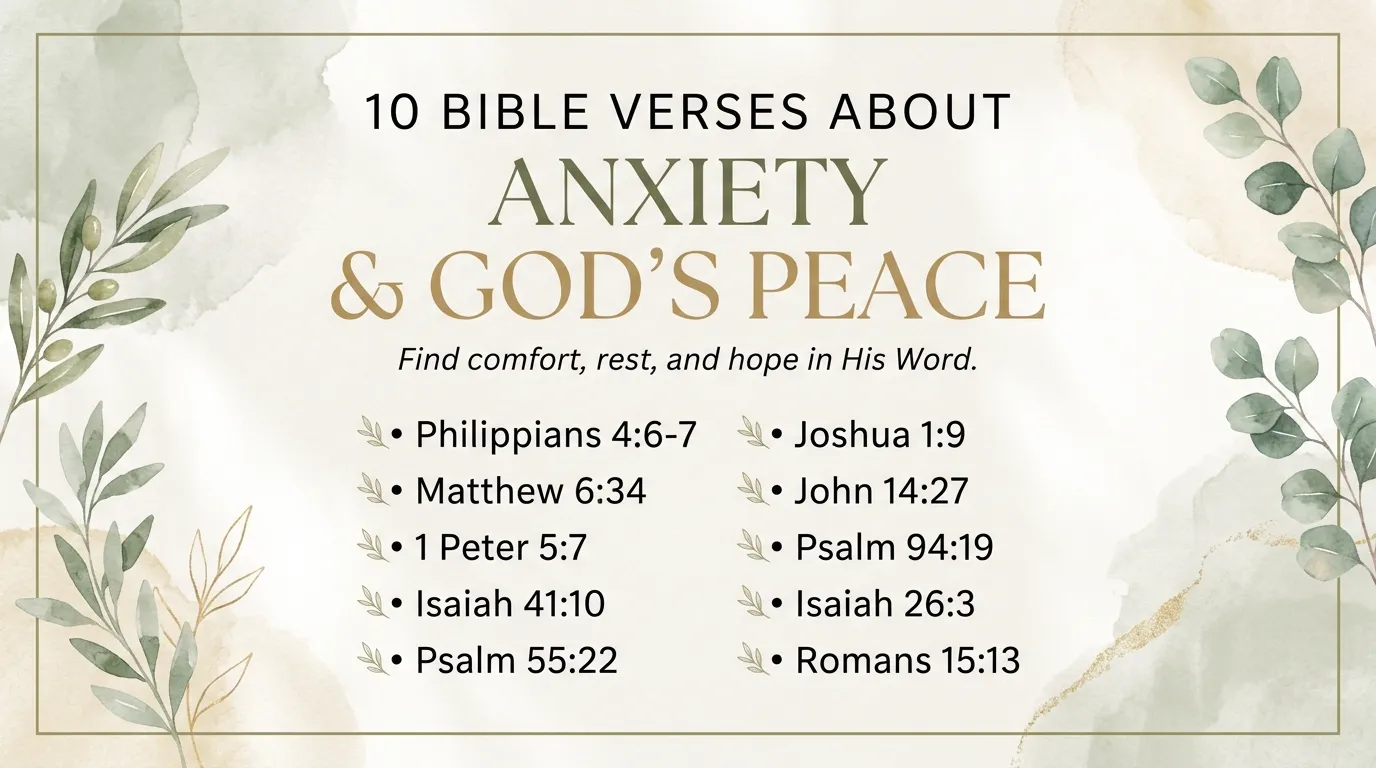
Anxiety can make even an ordinary day feel difficult. You may worry about your family, your health, your finances, or something that has not happened yet.
Sometimes, you know that you should trust God, but your thoughts keep returning to the same fears.
You may even wonder whether feeling anxious means your faith is not strong enough.
The Bible speaks to these struggles with honesty, comfort, and wisdom.
It teaches believers to bring their worries to God, remember His care, pray with honesty, and take life one day at a time.
These teachings do not promise that every problem will disappear at once. Instead, they point toward a deeper trust in God during uncertain times.
This guide explores Bible verses about anxiety and explains their meaning in context.
You will learn what Scripture says about worry, how biblical writers described anxious concerns, and how Christians can put these lessons into practice.
Whether you are looking for encouragement, a verse to remember, or words for prayer, these passages offer a thoughtful place to begin.
🔍 Did You Know?
The New Testament uses the Greek verb merimnaō (μεριμνάω) for being anxious or worrying. It appears in Matthew 6, where Jesus teaches about worry, and in other passages where the meaning depends on context. The related noun merimna can refer to anxiety, care, or concern. This reminds us that biblical teaching addresses how we handle our concerns, not simply whether we care about anything
📖 Quick Answer: What Does the Bible Say About Anxiety?
The Bible teaches people to bring their worries to God, trust in His care, pray honestly, and seek His peace. Passages such as Philippians 4:6–7, Matthew 6:25–34, and 1 Peter 5:7 offer comfort and guidance. They do not mean that anxious feelings are proof of weak faith or that every struggle will end immediately.
📚 Biblical Meaning of Anxiety
Hebrew Meaning of Anxiety
The Old Testament was written mainly in Hebrew, with some sections in Aramaic. It does not use one single word that matches every modern meaning of anxiety.
One Hebrew word connected with anxiety is de’agah (דְּאָגָה), which can mean anxiety, worry, or care. A related verb, da’ag (דָּאַג), can describe being anxious or feeling concern. These words help show that the Bible recognizes the distress people feel when they face danger or uncertainty.
For example, Proverbs 12:25 says that anxiety weighs down the heart, while a kind word brings encouragement. The verse acknowledges emotional heaviness rather than pretending that fear and worry never occur.
Greek Meaning of Anxiety
In the New Testament, the Greek words merimna (μέριμνα) and merimnaō (μεριμνάω) are associated with care, worry, and anxiety. They appear in passages such as 1 Peter 5:7 and Matthew 6:25.
The exact sense depends on the passage. Concern for another person can be positive, while worry that overwhelms a person can become burdensome. Therefore, it would be inaccurate to claim that every form of concern is sinful.
Literal and Spiritual Meaning
In everyday language, anxiety often means fear or uneasiness about something uncertain. In a biblical discussion, the word can refer to worry that weighs on the heart or distracts someone from trusting God.
The spiritual meaning is not that believers must hide their feelings. Rather, Scripture invites them to bring their concerns into an honest relationship with God. Prayer, trust, wisdom, community, and practical action can all be part of that response.
Biblical Significance of Anxiety
Anxiety matters in Scripture because people face real dangers and unanswered questions. The Bible does not present every faithful person as calm in every situation. The Psalms include cries of distress, and Jesus Himself experienced deep sorrow in Gethsemane (Matthew 26:36–39).
These accounts show that distress can be expressed honestly before God. Faith does not require pretending that life is easy. It means turning toward God even when emotions remain difficult.
A Key Scripture Reference
Philippians 4:6–7 is one of the best-known passages about anxiety. Paul encourages believers to bring their requests to God through prayer and thanksgiving, and he describes the peace of God guarding their hearts and minds in Christ Jesus.
The passage offers a spiritual practice, not a reason to blame people whose anxiety does not disappear quickly. Prayer can be part of a wider response that includes support, wise choices, and professional care when needed.
🏺 Historical and Biblical Context
Anxiety in the Old Testament
People in the Old Testament faced threats, illness, conflict, hunger, displacement, and uncertainty. The Psalms often express fear and distress while asking God for help. Psalm 55:22 encourages the faithful to cast their burdens on the Lord, while Proverbs 12:25 recognizes how anxiety can weigh down the heart.
These passages matter because they show that the Bible makes room for human vulnerability. Its writers do not always move straight from fear to confidence. Some prayers include questions, tears, and repeated requests for help.
The Old Testament also connects trust with wise living. Trusting God does not mean ignoring danger or refusing practical help. It means seeking God’s guidance while facing the situation honestly.
Anxiety in the New Testament
Jesus addresses worry in Matthew 6:25–34. He speaks about food, clothing, and tomorrow’s needs, reminding His listeners of God’s care for creation. His teaching calls people away from being consumed by worry and toward trust in their heavenly Father.
Paul’s words in Philippians 4:6–7 offer a similar invitation to pray about every concern. In 1 Peter 5:7, believers are told to cast their anxieties on God because He cares for them.
The New Testament also recognizes suffering and hardship. Christian hope does not mean that every believer will enjoy a trouble-free life. Rather, faith offers a way to face difficulties with God’s care and the support of the Christian community.
Cultural Understanding in Biblical Times
For people in the biblical world, concerns about daily food, clothing, safety, and family were not abstract ideas. Many people lived with limited security and depended on harvests, work, and community support.
When Jesus spoke about birds and flowers, He used familiar parts of creation to teach about God’s provision. He was not telling people to stop working or planning. He was challenging worry that takes over the heart and makes tomorrow’s uncertainties the center of life.
📜 Is Anxiety Mentioned in the Bible?
Yes. Modern translations use words such as anxiety, anxious, worry, and care in different passages. The exact wording varies by Bible translation, so a word may appear in one version and be translated differently in another.
Some important examples include:
- Philippians 4:6–7: Bring concerns to God in prayer and receive the promise of His peace.
- Matthew 6:25–34: Jesus teaches His followers not to let worry about daily needs control their lives.
- 1 Peter 5:7: Cast every anxiety on God because He cares for His people.
- Proverbs 12:25: Anxiety can weigh down the heart, while a kind word can lift it.
- Psalm 94:19: When anxious thoughts multiply, God’s comfort brings joy to the soul.
These verses show that anxiety is not an unfamiliar subject in Scripture. The Bible recognizes worry and points people toward prayer, trust, encouragement, and God’s care. It does not give a modern medical diagnosis, so biblical language about anxiety should not be treated as a complete explanation of every anxiety disorder.
🕊️ Spiritual Meaning and Symbolism of Anxiety
Anxiety and Trust
Trusting God means relying on His character even when the future remains unclear. It does not mean that a believer will never feel afraid. A person can trust God and still struggle with anxious thoughts.
Psalm 56:3 expresses this honestly: when fear comes, the writer chooses to trust in God. The verse does not deny fear. It shows how trust can become a response to fear.
Worry and Prayer
Worry often repeats the same questions without finding an answer. Prayer gives those concerns a place in which they can be expressed before God. In Philippians 4, prayer includes requests and thanksgiving.
Thanksgiving does not require ignoring pain. It can mean remembering what remains good while asking God for help with what is difficult. A person may pray for courage, wisdom, provision, healing, or support.
Fear and God’s Presence
Many biblical passages remind readers that God is near to those who seek Him. Psalm 23 describes God’s presence even in the valley of deep darkness. Its comfort comes not from a promise that valleys will never appear, but from the image of a shepherd who remains with the sheep.
This is a helpful Christian perspective on anxiety: the presence of fear does not prove that God has abandoned someone.
Faith and Practical Action
Faith is not the same as doing nothing. If anxiety concerns debt, a person may need a budget and trusted advice. If it concerns a difficult relationship, a safe conversation or outside support may help. If symptoms are severe, professional mental health care may be important.
Prayer and practical action can work together. Seeking help does not mean a person has failed spiritually.
⚖️ Anxiety, Concern, and Biblical Trust: What’s the Difference?
| Idea | Biblical perspective | Practical response |
| Ordinary concern | Caring about real needs can be appropriate | Make a plan and take wise action |
| Overwhelming worry | Worry can weigh down the heart and distract from the present | Pray, talk with someone trustworthy, and take one step at a time |
| Trust in God | Relying on God’s care without knowing every outcome | Remember Scripture and seek guidance |
| Biblical peace | God’s peace can guard the heart and mind | Pray honestly and build habits that support peace |
| Seeking help | Wisdom and support can be part of facing hardship | Reach out to trusted people or a qualified professional |
The goal is not to judge every anxious feeling. It is to recognize what is happening, seek support, and respond in ways that reflect both faith and wisdom.
📖 10 Bible Verses About Anxiety and Their Meaning
The following passages are especially helpful for readers seeking comfort and practical guidance. Wording differs among translations, so read each verse in your preferred Bible and consider its surrounding passage.
1. Philippians 4:6–7 — Pray Instead of Carrying Every Worry Alone
Paul encourages believers not to be anxious about everything, but to bring their requests to God through prayer and thanksgiving. He then speaks of God’s peace guarding their hearts and minds in Christ Jesus.
The passage does not say that prayer always removes every anxious feeling at once. It invites believers to turn their worries into honest conversation with God. Thanksgiving can help them remember signs of God’s care without denying their pain.
Practical lesson: Name the concern you are carrying. Pray about it specifically, ask for wisdom, and identify one helpful action you can take today.
2. 1 Peter 5:7 — Cast Your Anxiety on God
This verse tells believers to cast their anxiety on God because He cares for them. The image is one of handing over a burden rather than trying to carry it alone.
The surrounding passage speaks about humility and trust in God’s care. Casting anxiety on God does not mean refusing responsibility. It means recognizing that people have limits and that they can seek God’s help while doing what is within their power.
Practical lesson: In prayer, describe your worry honestly. Ask God for strength and guidance, then consider whether you need support from a friend, pastor, family member, or professional.
3. Matthew 6:25–34 — Do Not Be Consumed by Tomorrow
In the Sermon on the Mount, Jesus speaks about food, drink, clothing, birds, and flowers. He reminds His listeners that their heavenly Father knows their needs. He also teaches them not to let tomorrow’s worries take over today.
Jesus is not saying that people should stop working, saving, or planning. His teaching challenges the belief that endless worry can guarantee a safe future. Worry cannot control every outcome.
Practical lesson: Separate today’s responsibilities from tomorrow’s unknowns. Make a reasonable plan, do what you can, and leave room for trust instead of trying to solve every possible future problem at once.
4. Psalm 94:19 — God’s Comfort in Anxious Thoughts
Psalm 94:19 describes many anxious thoughts and the comfort God brings to the soul. The verse is meaningful because it does not pretend that faithful people have empty minds or easy lives. It acknowledges that distressing thoughts can multiply.
The psalm is a prayer that seeks God’s justice and help. Its message is not that a person should feel ashamed for being anxious. Instead, it points to God’s comfort as a source of support in distress.
Practical lesson: When your thoughts feel crowded, pause and pray. You may also write down what worries you and talk through those concerns with someone you trust.
5. Proverbs 12:25 — A Kind Word Can Lift the Heart
Proverbs 12:25 says that anxiety weighs down the heart, while a good word brings joy. This short statement recognizes the emotional weight of worry and the value of encouragement.
The verse also reminds readers that words matter. A caring conversation can help someone feel less alone. It does not mean that a few kind words will cure every form of anxiety, but kindness can be a meaningful part of support.
Practical lesson: If you feel overwhelmed, reach out to someone who listens without judging. If another person is anxious, offer patient encouragement rather than telling them to simply stop worrying.
6. Psalm 55:22 — Give Your Burden to the Lord
Psalm 55:22 invites the reader to cast their burden on the Lord and trust Him to sustain them. The psalm itself expresses distress and betrayal, showing that this encouragement comes in the middle of a painful situation.
The verse does not promise that every problem will be resolved in the way a person hopes. Its comfort is that God can sustain those who turn to Him. Christians can bring Him their fear, grief, and uncertainty without hiding their emotions.
Practical lesson: Name the burden you are carrying. Ask God for endurance and wisdom, and consider what support or practical step may help you face it.
7. Isaiah 41:10 — Do Not Be Afraid, for God Is With You
In Isaiah 41:10, God tells His people not to fear and assures them of His presence and help. The verse belongs to a larger message of encouragement to Israel, so its original context matters.
Christians often draw comfort from this passage because it reflects God’s strength and faithfulness. It should not be used to promise that believers will never face hardship. Rather, it encourages them to remember God’s presence while facing what lies ahead.
Practical lesson: When fear rises, read the verse slowly. Ask what kind of help you need today, whether courage, wise counsel, practical support, or strength to endure.
8. Psalm 23:4 — God Is Present in the Darkest Valley
Psalm 23 pictures God as a shepherd who guides and protects. In verse 4, the writer describes walking through a dark valley without being abandoned. The image offers comfort during times of fear and uncertainty.
The psalm does not say that the valley is imaginary or that the path will always be easy. Its hope rests in the shepherd’s presence. For a Christian, the passage can serve as a reminder that suffering does not automatically mean God is far away.
Practical lesson: If you are in a difficult season, take the next step rather than demanding that you understand the whole journey. Seek God’s guidance and accept support from people who care.
9. John 14:27 — Jesus Offers Peace
In John 14:27, Jesus speaks of giving His peace to His disciples. He says that their hearts should not be troubled or afraid. These words appear in His farewell teaching before His arrest and death.
That context matters. Jesus was preparing His followers for painful events, not promising that they would never experience grief or fear. His peace is a source of spiritual assurance amid trouble, not a guarantee of a life without hardship.
Practical lesson: Read this verse alongside the surrounding chapter. Pray for peace, remember Jesus’ care, and let trusted people walk beside you when fear feels difficult to manage.
10. 2 Timothy 1:7 — Remember Courage, Love, and Self-Control
Second Timothy 1:7 reminds Timothy of the spirit God gives: not one of fear, but of power, love, and self-control. The verse is part of Paul’s encouragement to Timothy to remain faithful in his calling.
It is sometimes used to suggest that every anxious person lacks faith. That is an unfair conclusion. The verse encourages courage and faithful action; it is not a clinical diagnosis or proof that a person with anxiety has failed God.
Practical lesson: Ask what a response shaped by love and wise judgment might look like. Take one manageable step, seek support when needed, and do not use this verse to shame yourself or others.
🌿 A Biblical Case Study: Jesus in Gethsemane
Matthew 26:36–39 describes Jesus praying in Gethsemane before His arrest. He tells His disciples that His soul is overwhelmed with sorrow and prays to the Father about what lies ahead. His prayer expresses deep distress while also showing surrender to the Father’s will.
This account should be read carefully. Jesus’ experience is not a medical diagnosis, and the Bible does not label it with a modern mental health term. Still, the passage shows that profound sorrow can be expressed honestly in prayer.
Jesus does not hide His anguish. He speaks openly to the Father and continues through the difficult path before Him. His example offers a meaningful lesson for Christians who feel pressure to appear strong at all times.
What can readers learn?
- Honest prayer can include grief, fear, and difficult questions.
- Faithfulness does not require pretending that suffering feels easy.
- Surrender means entrusting oneself to God, not denying the reality of pain.
- Support matters: Jesus brings His disciples with Him, even though they do not fully understand His sorrow.
The story does not mean every anxious person must respond in the same way. It reminds believers that they can approach God truthfully, even when their hearts feel heavy.
❤️ Life Lessons for Christians Facing Anxiety
1. Pray Honestly, Not Perfectly
You do not need polished words to pray. Tell God what you fear, what you do not understand, and what help you need. The Psalms offer many examples of people speaking to God from pain and uncertainty.
2. Focus on the Present Day
Matthew 6:34 encourages readers not to be consumed by tomorrow. This does not forbid planning. It reminds us that we can only act in the present. Choose one useful step instead of trying to solve every possible problem at once.
3. Remember Scripture in Context
Choose a passage that speaks to your situation, then read the verses around it. Understanding the original audience and purpose helps prevent false promises or harsh conclusions. God’s Word can encourage you without pretending that every struggle will end immediately.
4. Accept Help from Others
God’s care can be experienced through supportive people. Speak with a trusted friend, family member, pastor, or counselor. You do not have to carry every concern alone, and asking for help is not a sign of spiritual failure.
5. Seek Professional Care When Needed
If anxiety is persistent, intense, or affecting sleep, relationships, work, study, or daily life, consider speaking with a qualified mental health professional or healthcare provider. Prayer and professional care are not enemies. A Christian can seek both spiritual support and appropriate treatment.
⚠️ Common Misunderstandings About Anxiety in the Bible
Misunderstanding 1: Anxiety Always Means Weak Faith
The Bible does not support judging every anxious person as faithless. Scripture includes honest expressions of distress, and Jesus experienced deep sorrow. Anxiety can have many causes, so it is unwise to assume that a person’s feelings reveal the strength of their faith.
Misunderstanding 2: Philippians 4:6 Means Christians Must Never Feel Anxious
Paul’s instruction invites believers to bring their concerns to God. It should not be turned into a weapon against people who are struggling. The passage offers a practice of prayer and a promise of God’s peace, not a reason for shame when anxiety persists.
Misunderstanding 3: Trusting God Means Doing Nothing
Biblical trust can include planning, asking for help, taking safety measures, and seeking treatment. Faith does not require ignoring a problem. It encourages people to respond with prayer, wisdom, and responsibility.
Misunderstanding 4: Every Verse Guarantees Immediate Relief
Some readers expect a verse to remove anxiety as soon as they read it. Scripture can offer comfort and direction, but emotional struggles may take time and may need several forms of support. Avoid promising instant healing when the text does not make that promise.
Misunderstanding 5: Anxiety Is Only a Spiritual Problem
The Bible offers spiritual wisdom, but it does not replace modern medical understanding. Anxiety may be connected with stress, trauma, health conditions, or other factors. A balanced Christian response can include prayer, community support, and professional care.
💡 Expert Insight: Read the Verse and Its Context
When studying anxiety in Scripture, compare the wording in two reliable Bible translations and read the surrounding paragraph or chapter. Ask three questions: Who is speaking? Who first received the message? What does the passage promise, and what does it encourage the reader to do?
For example, Matthew 6:25–34 speaks about daily needs and trust in God’s care. Philippians 4:6–7 connects prayer with God’s peace. Reading the context helps distinguish encouragement from promises the text does not make.
❓ FAQs
What is the best Bible verse for anxiety?
Philippians 4:6–7 is a helpful starting point because it encourages prayer and describes God’s peace guarding the heart and mind. Another comforting passage is 1 Peter 5:7, which invites believers to cast their anxiety on God because He cares for them.
What does God say about anxiety?
The Bible encourages people to bring their worries to God, trust His care, and avoid letting fear control their lives. Matthew 6:25–34 and Philippians 4:6–7 are key passages. They offer spiritual guidance without suggesting that every anxious feeling disappears immediately.
Is anxiety a sin according to the Bible?
The Bible warns against worry that consumes the heart, but it does not justify labeling every anxious feeling as personal sin or weak faith. Anxiety can arise for many reasons. Christians can seek God, receive support, and take responsible steps without condemning themselves.
How can I pray when I feel anxious?
Be honest and specific. Tell God what you fear, ask for wisdom and strength, and thank Him for the good you can recognize. You might pray through Philippians 4:6–7 or Psalm 55:22. You can also ask a trusted person to pray with you.
Can Christians seek therapy for anxiety?
Yes. Seeking help from a qualified mental health professional is compatible with Christian faith. Prayer, pastoral care, supportive relationships, and professional treatment can complement one another. If anxiety disrupts everyday life or feels overwhelming, speaking with a healthcare provider is a sensible step.
🙏 Conclusion: Trust God One Step at a Time
The Bible does not ignore anxiety or pretend that life is always easy. It acknowledges the weight of worry and points believers toward prayer, trust, encouragement, and God’s care.
Passages such as Philippians 4:6–7, Matthew 6:25–34, and 1 Peter 5:7 remind Christians that they can bring their concerns to God honestly.
Remember that faith is not a demand to feel calm every moment. You can trust God while still experiencing fear, and you can ask for help without feeling ashamed.
Take time to read Scripture in context, pray about what troubles you, and focus on the next wise step.
If anxiety has become hard to manage, reach out to someone trustworthy or a qualified professional. You do not have to face every struggle alone.
May God’s Word encourage you, His people support you, and His peace guide you through the days ahead.

Hello, I’m Jonathan Reed. I have a strong interest in biblical interpretation and Christian education. Over the years, I have spent significant time studying Scripture and researching its historical context to better understand its teachings and messages.