Have you ever wondered who you really are beyond your mistakes, achievements, appearance, or other people’s opinions? Many people struggle with these questions.
Life can make us feel that our value depends on success, approval, or how well we meet other people’s expectations.
The Bible offers a different foundation for understanding ourselves. It teaches that people are created in God’s image and that those who belong to Jesus receive a new identity through Him.
They are welcomed into God’s family, called to live in His grace, and given a purpose that goes beyond worldly success.
These Bible verses about who we are in Christ help explain what Scripture says about a believer’s identity. They point to God’s love, forgiveness, and transforming work rather than human perfection.
Whether you are studying Scripture, encouraging a friend, or looking for reminders of your faith, these passages can help you understand what it means to belong to Christ and how that identity should shape everyday life.
🔍 Did You Know?
The expression in Christ appears throughout Paul’s letters as a way of describing the believer’s relationship with Jesus. In Ephesians 1, Paul repeatedly connects life in Christ with spiritual blessings, adoption, redemption, and God’s purpose. These ideas help explain why Christian identity is rooted in God’s work rather than personal achievement.
Christian Pure
+1
📖 Quick Answer: What Does the Bible Say About Who We Are in Christ?
The Bible teaches that those who belong to Jesus are made new, welcomed as God’s children, forgiven through His grace, and called to live with faith and purpose. Our identity in Christ rests on God’s saving work, not on worldly status, personal success, or a perfect past.
✝️ The Biblical Meaning of Who We Are in Christ
What does “in Christ” mean?
The phrase in Christ describes a person’s relationship with Jesus through faith. It points to belonging to Him and sharing in the benefits of His saving work.
In Paul’s letters, this relationship affects how believers understand their past, present, and future. They are called to leave behind sinful ways, grow in holiness, and live in the hope God gives through Jesus.
Being in Christ does not mean a Christian never struggles or makes mistakes. It means that Jesus becomes the foundation of their faith, forgiveness, and new way of life.
Is there a Hebrew or Greek meaning?
The Old Testament provides important foundations for understanding God’s people, including the themes of covenant, creation, and belonging to Him. However, the New Testament phrase in Christ is especially associated with the Greek expression en Christō (ἐν Χριστῷ), meaning “in Christ.”
The exact meaning depends on its context. Paul may use the phrase to describe belonging to Christ, receiving God’s grace through Him, or living as part of the community shaped by Jesus.
The Greek word Christos means “Christ” or “Anointed One.” It corresponds to the Hebrew title Mashiach, commonly rendered “Messiah.”
These language details help explain the title, but the full meaning of Christian identity comes from reading the relevant passages in context.
What is our spiritual identity in Christ?
According to Scripture, Christian identity includes several connected truths:
- We are God’s children: Through receiving Christ and believing in Him, believers are welcomed into God’s family (John 1:12).
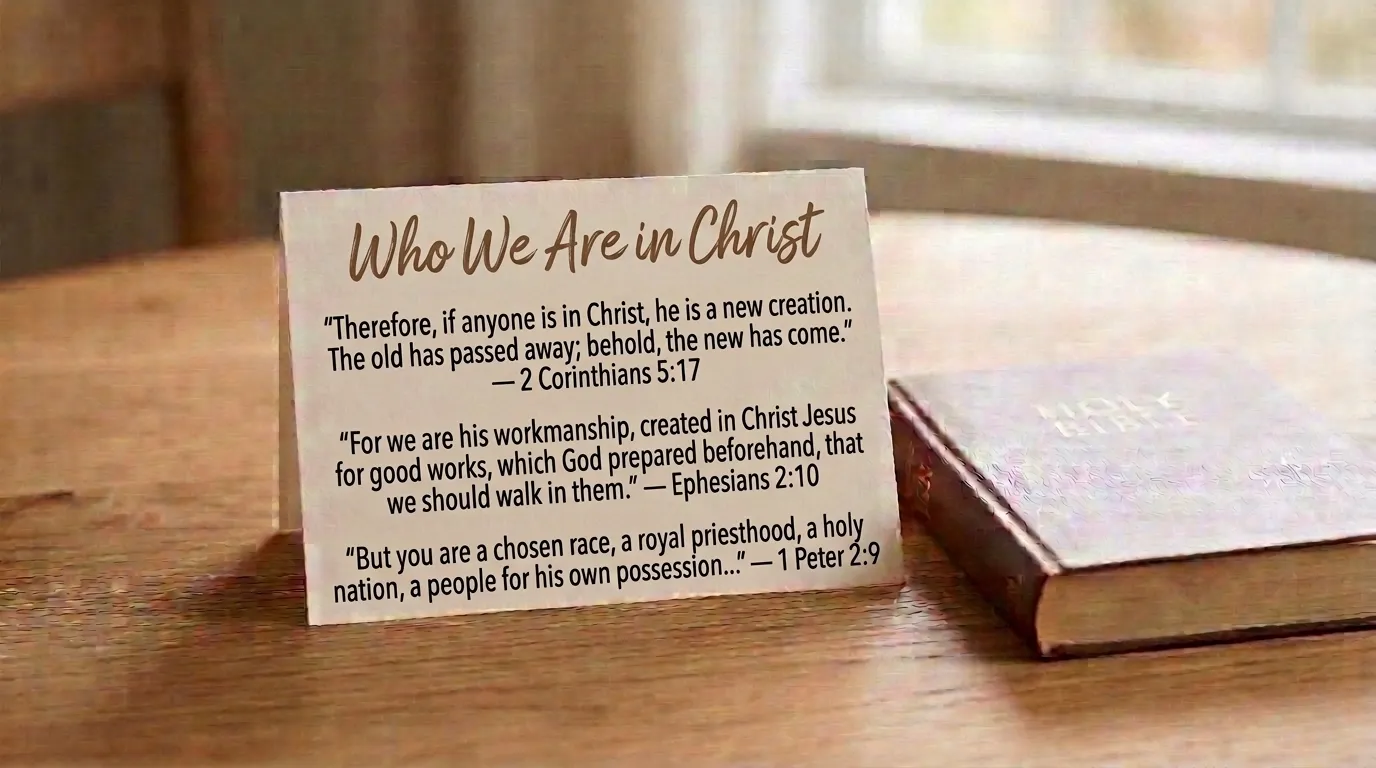
- We are a new creation: Life in Christ brings a new relationship with God and a call to live differently (2 Corinthians 5:17).
- We are saved by grace: Salvation is God’s gift, not something earned by good works (Ephesians 2:8–10).
- We belong to God’s people: Christians are called to worship God and show His goodness to others (1 Peter 2:9).
- We have a purpose: Believers are called to do good works and reflect Christ in daily life (Ephesians 2:10).
These descriptions are not reasons to feel superior to others. They are reminders of God’s grace and invitations to live with humility, gratitude, and love.
🏛️ Historical and Biblical Context
Identity in the Old Testament
The Old Testament often describes identity through creation, covenant, and belonging to God’s people. Genesis 1:27 says that humanity was created in God’s image. This gives human life dignity and value.
God also formed a covenant relationship with Israel. In passages such as Exodus 19:5–6, Israel is described as God’s treasured possession and a kingdom of priests. This language shows that belonging to God carried both privilege and responsibility.
These passages are not identical to New Testament teaching about being in Christ. However, they provide important background for understanding God’s relationship with His people and their calling to reflect His character.
Identity in the New Testament
The New Testament focuses on what God has done through Jesus Christ. John 1:12 describes those who receive Christ and believe in His name as children of God. Romans 8:14–17 connects believers’ identity as God’s children with the work of the Holy Spirit.
Paul also explains that believers are united with Christ in His death and resurrection (Romans 6:3–11). This union points to a new direction for life: turning away from sin and walking in obedience to God.
Understanding the original audience
The first Christians lived in communities where family background, social rank, citizenship, and religious identity could strongly affect a person’s place in society. The New Testament offered believers a deeper source of belonging through Christ.
This did not mean that every social difference immediately disappeared. Instead, Christians were called to treat one another according to their shared relationship with Jesus and to live as one body in Him (Galatians 3:26–28; 1 Corinthians 12:12–27).
📚 Is “Who We Are in Christ” Mentioned in the Bible?
The exact modern phrase who we are in Christ is commonly used as a summary of several biblical teachings, rather than as one specific verse or formal biblical heading.
The idea is clearly supported by Scripture. For example:
- 2 Corinthians 5:17 describes anyone in Christ as a new creation.
- John 1:12 speaks of becoming children of God through receiving Christ.
- Ephesians 2:10 calls believers God’s workmanship, created in Christ Jesus for good works.
- 1 Peter 2:9 describes God’s people as chosen and called out of darkness into His light.
- Romans 8:1 teaches that there is no condemnation for those who are in Christ Jesus.
Read these passages alongside their surrounding verses. Doing so helps you understand both the promises God gives and the life of faith to which believers are called.
❤️ Spiritual Meaning and Symbolism of Our Identity in Christ
Christian identity is not simply about using a religious label. It is about belonging to Jesus and allowing that relationship to shape how we think, choose, and treat others.
From the old life to a new life
The image of becoming new does not mean a believer instantly forgets every painful memory or loses every struggle. It means Christ brings a new relationship with God and a new direction for life. Growth often involves daily repentance, learning, and dependence on God’s grace.
From rejection to belonging
People may feel defined by rejection, family conflict, failure, or the opinions of others. Scripture reminds Christians that their relationship with God is not measured by public approval. Through Christ, believers are invited into a family of faith and encouraged to care for one another.
From pride to humility
Knowing who we are in Christ should not lead to arrogance. Christian identity is a gift of grace, not proof that someone is better than another person. It encourages gratitude, service, patience, and love.
From fear to faithful living
The Bible gives believers reasons for hope, but it does not promise a life without pain or uncertainty. Christian confidence means trusting God’s character and promises while continuing to seek wisdom and act faithfully.
📊 What the Bible Says About Our Identity
| Biblical truth | Key Scripture | What it teaches |
| Created in God’s image | Genesis 1:27 | Human life has dignity and value |
| Children of God | John 1:12 | Believers receive a new family identity |
| A new creation | 2 Corinthians 5:17 | Life in Christ brings a new direction |
| Saved by grace | Ephesians 2:8–10 | Salvation is God’s gift, not an achievement |
| God’s workmanship | Ephesians 2:10 | Believers are called to do good works |
| Free from condemnation | Romans 8:1 | Those in Christ are not under condemnation |
| Part of God’s people | 1 Peter 2:9 | Believers are called to proclaim God’s goodness |
| Loved as God’s children | 1 John 3:1 | God’s love gives believers a secure identity |
📖 10 Bible Verses About Who We Are in Christ
The following Scriptures explain different parts of Christian identity. Wording varies between Bible translations, so read the full passage in your preferred translation for the most accurate context.
1. 2 Corinthians 5:17 — We Are a New Creation
Paul teaches that anyone who is in Christ is a new creation. The old has passed away, and the new has come. This verse is central to understanding identity in Jesus because it points to transformation through Christ rather than a person’s ability to fix everything alone.
The surrounding passage discusses reconciliation with God through Jesus. Therefore, being a new creation is more than feeling positive or starting a new habit. It describes a changed relationship with God and a new calling to live for Him.
Life lesson: Your past may be part of your story, but it does not have to determine your future. In Christ, you can seek forgiveness, make wiser choices, and grow in faith.
2. John 1:12 — We Are Children of God
John 1:12 explains that those who receive Jesus and believe in His name are given the right to become children of God. This verse connects Christian identity with a response to Christ. It is not simply a statement about human self-esteem; it describes a relationship with God through faith in Jesus.
The following verse also emphasizes God’s role in this new birth. Christian belonging is presented as God’s work, not something a person earns through status, wealth, or religious reputation.
Life lesson: When you feel that you do not belong, return to what Scripture teaches about receiving Christ. Let your relationship with God shape your choices and how you treat other members of His family.
3. Romans 8:1 — We Are Not Under Condemnation
Romans 8:1 declares that there is no condemnation for those who are in Christ Jesus. Paul develops this truth while explaining the work of the Spirit, freedom from sin’s rule, and the hope believers have in Christ.
This does not mean that choices no longer matter or that Christians should ignore wrongdoing. Scripture still calls believers to confess sin, turn away from it, and pursue a life that honors God. The verse offers hope against condemnation, not permission to live carelessly.
Life lesson: When guilt troubles you, distinguish between honestly recognizing a wrong and believing that you are beyond God’s grace. Take responsibility, seek forgiveness, and keep walking in faith.
4. Ephesians 2:8–10 — We Are Saved by Grace and Created for Good Works
Ephesians 2 explains that salvation comes by grace through faith, not as a result of works that would allow anyone to boast. Verse 10 then describes believers as God’s workmanship, created in Christ Jesus for good works.
Together, these verses hold two truths in balance. Good works do not purchase salvation, yet a life shaped by God’s grace should produce actions that reflect His goodness. Our purpose is not to earn God’s love by performing well but to respond faithfully to the grace we have received.
Life lesson: Serve others out of gratitude rather than a need to prove your worth. Small acts of kindness, honesty, generosity, and compassion can become meaningful expressions of faith.
5. Galatians 2:20 — Christ Shapes Our Lives
In Galatians 2:20, Paul describes his life as one lived by faith in the Son of God, who loved him and gave Himself for him. The verse uses strong language about being crucified with Christ to explain how deeply the believer’s life is changed through faith.
Paul is not saying that a Christian loses their personality or becomes free from every struggle. Instead, Christ becomes central to the believer’s values, hope, and way of living. The verse connects identity with trust in Jesus and a response to His self-giving love.
Life lesson: Ask how your faith influences your decisions, relationships, and priorities. Christian identity is not only something to remember; it is something to live out each day.
6. 1 Peter 2:9 — We Belong to God’s People
First Peter 2:9 describes its readers as a chosen people, a royal priesthood, a holy nation, and God’s own people. The verse echoes language used for Israel in the Old Testament and applies it to the community being addressed in the letter.
The purpose of this identity is also stated: God’s people are called to declare His goodness, having been called out of darkness into His wonderful light. The verse is therefore both an assurance of belonging and a calling to witness through words and conduct.
Life lesson: Let your faith help you build others up rather than look down on them. Belonging to God should inspire worship, compassion, integrity, and a willingness to share the hope found in Christ.
7. 1 John 3:1 — We Are Loved as God’s Children
First John 3:1 invites readers to consider the great love the Father has given them by calling them His children. The verse emphasizes that this is not merely a hopeful title; it describes a real relationship within the message of the letter.
The surrounding verses connect this identity with hope and a desire to become more like Christ. God’s love is not presented as a reason to remain unchanged. Rather, it gives believers a foundation from which to grow in purity, love, and faithfulness.
Life lesson: When you question your worth, remember that Scripture grounds Christian identity in God’s love. Let that assurance encourage you to show patience, kindness, and care to people around you.
8. Colossians 3:3 — Our Life Is Hidden With Christ in God
Colossians 3:3 says that believers have died and that their life is hidden with Christ in God. Paul uses this image to explain a new spiritual identity that is not always visible or understood by the wider world.
The next verses call believers to set their minds on things above and turn away from harmful practices. Being hidden with Christ does not mean withdrawing from ordinary responsibilities. It means that a believer’s deepest hope and identity are grounded in Christ, even when circumstances change.
Life lesson: Do not measure your spiritual life only by public recognition or immediate success. Stay faithful in the quiet choices that reflect Christ’s character, even when others do not notice.
9. Romans 8:16–17 — We Are God’s Children and Heirs
In Romans 8:16–17, Paul explains that the Holy Spirit bears witness that believers are God’s children. He then describes them as heirs of God and co-heirs with Christ, while also acknowledging suffering with Christ on the way to glory.
This passage combines assurance with realism. Christian identity does not promise a trouble-free life. Instead, it places suffering within a larger hope rooted in God’s promises. Believers can face hardship without treating it as proof that God has abandoned them.
Life lesson: In difficult seasons, seek support from trusted believers and hold on to the hope Scripture offers. Faith can sustain you through suffering without requiring you to pretend that pain is not real.
10. 1 Corinthians 12:27 — We Are Members of Christ’s Body
Paul tells the Corinthian church that they are the body of Christ and that each person is a part of it. The wider chapter uses the human body to explain why Christians have different gifts but need one another.
This image challenges the idea that Christian identity is only personal. Believers belong to Christ, but they are also called to live as members of a community. No single gift makes every other person unnecessary, and differences should lead to mutual care rather than division.
Life lesson: Use your abilities to help others and value the contributions of people whose gifts differ from yours. Faith grows through worship, service, encouragement, and life together with other believers.
🌿 A Biblical Case Study: Peter’s Identity After Failure
Peter’s story shows how failure does not have to be the end of a person’s walk with God.
Peter was one of Jesus’ disciples, yet he denied knowing Jesus three times during the events leading to the crucifixion (Luke 22:54–62). His actions were serious, and the Gospel does not pretend otherwise. Peter wept bitterly after realizing what he had done.
After His resurrection, Jesus met with Peter and gave him an opportunity to affirm his love and receive a renewed responsibility to care for His people (John 21:15–19). Jesus did not treat Peter’s denial as unimportant. Instead, the encounter showed restoration and a renewed calling.
Peter later became a prominent witness to the message of Jesus, as described in the book of Acts.
What can Christians learn from Peter?
- Failure should be faced honestly, not hidden or excused.
- Repentance and restoration are important parts of Christian growth.
- A person’s worst moment does not have to define their whole life.
- Grace can lead to renewed responsibility and service.
Peter’s story is not a promise that every consequence disappears after a mistake. It is an example of how Jesus can restore a repentant disciple and continue to work through that person’s life.
🙏 Life Lessons for Christians
Understanding who we are in Christ should shape daily choices. Here are five practical ways to put these Scriptures into action.
1. Let Scripture guide how you see yourself
Feelings and other people’s opinions can change quickly. Read passages such as Romans 8:1 and 1 John 3:1 to remember what Scripture teaches about forgiveness and belonging to God.
This does not mean ignoring helpful criticism. It means evaluating criticism honestly instead of allowing every opinion to determine your worth.
2. Practice gratitude instead of comparison
Social media and everyday life can make people compare their appearance, income, relationships, or achievements with others. Christian identity offers a different foundation.
Thank God for the gifts you have, recognize the good in other people, and resist the idea that another person’s success makes you less valuable.
3. Take responsibility for your choices
Being a new creation does not mean that personal growth happens without effort. Scripture calls believers to turn away from sin, seek wisdom, and practice love.
When you make a mistake, admit it, ask forgiveness where appropriate, and take practical steps to change.
4. Use your gifts to serve others
Ephesians 2:10 connects life in Christ with good works. You do not need a public platform or a special title to serve God.
You can show your faith through honest work, helping someone in need, supporting your family, or encouraging a person who feels alone.
5. Stay connected to a community of faith
The Bible describes Christians as members of Christ’s body. Faith is personal, but it is not meant to be lived in isolation.
Look for a healthy church or community where people study Scripture, encourage one another, practice accountability, and offer care during difficult times.
⚠️ Common Misunderstandings About Identity in Christ
Misunderstanding 1: Being in Christ means never struggling
Biblical correction: The New Testament gives believers hope while also recognizing temptation, suffering, and the need for continued growth. Christian identity does not remove every difficulty.
Misunderstanding 2: God accepts me only when I perform well
Biblical correction: Ephesians 2:8–10 teaches that salvation is by grace through faith, not earned by works. Good works matter, but they are the response to God’s grace rather than a way to purchase it.
Misunderstanding 3: My past no longer matters at all
Biblical correction: Christ offers forgiveness and new life, but people may still need to repair harm, face consequences, and rebuild trust. Grace encourages honest change rather than avoiding responsibility.
Misunderstanding 4: Being chosen makes Christians better than others
Biblical correction: Biblical descriptions of God’s people carry responsibility. First Peter 2:9 connects their identity with declaring God’s goodness. It should inspire humility and service, not pride.
Misunderstanding 5: Identity in Christ means I will always feel confident
Biblical correction: Believers can experience doubt, grief, fear, or discouragement. Feelings deserve honest attention, but they do not automatically settle what Scripture teaches. Prayer, support, wise counsel, and time in God’s Word can help.
💡 Expert Insight: Read Identity Verses in Context
When studying Bible verses about who we are in Christ, read the verses before and after each passage. Ask three questions:
- Who is speaking, and who is being addressed?
- What does the passage teach about God’s work and the believer’s response?
- How does this truth connect with the rest of Scripture?
For example, Ephesians 2:8–10 should be read as a whole. Verses 8–9 emphasize salvation by grace, while verse 10 explains that believers are created in Christ for good works. Reading all three together helps prevent the mistaken idea that good behavior earns salvation.
Translations may word a passage differently, so comparing two reliable translations can help clarify meaning. For deeper study, consult a Bible dictionary or commentary, while keeping the passage’s context central.
❓ FAQs
1. What does the Bible say about who we are in Christ?
The Bible describes believers as children of God, new creations, recipients of grace, and members of Christ’s body. Passages such as John 1:12, 2 Corinthians 5:17, and 1 Corinthians 12:27 explain different parts of this identity.
2. What is the best Bible verse about our identity in Christ?
Second Corinthians 5:17 is a strong starting point because it describes anyone in Christ as a new creation. It highlights the new life that comes through Jesus. Reading the surrounding verses helps explain how this new identity connects with reconciliation to God.
3. Are we children of God according to the Bible?
John 1:12 says that those who receive Jesus and believe in His name are given the right to become children of God. Romans 8:14–17 also describes believers as God’s children through the work of the Holy Spirit.
4. Does being in Christ mean my past mistakes are forgotten?
The Bible offers forgiveness and new life through Christ, but this does not mean every earthly consequence disappears. Christians are called to repent, seek forgiveness, make amends when possible, and grow in faith. Peter’s restoration in John 21 provides a helpful example.
5. How can I remember who I am in Christ every day?
Read a short passage of Scripture, pray honestly, and reflect on what it teaches. You might begin with Romans 8:1, John 1:12, or Ephesians 2:8–10. Put the passage into practice through kindness, honesty, service, and trust in God.
🌅 Conclusion: Live From Your Identity in Christ
The Bible teaches that our identity in Christ rests on God’s grace and the work of Jesus. Believers are described as new creations, children of God, recipients of forgiveness, and members of a people called to reflect His goodness.
These truths do not mean Christians will never struggle or make mistakes. Instead, they offer a foundation for facing life with faith, humility, and hope.
Our past does not need to control every decision, and the opinions of others do not have to become the final word about who we are.
As you read these Bible verses about who we are in Christ, take time to study their context and consider how they apply to your life.
Let God’s Word shape your choices, strengthen your faith, and guide you toward loving others well.
Remember: Christian identity is not a trophy to display. It is a gift of grace to receive and a calling to live out faithfully.

Hello, I’m Daniel Mercer. My passion for studying the Bible began many years ago when I started exploring the historical and spiritual meanings behind biblical names and symbols. Since then, I have dedicated countless hours to researching Scripture, ancient biblical traditions, and Christian teachings.