One important Hebrew word behind the phrase “fear of the Lord” is yir’ah (יִרְאָה). Depending on the context, it can describe fear, reverence, or awe.
The related Hebrew verb yare (יָרֵא) can mean to fear or to stand in awe.
In Proverbs 1:7, the “fear of the LORD” is linked with the beginning of knowledge. This does not mean that people must live in constant panic.
It points to recognizing God’s holiness and authority and taking His wisdom seriously. The Hebrew word can express both dread and reverence, so the passage’s context matters.
Greek meaning in the New Testament
A key Greek noun translated as “fear” is phobos (φόβος). Depending on how it is used, it can refer to fear, alarm, or reverence. The related verb phobeō (φοβέομαι) can mean to fear or to regard with reverence.
For example, 1 Peter 2:17 tells believers to “fear God” while also instructing them to honor the king. This shows that fearing God is not simply the same as being afraid of people. God receives a unique place of reverence and loyalty.
Greek words also depend on context. The word phobos does not always mean the same kind of fear in every verse. A passage about fear of danger may use it differently from a passage about reverence toward God.
The literal meaning
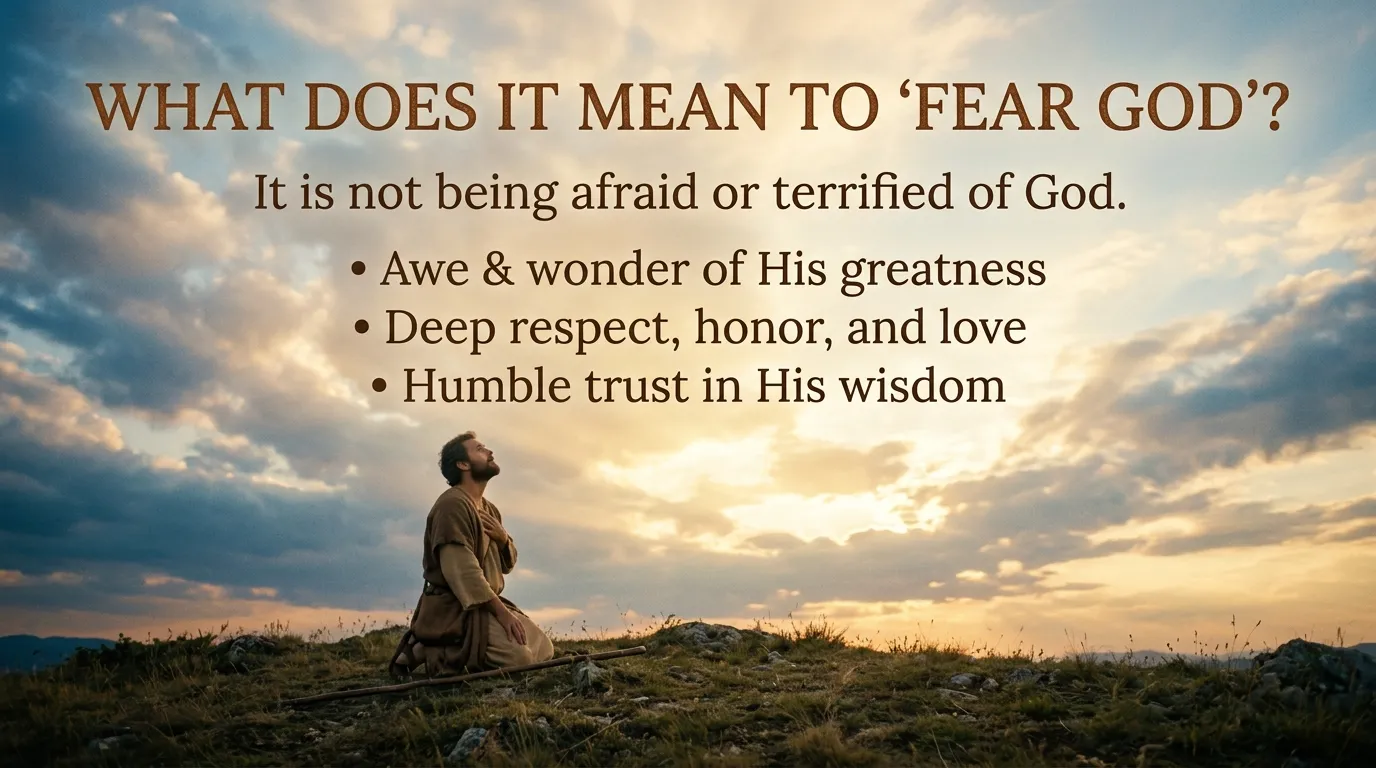
At its most basic level, to fear God means to recognize that He is holy, powerful, and worthy of reverence. The Bible does sometimes describe people being afraid in God’s presence, especially when they encounter His power or face the seriousness of their wrongdoing.
Yet the phrase “fear God” often carries a wider meaning. It includes respect for God’s authority, a willingness to listen to His commands, and an understanding that human choices matter before Him. is not simply an emotion. It is an attitude that affects how a person thinks, speaks, and acts.
The spiritual meaning
Spiritually, fearing God means taking Him seriously while recognizing His greatness, goodness, and authority. It involves humility, worship, obedience, and a desire to turn away from evil.
A person who fears God does not assume that personal wishes matter more than God’s wisdom. Instead, that person seeks to understand what is right and to live accordingly.
This fear can exist alongside love. Deuteronomy 10:12 connects fearing God with loving Him, serving Him, and walking in His ways. The Bible does not present reverence and love as enemies.
For Christians, this means approaching God with both confidence in His grace and respect for His holiness. Love does not make God less worthy of reverence, and reverence does not require a person to believe that God is cruel or unpredictable.
The biblical significance
Fearing God is a central theme in Scripture because it shapes the way people respond to Him.
- Wisdom: Proverbs 1:7 connects the fear of the Lord with knowledge.
- Obedience: Deuteronomy 10:12–13 joins reverence with following God’s commands.
- Worship: Psalm 96:9 calls worshipers to honor the Lord in the splendor of His holiness.
- Moral choices: Proverbs 8:13 connects the fear of the Lord with hating evil.
- Faithfulness: Ecclesiastes 12:13 summarizes human responsibility as fearing God and keeping His commandments.
- Christian living: First Peter 1:17 calls believers to live with reverent fear during their time on earth.
These themes show that fearing God is not an isolated feeling. It influences a person’s understanding of wisdom, worship, morality, and responsibility.
Key Scripture reference
Proverbs 1:7 is one of the clearest starting points: “The fear of the LORD is the beginning of knowledge” (KJV).
The verse introduces the book’s emphasis on wisdom. A wise person does not assume that personal judgment is the highest authority. Instead, the person begins by recognizing God and remaining open to His instruction.
Deuteronomy 10:12–13 adds an important balance. It connects fearing God with loving Him, serving Him, and obeying His commands. Together, these passages show that biblical fear includes reverence and a response of faithful living.
Bible Hub
+1
Historical and Biblical Context 🏺
Fearing God in the Old Testament
The Old Testament often describes fearing God as part of Israel’s covenant relationship with Him. God had delivered Israel from Egypt, given the people His law, and called them to live as His people.
In Deuteronomy 6:2, the Israelites are instructed to fear the Lord and keep His commands. Deuteronomy 10:12–13 brings together fear, love, service, and obedience. These ideas belong together in the passage.
The wisdom books also place great importance on the fear of the Lord. Proverbs 9:10 says that the fear of the Lord is the beginning of wisdom. Psalm 111:10 expresses a similar theme, connecting the fear of the Lord with wisdom and understanding.
The prophets also warned against pretending to honor God while living unjustly. Reverence for God should shape the way people treat others, keep promises, and respond to correction.
Fearing God in the New Testament
The New Testament continues this theme while teaching about God’s grace through Jesus Christ.
Jesus teaches that people should love God with all their heart, soul, and mind (Matthew 22:37). The apostles also call believers to reverence and faithful living. First Peter 1:17, for example, encourages Christians to live with reverent fear, remembering that God judges impartially.
Acts 9:31 describes the early Church as living in the fear of the Lord and the encouragement of the Holy Spirit. This pairing is important: reverence for God and the Spirit’s encouragement are not presented as opposites.
The New Testament also teaches that God’s perfect love casts out fear in a particular context. First John 4:18 speaks about fear connected with punishment. It does not mean believers should treat God casually or abandon reverence. Rather, confidence in God’s love can free them from the terror of condemnation.
Cultural understanding in biblical times
In the ancient world, people often understood kings and rulers as figures who deserved honor and respect. Approaching a ruler carelessly could have serious consequences.
The Bible uses language of reverence to express God’s unique authority, but it also presents Him as more than an earthly king. He is the Creator, judge, covenant Lord, and source of life.
For Israel, fearing God meant recognizing His authority over the whole community. It was not just a private religious feeling. It shaped justice, worship, family life, and the way people treated those who were vulnerable.
This background helps explain why biblical writers so often connect fear of God with obedience and moral responsibility.
Is “Fear God” Mentioned in the Bible? 📜
Yes. The command and theme appear throughout both the Old and New Testaments.
Here are some important examples:
- Deuteronomy 10:12: Israel is told to fear God, walk in His ways, love Him, and serve Him.
- Psalm 111:10: The fear of the Lord is connected with wisdom.
- Proverbs 1:7: The fear of the Lord is the beginning of knowledge.
- Ecclesiastes 12:13: The book concludes by calling people to fear God and keep His commandments.
- Matthew 10:28: Jesus distinguishes fear of those who can harm the body from reverence for God, who has ultimate authority.
- Acts 10:34–35: Peter recognizes that God does not show favoritism and that people from every nation who fear Him and do what is right are acceptable to Him.
- 1 Peter 2:17: Believers are told to honor everyone, love the family of believers, fear God, and honor the king.
The theme matters because it challenges people to place God’s authority above pride, selfishness, and human approval.
It also reminds readers that fearing God is not limited to one book or one group of biblical characters. It is a recurring part of Scripture’s teaching about wise and faithful living.
When reading any of these verses, consider the surrounding passage. Ask whether the author is discussing wisdom, worship, judgment, obedience, or courage. That context will help you understand the specific meaning of fear in each verse.
Spiritual Meaning and Symbolism of Fearing God ❤️
Reverence rather than constant terror
The Bible’s teaching about fearing God includes a serious awareness of His holiness and authority. However, it should not be reduced to constant terror.
When Moses encountered God’s power at Mount Sinai, the people were afraid. In Exodus 20:20, Moses tells them not to be afraid in the immediate sense of terror, while explaining that the fear of God should remain before them to keep them from sinning. The passage shows that fear can have different meanings even within one scene.
The broader lesson is that reverence should guide people away from wrongdoing. It should not lead them to believe that God is always looking for a reason to reject them.
Humility rather than pride
Fearing God means recognizing that human knowledge and power have limits. A person cannot know everything or control every outcome.
This recognition can produce humility. Instead of assuming that every personal opinion is right, a person who reveres God remains willing to learn, receive correction, and admit mistakes.
Proverbs repeatedly connects wisdom with listening to instruction. The fear of God encourages a teachable spirit because it places God’s wisdom above human pride.
Obedience rather than empty words
A person may say that they respect God but ignore His commands. Scripture challenges that separation between words and actions.
Ecclesiastes 12:13 links fearing God with keeping His commandments. Deuteronomy 10:12 connects it with walking in God’s ways, loving Him, and serving Him.
This does not mean Christians earn God’s grace by achieving perfect obedience. It means that reverence should affect how people live. A sincere response to God includes a willingness to turn away from wrong choices and seek what is good.
Love rather than a false choice
Some people think they must choose between loving God and fearing Him. Scripture often brings the two together.
Deuteronomy 10:12 places fear and love in the same sentence. Psalm 130:4 says that forgiveness is with God so that He may be feared. In that context, God’s mercy does not make reverence unnecessary. It gives people reason to honor Him.
For Christians, this balance is important. God’s love can give confidence and comfort, while His holiness calls for respect and faithfulness.
Fear of God vs. Fear of Punishment 📊
These ideas can overlap, but they are not identical.
| Aspect | Reverential fear of God | Fear of punishment |
| Main focus | God’s holiness, authority, and worth | The possibility of suffering a penalty |
| Typical response | Worship, humility, obedience, and trust | Anxiety, dread, or concern about consequences |
| Biblical connection | Proverbs 1:7; Deuteronomy 10:12 | 1 John 4:18 discusses fear connected with punishment |
| Relationship with love | Can exist alongside love for God | May involve distress rather than loving trust |
| Long-term direction | Encourages wisdom and faithful living | Can become overwhelming if driven by constant dread |
This table is a guide, not a claim that every biblical use of “fear” fits neatly into one category. The meaning depends on the passage.
A healthy biblical understanding takes sin and judgment seriously while also recognizing God’s mercy. It does not encourage people to live in endless panic or assume that every hardship proves God is angry with them.
10 Bible Verses About Fearing God 📖
1. Proverbs 1:7 — The beginning of knowledge
Proverbs 1:7 says that the fear of the Lord is the beginning of knowledge. The verse introduces a book that teaches readers to seek wisdom, accept correction, and make good choices.
The point is not that a person must feel frightened before learning anything. Instead, wisdom begins with recognizing God’s authority and being willing to learn from Him. The verse contrasts this attitude with the foolishness of rejecting instruction.
Practical lesson: Begin decisions with humility. Rather than relying only on your own opinions, seek biblical wisdom and remain open to correction.
Bible Hub
+1
2. Deuteronomy 10:12–13 — Fear God, love Him, and obey Him
Moses asks Israel what God requires of His people. The answer brings together fearing the Lord, walking in His ways, loving Him, serving Him, and keeping His commands.
This passage makes it difficult to define biblical fear as simple terror. Fear belongs alongside love and service. It reflects a relationship in which God’s people recognize His authority and respond with loyalty.
Practical lesson: Consider how reverence for God shapes daily choices. Faith is not only a feeling or a statement of belief. It should influence the way you act and treat others.
Bible Gateway
+1
3. Psalm 111:10 — Fear of the Lord and wisdom
Psalm 111:10 connects the fear of the Lord with the beginning of wisdom. It also praises those who follow God’s instructions and gain understanding.
The psalm presents wisdom as more than intelligence. A person may know many facts and still make harmful choices. Biblical wisdom involves recognizing God and learning to live in a way that reflects His character.
Practical lesson: Knowledge becomes more useful when it guides good decisions. Seek understanding that helps you act with honesty, fairness, patience, and respect for God.
4. Ecclesiastes 12:13 — The conclusion of the matter
At the end of Ecclesiastes, the writer summarizes the matter by calling people to fear God and keep His commandments. The book has considered life’s pleasures, work, achievements, limits, and uncertainties.
The closing statement directs readers toward a life shaped by reverence and responsibility. Human achievements cannot answer every question or give people control over everything. The writer places faithful living at the center of the conclusion.
Practical lesson: Do not measure a meaningful life only by success, possessions, or recognition. Consider whether your choices honor God and reflect the values taught in Scripture.
Bible Hub
+1
5. Exodus 20:20 — Fear that keeps people from sin
After the people witness the signs at Mount Sinai, Moses explains that they should not give way to terror, yet the fear of God should remain before them to keep them from sinning.
The verse illustrates the difference between panic and reverence. Moses reassures the people while also emphasizing that God’s holiness deserves serious attention.
Practical lesson: Let reverence guide your conscience without allowing fear to control every part of your life. Take wrongdoing seriously, but remember that the biblical call is to faithful living, not constant panic.
6. Proverbs 8:13 — To fear God is to hate evil
Proverbs 8:13 connects the fear of the Lord with hating evil, including pride, arrogance, and corrupt speech. The verse shows that reverence has a moral effect.
Fearing God is not merely attending worship or using religious words. It involves recognizing that certain actions and attitudes oppose what is right. The verse especially challenges pride, which can make people unwilling to admit their faults.
Practical lesson: Examine the habits you excuse. Ask whether your words, attitudes, and decisions reflect humility and goodness. Reverence for God should encourage you to turn away from harmful behavior.
7. Psalm 34:9 — Fear the Lord and trust His goodness
Psalm 34:9 calls God’s holy people to fear the Lord and then speaks of those who fear Him lacking nothing. The psalm celebrates God’s care and invites people to seek Him.
This verse should not be treated as a guarantee that faithful people will never face hardship or material need. The psalm itself discusses trouble and God’s deliverance. Its wider message encourages trust in God’s care rather than promising a life free from difficulty.
Practical lesson: Seek God with reverence and bring your needs to Him honestly. Trust His goodness without assuming that faith guarantees a trouble-free life.
8. Matthew 10:28 — Fear God rather than people
Jesus tells His followers not to fear those who can kill the body but cannot destroy the soul. He directs their attention to God, whose authority is greater than human power.
The passage appears as Jesus prepares His disciples for opposition. He is not teaching them to ignore danger. He is teaching them that human threats should not have the final say over their faithfulness.
Practical lesson: Do not let the desire for approval lead you to abandon what is right. Consider whose opinion is shaping your choices, and remember that faithfulness to God matters more than pleasing every person.
9. Acts 9:31 — The early Church lived in the fear of the Lord
Acts 9:31 describes the Church in a time of peace and growth, living in the fear of the Lord and in the encouragement of the Holy Spirit.
The two ideas appear together. Reverence for God did not prevent the believers from receiving encouragement. Instead, the verse presents a community shaped by respect for God and strengthened by the Spirit.
Practical lesson: A faithful Christian community should encourage both reverence and hope. Respect for God should not be used to frighten people into silence; it should help a community grow in faith, wisdom, and love.
10. 1 Peter 2:17 — Fear God and honor others
Peter instructs believers to honor everyone, love the family of believers, fear God, and honor the king. The verse places reverence for God within a list of responsibilities toward other people and society.
The order is meaningful: Christians are called to show respect to others while giving God a unique place of reverence. Human leaders may deserve appropriate honor, but they do not take God’s place.
Practical lesson: Reverence for God should influence how you treat people. Respect, love, and faithfulness belong together. Do not use religious conviction as an excuse to mistreat others.
A Biblical Case Study: Joseph Shows His Fear of God 🤝
Joseph’s story in Genesis offers a practical example of how fearing God can shape a person’s choices.
Joseph was sold by his brothers and taken to Egypt. Later, he served in the household of Potiphar. When Potiphar’s wife tried to persuade him to commit adultery with her, Joseph refused. He recognized that giving in would be a serious wrong before God (Genesis 39:7–9).
Joseph’s response is especially important because he faced pressure in a private setting. He could have focused only on whether anyone would discover his actions. Instead, he considered his responsibility before God.
His words in Genesis 42:18 provide another clear example. When Joseph, then serving as a ruler in Egypt, spoke to his brothers, he said that he feared God. In that scene, he also told them to do what was right so they could live.
These passages show that fearing God can influence both personal integrity and how someone treats others.
Joseph’s story does not mean that every person who fears God will avoid suffering. Joseph himself experienced betrayal and imprisonment. His example shows something different: reverence for God can guide a person’s decisions even when life is unfair.
The lesson: Fearing God means choosing what is right because God matters, not simply because people might be watching.
Life Lessons for Christians Today 🌱
1. Make God the starting point for decisions
Before making an important choice, consider what Scripture teaches about honesty, love, justice, and responsibility. You may not find a verse for every modern situation, but biblical principles can help guide your judgment.
2. Turn away from wrongdoing
Proverbs 8:13 connects fearing God with hating evil. This calls for more than avoiding public scandal. It includes resisting dishonesty, cruelty, pride, and choices that harm others.
3. Accept correction with humility
A person who reveres God should remain willing to learn. When Scripture challenges your attitude or behavior, take time to consider what needs to change instead of dismissing the message.
4. Combine reverence with love
Deuteronomy 10:12 brings fear and love together. Christians can approach God with respect while also trusting His mercy. Reverence should deepen a relationship with God, not turn every prayer into an expression of panic.
5. Treat other people with dignity
First Peter 2:17 connects fearing God with honoring others. Your faith should influence your words, actions, and treatment of people who disagree with you. Religious conviction is not a reason to act with arrogance or cruelty.
Common Misunderstandings About Fearing God ⚠️
Misunderstanding 1: Fearing God means being terrified of Him all the time
The Bible sometimes uses fear to describe terror, but it also uses the word for reverence and awe. The meaning depends on the context.
The fear of the Lord in Proverbs is closely connected with wisdom. It encourages people to respect God’s authority and listen to His instruction, not to live in constant panic.
Misunderstanding 2: If I love God, I do not need to fear Him
Scripture places love and fear together. Deuteronomy 10:12 calls Israel to fear God, love Him, and serve Him.
Love does not remove God’s holiness or authority. Instead, love and reverence can work together in a relationship marked by trust, humility, and obedience.
Misunderstanding 3: Fearing God guarantees a successful life
The Bible does not promise that people who fear God will avoid every illness, loss, financial problem, or injustice. Faithful people in Scripture experienced serious suffering.
Fearing God is about honoring Him and living wisely. It should not be treated as a formula for guaranteed wealth, comfort, or success.
Misunderstanding 4: God’s love means sin does not matter
The Bible teaches God’s mercy, but it also calls people to turn away from wrongdoing. Ecclesiastes 12:13 connects fearing God with keeping His commandments.
Grace should not be used as an excuse to harm others or ignore what is right. Reverence includes taking moral choices seriously.
Misunderstanding 5: Fearing God means obeying every human leader without question
First Peter 2:17 says to honor the king, but it also says to fear God. These instructions do not make human leaders equal to God.
Scripture recognizes God’s higher authority. Respect for people should not require abandoning faithfulness, conscience, or what is right before God.
Expert Insight: Read “Fear” in Its Context 💡
When studying a verse about fearing God, do not assume the word always means the same thing.
Read the surrounding verses and ask what the author emphasizes. Is the passage about danger, judgment, worship, wisdom, or obedience? Compare it with Proverbs 1:7, Deuteronomy 10:12–13, and 1 John 4:18.
These passages help you see that biblical fear can include reverence, moral seriousness, and freedom from the terror of punishment through God’s love. This approach gives a fuller picture than relying on one verse or one English definition.
FAQs
1. What does it mean to fear God spiritually?
Spiritually, fearing God means recognizing His holiness, authority, and worth. It encourages reverence, humility, obedience, and a desire to turn away from evil. It does not mean living in constant terror. Scripture often connects the fear of God with wisdom and faithful living.
2. Is fearing God the same as being afraid of God?
Not always. Biblical fear can mean dread in some passages and reverence or awe in others. Proverbs 1:7 connects fearing God with wisdom, while 1 John 4:18 discusses fear associated with punishment. The context helps determine the meaning.
3. Why does the Bible say the fear of God is the beginning of wisdom?
Proverbs 1:7 teaches that wisdom begins by recognizing God and taking His instruction seriously. People who believe they need no correction can make foolish choices. Reverence encourages humility, learning, and a willingness to follow what is right.
4. Can I love God and still fear Him?
Yes. Deuteronomy 10:12 places fear, love, service, and obedience together. Biblical reverence does not cancel love. Christians can trust God’s goodness and mercy while also recognizing His holiness and taking His guidance seriously.
5. How can I develop the fear of God?
Read Scripture in context, pray for wisdom, learn from correction, and consider how your choices affect others. Proverbs 8:13 connects the fear of the Lord with turning away from evil. The goal is sincere reverence that shapes daily life, not constant anxiety.
Conclusion
To understand what it means in the Bible to fear God, look at the way Scripture connects reverence with wisdom, love, obedience, and moral responsibility.
Fearing God means recognizing His holiness and authority while taking His guidance seriously.
Proverbs 1:7 calls the fear of the Lord the beginning of knowledge. Deuteronomy 10:12 connects it with loving and serving God, while Ecclesiastes 12:13 places it at the heart of faithful living.
For Christians, this does not mean living in constant dread. God’s love and mercy give believers reason for trust, while His holiness calls them to humility and obedience.
Let your reverence for God shape the choices you make when no one is watching, the way you treat others, and your willingness to learn from Scripture.
Seek His wisdom with a humble heart, trust His goodness, and allow your faith to lead you toward a life marked by love and integrity.

Hello, I’m Samuel Carter. My interest in biblical studies comes from a lifelong desire to understand the wisdom and teachings contained within Scripture. I particularly enjoy researching biblical numbers, patterns, and themes that appear throughout God’s Word.