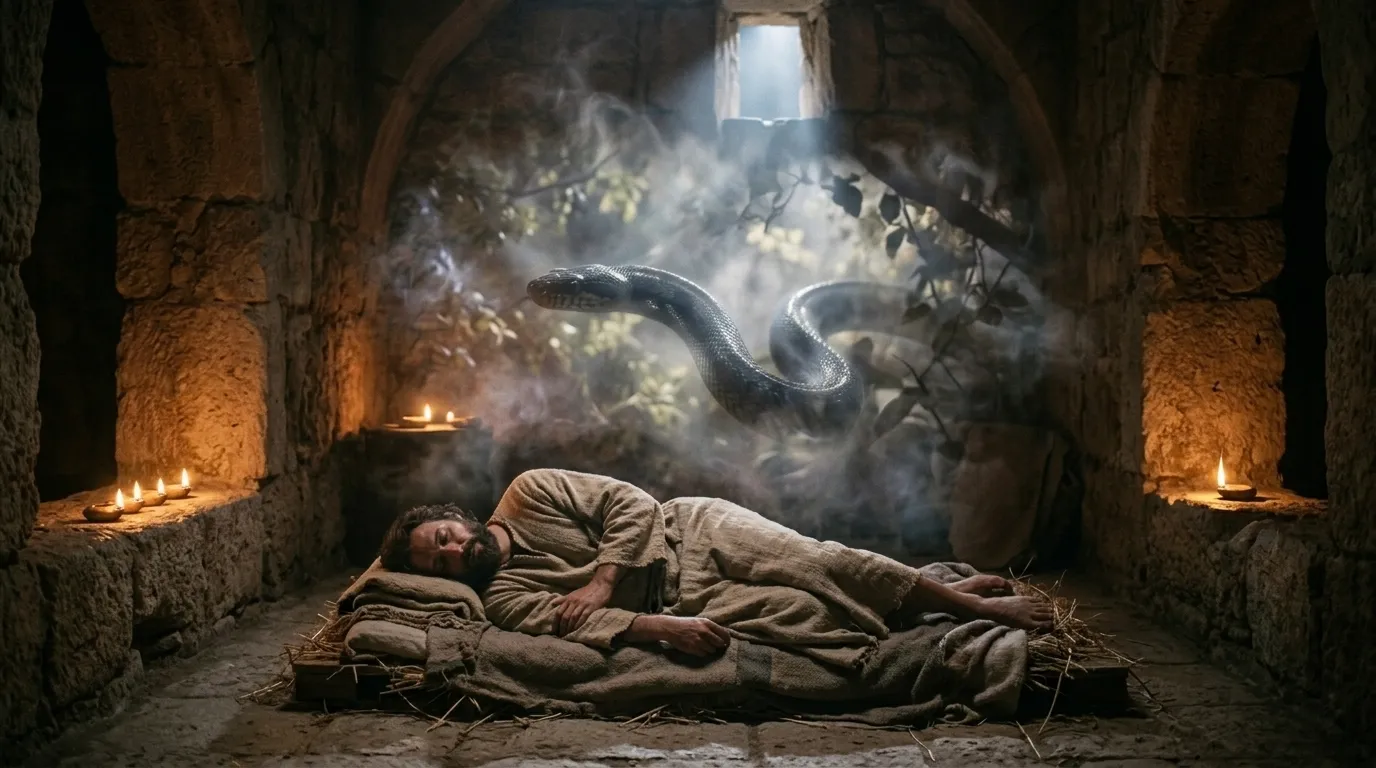
Dreaming about snakes can leave you feeling afraid, confused, or curious about what the dream might mean. You may wonder whether the snake represents danger, temptation, a hidden problem, or a message from God.
These questions are understandable, especially when the dream feels vivid or stays in your mind after you wake up.
The Bible gives snakes several important meanings. In Genesis, the serpent is connected with deception and temptation. In other passages, snakes appear in stories about danger, God’s judgment, healing, and wisdom.
These different uses show why a single meaning cannot explain every biblical reference to a snake.
The biblical meaning of snakes in a dream needs careful thought. Scripture contains examples of symbolic dreams, but it does not teach that every snake dream has a fixed spiritual meaning. A dream alone cannot prove that someone is against you or that God is warning you about a specific event.
By studying Scripture in context, you can explore these symbols while seeking God’s guidance with wisdom, peace, and discernment.
Did You Know? 🔍
The Hebrew noun nāḥāš (נָחָשׁ) means “snake” or “serpent.” It appears in Genesis 3:1, where the serpent speaks to Eve. The Hebrew Bible also uses serpents in other settings, including the bronze serpent in Numbers 21:8–9. The same animal can therefore appear in different biblical contexts rather than carrying one universal meaning. provides the word’s lexical information.
Quick Answer: What Is the Biblical Meaning of Snakes in a Dream? 📖
The biblical meaning of snakes in a dream is not fixed, because Scripture does not give a universal code for interpreting dreams about snakes. Biblical serpents can represent deception, temptation, danger, wisdom, or healing, depending on the passage. Consider these themes prayerfully, but do not assume that your dream predicts an event or proves a spiritual attack.
Biblical Meaning of Snakes in a Dream ✨
The Hebrew Meaning of Snakes
The Hebrew word nāḥāš means a snake or serpent. It appears in several Old Testament passages, including Genesis 3 and Numbers 21.
In Genesis 3, the serpent is described as crafty and plays a role in tempting the woman to disobey God’s command. This story makes the serpent an important biblical image associated with deception and temptation.
However, the word itself simply identifies a serpent. It does not automatically mean that every snake represents Satan, an enemy, or an evil influence. The surrounding passage determines how the image functions.
This distinction matters when interpreting a dream. The Hebrew meaning of the animal can help you understand Scripture, but it cannot establish the meaning of a modern dream on its own.
The Greek Meaning of Snakes
The Greek noun ophis (ὄφις) means “snake” or “serpent.” It appears in the New Testament in passages such as Matthew 10:16 and Revelation 12:9.
Jesus uses the image of a serpent when teaching His disciples to be wise while remaining innocent. Revelation 12:9 identifies the ancient serpent with the Devil and Satan, connecting the serpent image with spiritual opposition in that passage.
These examples show that biblical symbolism depends on context. A serpent may represent a harmful spiritual influence in one passage, while the image of a serpent may illustrate wisdom in another.
The Greek word does not provide a secret formula for decoding dreams. Instead, it helps readers understand how New Testament writers use the image.
The Literal Meaning of a Snake Dream
At the most basic level, a snake dream is a dream in which a snake appears. The snake may be calm, aggressive, hidden, colorful, or moving away from you.
The Bible does not assign a separate spiritual meaning to every color, size, or action a snake might display in a dream. Claims that a black snake always means betrayal or that a green snake always means financial success go beyond what Scripture clearly teaches.
A careful Christian interpretation begins by distinguishing the dream itself from the meaning someone assigns to it.
The Spiritual Meaning of Snakes in a Dream
Some Christians reflect on snake dreams through biblical themes such as temptation, deception, wisdom, danger, or healing. These themes can provide starting points for prayer and reflection, but they are not guaranteed interpretations.
For example, if a dream reminds you of dishonesty in a relationship, you can consider whether there are real concerns that need an honest conversation. The dream alone, however, is not proof that someone is lying.
Likewise, a frightening dream may lead you to pray for peace. It does not mean that something terrible is certain to happen.
The spiritual meaning should be approached with humility. Seek truth through Scripture, consider the facts of your situation, and avoid making major decisions based only on a dream.
The Biblical Significance of Serpents
Serpents have several roles in Scripture. Genesis 3 presents a serpent associated with deception. Numbers 21 describes poisonous snakes and a bronze serpent through which God provides a means for the Israelites to look and live. Matthew 10:16 uses serpent imagery to illustrate prudence.
These examples are important because they prevent an overly simple interpretation.
The Bible does not say that every serpent is a symbol of evil in every setting. Nor does it say that seeing a snake in a dream guarantees spiritual growth or healing. The passage, its purpose, and its context matter.
A Key Scripture Reference: Genesis 3:1–5
Genesis 3:1–5 tells how the serpent questions God’s command and contradicts God’s warning about the forbidden fruit. The conversation introduces deception and temptation into the story.
Because of this account, many Christians associate snakes with temptation, lies, or spiritual danger. That association has a genuine biblical basis in this passage.
Yet Genesis 3 is a narrative about the events in Eden, not a universal guide to every dream involving a snake. Its message is best applied by examining temptation, truth, and obedience in real life rather than assuming that a dream predicts a hidden enemy.
Historical and Biblical Context of Snakes 🏺
Snakes in the Old Testament
Snakes appear in several different Old Testament settings.
In Genesis 3, the serpent is involved in the temptation of Eve.
In Exodus 4:1–5, Moses’ staff becomes a serpent as part of the signs God gives him. The Numbers 21:4–9, poisonous snakes bite the Israelites after they speak against God.
These accounts have different purposes. One addresses disobedience, another demonstrates God’s power through Moses, and another deals with Israel’s rebellion and God’s provision.
The bronze serpent in Numbers 21 is especially important. God instructs Moses to make a bronze serpent and place it on a pole. Those who look at it after being bitten live. The story does not make snakes a universal symbol of healing; rather, it describes a particular act of God’s provision.
Snakes in the New Testament
The New Testament uses serpent imagery in several ways. Matthew 10:16 tells Jesus’ disciples to be wise as serpents and innocent as doves. This comparison shows that the image can illustrate a quality that is useful when understood in context.
In John 3:14–15, Jesus compares His being lifted up with Moses lifting up the bronze serpent in the wilderness. The passage points to the salvation associated with believing in Him.
Revelation 12:9, on the other hand, calls Satan the ancient serpent. Here the serpent represents spiritual opposition and deception.
These passages show that biblical writers use the same image to make different points. They do not establish that every dream about a snake carries a direct message from God.
How People in Biblical Times Viewed Snakes
Snakes were real animals that could pose a serious danger. Numbers 21 describes people suffering from poisonous bites, while Ecclesiastes 10:8 and 10:11 refer to the danger of snakes in ordinary life.
These real experiences help explain why serpents could serve as powerful images of danger or harm. Their ability to hide, strike, or bite made them useful illustrations in biblical teaching.
Ancient cultures also gave serpents religious and symbolic meanings. Biblical writers sometimes challenged the religious ideas around them and presented the serpent within the Bible’s own account of God, creation, sin, and redemption.
Historical context helps explain the imagery. It does not prove that a modern dream has the same meaning as an ancient biblical story.
Is the Meaning of Snakes in Dreams Mentioned in the Bible? 📜
The Bible mentions snakes and records dreams and visions, but it does not provide a complete system for interpreting dreams about snakes.
In Genesis 40 and 41, Joseph interprets dreams in specific situations. In Daniel 2, Daniel explains a king’s dream after seeking God’s help. These accounts show that dreams can have a role in particular biblical narratives. They do not teach that every dream must contain a divine message.
The Bible also warns against false spiritual claims and encourages believers to seek truth. First John 4:1 tells Christians to test the spirits rather than believe every spiritual claim without examination.
Therefore, if you dream about a snake, you can reflect on biblical themes and pray for wisdom. But you should not assume that the dream reveals a curse, identifies an enemy, predicts death, or confirms that someone is practicing witchcraft.
A Christian approach combines faith with humility. Let Scripture guide your understanding, and look for real evidence before drawing conclusions about people or events.
Spiritual Meaning and Symbolism of Snakes ❤️
1. Temptation and Deception
Genesis 3 provides the clearest biblical link between a serpent and temptation. The serpent challenges what God has said and encourages disobedience.
If your dream makes you think about temptation, consider whether you face a real choice involving honesty, faithfulness, or obedience. Use the reflection as an opportunity to examine your actions.
Do not use the dream to accuse another person of deception without evidence. The biblical lesson concerns the danger of lies and disobedience, not a guarantee that a hidden deceiver is near you.
2. Danger and the Need for Wisdom
Numbers 21 describes the serious danger posed by poisonous snakes. In everyday biblical imagery, a serpent can therefore remind readers of harm that requires care.
If you are already facing a difficult situation, a snake dream might prompt you to think carefully about your choices. Consider practical risks, seek advice from trustworthy people, and avoid rushing into decisions.
The dream itself is not proof of danger. Wisdom means responding to facts and sound judgment, not allowing fear to control your life.
3. Wisdom and Discernment
Matthew 10:16 offers a different use of serpent imagery. Jesus tells His disciples to be wise as serpents and innocent as doves.
In this context, the serpent illustrates prudence rather than evil. The verse encourages believers to be alert and thoughtful without becoming dishonest or harmful.
If a snake dream leads you to think about wisdom, ask whether you need to approach a situation more carefully. This is a possible personal reflection, not a confirmed interpretation of the dream.
4. Healing and God’s Provision
Numbers 21:8–9 describes the bronze serpent God instructed Moses to make during the Israelites’ journey. John 3:14–15 later connects this event with Jesus’ being lifted up.
These passages connect the serpent image with God’s provision in a specific story. They do not establish that a snake in a dream promises physical healing, financial gain, or a miracle.
You can still use these passages to reflect on God’s power to provide hope in difficult circumstances. Let the biblical account guide your faith without treating the dream as a guarantee.
5. Spiritual Conflict
Revelation 12:9 identifies the ancient serpent with Satan. This gives the serpent a clear connection with spiritual opposition in that passage.
Some Christians may think about this imagery after a frightening dream. However, the dream alone cannot establish that a spiritual attack is taking place.
A balanced response is to pray, remain grounded in Scripture, and continue practicing honesty, love, and self-control. You do not need to live in fear or search for an enemy because of a dream.
Biblical Symbolism of Snakes Compared With Modern Dream Claims 📊
| Snake imagery | Biblical context | What you can reasonably conclude |
| Deception | Genesis 3:1–5 | The serpent participates in temptation and contradicts God’s warning. |
| Danger | Numbers 21:4–9 | Snake bites are a real threat in the story. |
| Wisdom | Matthew 10:16 | Serpent imagery illustrates prudence. |
| Healing and provision | Numbers 21:8–9 | God provides a means of survival in a specific event. |
| Spiritual opposition | Revelation 12:9 | The ancient serpent is identified with Satan in this passage. |
| A black snake in a dream | No universal biblical interpretation | Scripture does not assign it a fixed meaning. |
| A snake chasing you in a dream | No universal biblical interpretation | The dream does not prove that an enemy is pursuing you. |
This comparison separates what the Bible actually teaches from modern interpretations that may be popular but are not established by Scripture.
10 Bible Verses About Snakes and Their Meaning 📖
1. Genesis 3:1 — The Crafty Serpent
Genesis 3:1 introduces the serpent as more crafty than the other wild animals God had made. The serpent then begins a conversation with Eve about God’s command.
This verse introduces the theme of deception in the Eden story. It is a major reason why many Christians connect serpents with temptation and dishonesty.
Practical lesson: Examine ideas carefully and compare them with God’s Word. Do not assume that every thought, claim, or spiritual interpretation is true simply because it feels convincing.
2. Genesis 3:4–5 — Questioning God’s Word
In Genesis 3:4–5, the serpent contradicts God’s warning and offers Eve a different account of what will happen if she eats the forbidden fruit.
The passage shows how deception can work by creating doubt about God’s instructions and promising benefits without acknowledging the consequences.
Practical lesson: When a choice seems appealing, consider whether it agrees with biblical teaching and sound moral judgment. A snake dream does not prove that someone is deceiving you, but the passage can remind you to value truth.
3. Genesis 3:14–15 — Judgment and the Conflict With the Serpent
After the disobedience in Eden, God pronounces judgment on the serpent and describes hostility between the serpent and the woman, and between their offspring.
Many Christian traditions also understand Genesis 3:15 as pointing forward to Christ’s victory over evil. This is a longstanding Christian interpretation, although the verse’s immediate context describes the conflict that follows the events in Eden.
Practical lesson: The passage directs attention toward the seriousness of sin and the biblical hope that evil will not have the final word. It does not provide a code for interpreting every snake dream.
4. Exodus 4:2–5 — Moses’ Staff Becomes a Serpent
God tells Moses to throw his staff on the ground, where it becomes a serpent. Moses runs from it, but God instructs him to take it by the tail, and it becomes a staff again.
This sign helps establish Moses’ role in the mission to lead the Israelites out of Egypt. The serpent is part of a demonstration of God’s power, not simply a symbol of evil.
Practical lesson: Read the whole account before assigning meaning to a symbol. The setting and purpose of a biblical event are essential to understanding its message.
5. Numbers 21:8–9 — The Bronze Serpent
After poisonous snakes bite the Israelites, God tells Moses to make a bronze serpent and place it on a pole. Those who look at it after being bitten live.
The story presents God’s provision in a time of judgment and suffering. Jesus later refers to this event in John 3:14–15.
Practical lesson: This passage can remind Christians to seek God’s help during hardship. It should not be treated as a promise that a snake dream guarantees healing or that a particular ritual is needed.
6. Psalm 91:13 — Protection From Serpents
Psalm 91:13 uses imagery of lions and serpents to describe God’s protection over the person who trusts in Him. The surrounding psalm offers comfort and expresses confidence in God’s care.
Christians often turn to Psalm 91 during times of fear. Still, the passage should not be used to promise that believers will never experience harm. Its message is rooted in trust in God, not in decoding dreams.
Practical lesson: If a snake dream frightens you, use prayer and Scripture to seek comfort. You can trust God without assuming that the dream predicts an attack.
7. Proverbs 23:31–32 — The Serpent’s Bite
Proverbs 23:31–32 warns about the dangers associated with excessive wine and describes its eventual bite using the image of a serpent.
Here the serpent is part of a warning about harmful choices and their consequences. The passage uses vivid language to encourage self-control and wisdom.
Practical lesson: Reflect on whether any habit or decision in your life is causing harm. Do not interpret the verse as proof that a snake in your dream represents a specific person or event.
8. Matthew 10:16 — Wise as Serpents
Jesus tells His disciples to be wise as serpents and innocent as doves as He sends them out into a difficult world.
This verse is especially useful because it shows that serpent imagery can communicate a positive quality. Jesus encourages careful judgment without dishonesty or cruelty.
Practical lesson: Be alert, think before acting, and keep your integrity. If your dream makes you consider a difficult decision, seek wisdom rather than reacting out of fear.
9. John 3:14–15 — The Serpent and Jesus’ Mission
Jesus refers to Moses lifting up the bronze serpent in the wilderness and compares it with the Son of Man being lifted up. The passage points toward His death and the promise of eternal life for those who believe in Him.
This connection gives the earlier Old Testament story an important place in Christian understanding. It does not mean that every serpent image represents Jesus or that a snake dream predicts salvation.
Practical lesson: Read biblical symbols in light of the passage in which Jesus uses them. Let the focus remain on the message of faith and salvation rather than an unsupported dream interpretation.
10. Revelation 12:9 — The Ancient Serpent
Revelation 12:9 identifies the great dragon as the ancient serpent, the Devil and Satan, who deceives the world. This passage clearly connects serpent imagery with spiritual opposition and deception.
Because of this verse, Christians may associate snakes with evil. However, its meaning comes from the vision in Revelation and should not be applied automatically to every snake in every setting.
Practical lesson: Take biblical warnings about deception seriously, but do not assume a frightening dream proves that Satan is attacking you. Stay grounded in Scripture, prayer, and wise judgment.
A Biblical Case Study: Moses and the Bronze Serpent 🌿
The account in Numbers 21:4–9 is a helpful example of why biblical snake symbolism requires context.
During Israel’s journey through the wilderness, the people spoke against God and Moses. Poisonous snakes appeared, and many Israelites were bitten. The people acknowledged their wrongdoing and asked Moses to pray for them.
God then instructed Moses to make a bronze serpent and place it on a pole. Those who had been bitten could look at it and live.
At first, this story may seem surprising. If serpents were always symbols of evil, why would God use a bronze serpent in an act of provision? The answer lies in the specific purpose of the account. The serpent was part of God’s instruction to the people in that situation.
Jesus later referred to the event in John 3:14–15 to explain His own mission.
The lesson: Never interpret a biblical symbol without considering its setting. A snake may represent deception in one passage and appear in a story about God’s provision in another. A modern dream cannot be assigned a definite meaning merely because it contains the same image.
Life Lessons for Christians After a Snake Dream 🙏
1. Pray for Wisdom and Peace
If the dream troubles you, speak honestly with God about your feelings. Ask for wisdom to understand your concerns and peace to face the day ahead.
Prayer does not require you to decide that the dream was a supernatural message. It can simply be a way to bring your fear and questions before God.
2. Examine Your Life Without Becoming Suspicious
Consider whether the dream brings to mind a real concern, such as a difficult choice, a conflict, or a need for better boundaries. Address those issues based on facts and sound judgment.
Avoid accusing family members, friends, or colleagues because of a dream. A dream is not reliable evidence of another person’s intentions.
3. Read Scripture in Context
Read the full passage surrounding any verse that comes to mind. Genesis 3, Numbers 21, Matthew 10, and Revelation 12 use snake imagery in different ways.
Understanding these differences can help you avoid fearful or misleading interpretations.
4. Do Not Let Fear Control Your Decisions
A vivid dream may feel powerful, but it cannot by itself prove that a disaster, betrayal, or spiritual attack is coming.
If you have a real safety concern, respond to the evidence and seek appropriate help. Otherwise, you can acknowledge the dream and continue your normal responsibilities with calm judgment.
5. Seek Trusted Christian Guidance
If you remain troubled, consider speaking with a mature pastor or trusted Christian mentor who respects Scripture and does not use fear to control others.
A wise adviser will help you examine the biblical context instead of insisting that every detail has a secret meaning. If recurring nightmares disrupt your sleep or daily life, a qualified health professional can also help.
Common Misunderstandings About Snake Dreams ⚠️
Every Snake Dream Is a Warning From God
The Bible does not teach that every dream is a divine warning. Scripture records dreams that have special meaning, but it does not establish that all dreams are prophetic.
It is reasonable to pray and reflect, but do not treat a dream as a certain message without sound grounds.
Snakes Always Represent Satan
Genesis 3 and Revelation 12 connect serpents with deception and Satan. Other passages use snake imagery differently, including Matthew 10:16, where Jesus refers to serpent-like wisdom.
Therefore, the biblical meaning depends on context. The presence of a snake alone does not prove an evil spiritual influence.
A Snake Dream Proves Someone Is Jealous or Betraying You
There is no general biblical rule that a snake dream identifies a jealous friend, an unfaithful partner, or a hidden enemy.
If you have concerns about a relationship, consider real behavior and communicate wisely. Do not allow an unverified dream interpretation to damage an otherwise healthy relationship.
Snake Colors Have Fixed Biblical Meanings
The Bible does not provide a universal chart assigning spiritual meanings to black, white, green, yellow, or red snakes in dreams.
Such interpretations may appear in modern dream guides, but they should not be presented as established biblical teaching. Be honest about the difference between personal symbolism and what Scripture actually says.
A Frightening Dream Means You Lack Faith
Having a disturbing dream does not prove that your faith is weak or that God is displeased with you. Dreams can be influenced by many factors, and their cause is not always clear.
You can respond with prayer, Scripture, and practical care without blaming yourself or assuming that the dream has a spiritual cause.
Expert Insight: How to Interpret Snake Dreams Carefully 💡
Use three questions when reflecting on a snake dream.
First, what does the relevant Bible passage actually say? Second, what meaning comes from the passage’s context rather than modern dream traditions? Third, is there a real-life issue you can address through wisdom, prayer, and honest action?
Keep your conclusions modest. You may find a helpful lesson about temptation or prudence, but you may not discover a definite meaning. That is acceptable.
Christian discernment does not mean finding a hidden message in every event. It means seeking truth, testing claims, and choosing actions that reflect biblical wisdom.
FAQs
1. Is dreaming about snakes a warning from God?
Not necessarily. The Bible does not teach that every snake dream is a warning from God. You can pray for wisdom and reflect on biblical passages, but do not assume the dream predicts danger or reveals a hidden enemy.
2. What does a snake mean spiritually in Christianity?
Biblical snakes can symbolize deception, temptation, danger, wisdom, or other themes, depending on the passage. Genesis 3 and Revelation 12 connect serpents with deception, while Matthew 10:16 uses serpent imagery to illustrate wisdom.
3. Does dreaming about snakes mean spiritual attack?
A snake dream alone cannot prove that you are experiencing a spiritual attack. If the dream frightens you, pray, read Scripture, and seek wise guidance. Avoid fear-based claims that identify enemies or predict harm without evidence.
4. What does a black snake in a dream mean in the Bible?
The Bible does not give black snakes in dreams a fixed spiritual meaning. Interpretations that link a specific snake color with betrayal, witchcraft, or financial loss are not established biblical teachings. Consider the dream carefully without treating its color as a prophecy.
5. What should Christians do after dreaming about snakes?
Christians can pray for peace, read relevant passages, and reflect on any real concerns the dream brings to mind. Avoid making major decisions based only on a dream. If disturbing dreams keep affecting your sleep, consider seeking professional support.
Conclusion:
The biblical meaning of snakes in a dream cannot be reduced to one answer.
Scripture presents serpents in different ways, including as symbols of deception in Genesis 3, a sign used in God’s provision in Numbers 21, an image of wisdom in Matthew 10:16, and a symbol of spiritual opposition in Revelation 12:9.
These passages can help you reflect on your dream, but they do not provide a universal code for predicting events or identifying hidden enemies. A dream is not proof of a curse, betrayal, or spiritual attack.
If you have dreamed about a snake, respond with prayer, careful Bible study, and sound judgment. Ask God for wisdom rather than allowing fear to guide your choices.
Consider real-life concerns honestly, and seek trusted help when needed.
Above all, remember that Christian faith calls you to pursue truth, love, and peace. You can explore the dream’s possible significance without assuming that it carries a definite message from God.

Hello, I’m Samuel Carter. My interest in biblical studies comes from a lifelong desire to understand the wisdom and teachings contained within Scripture. I particularly enjoy researching biblical numbers, patterns, and themes that appear throughout God’s Word.