You chase after something for years, a promotion, a purchase, a goal, only to feel strangely empty once you finally get it.
That hollow feeling has a name Scripture uses again and again: vanity.
King Solomon, one of the wisest and wealthiest men who ever lived, wrote an entire book wrestling with this exact feeling.
The word “vain” also shows up in one of the Ten Commandments, warning against misusing God’s own name.
This article explores the vain meaning in the Bible, its Hebrew roots, and what Scripture offers instead of emptiness.
Did You Know? 🔍
The Hebrew word hevel, translated “vanity” in Ecclesiastes, appears 38 times in that single short book, more than in any other book of the Bible, and literally means “breath” or “vapor.”
Quick Answer 🎯
What Does Vain Mean in the Bible?
Vain in the Bible describes something empty, futile, or without lasting substance, from the Hebrew hevel (“breath” or “vapor”) used throughout Ecclesiastes, and shav (“emptiness” or “falsehood”) used in the Third Commandment against taking God’s name in vain. Both words point to a life or action lacking real, lasting value.
Biblical Meaning of Vain 📖
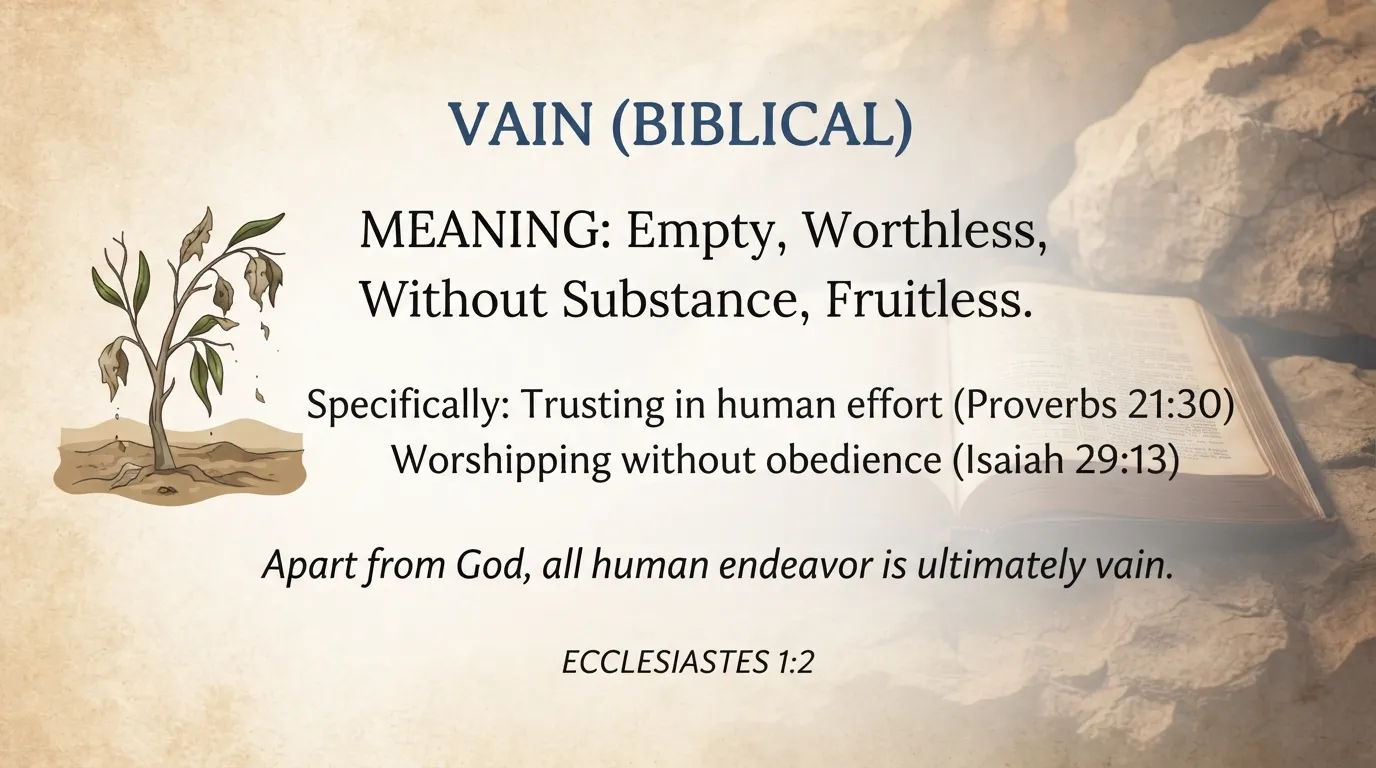
Vain describes emptiness in two distinct but related biblical senses: fleeting meaninglessness and false, careless misuse.
Hebrew Meaning
Two main Hebrew words are translated “vain” in English Bibles: hevel (הֶבֶל), meaning “breath,” “vapor,” or “mist,” and shav (שָׁוְא), meaning “emptiness,” “falsehood,” or “worthlessness.”
Hevel pictures something you can feel is real but cannot hold onto, like breath on a cold morning.
Shav carries a stronger sense of falseness, describing something hollow, misleading, or careless.
Literal Meaning
Literally, vain describes something that looks substantial but ultimately produces no lasting result or true value.
Spiritual Meaning
Spiritually, vanity represents the emptiness of pursuing anything, wealth, pleasure, achievement, apart from genuine relationship with God.
Biblical Significance
Ecclesiastes uses vanity as its central theme, testing whether life’s pursuits offer lasting meaning without God at the center.
Key Scripture Reference
Ecclesiastes 1:2 declares, “Vanity of vanities, says the Preacher, vanity of vanities! All is vanity.”
Historical & Biblical Context 🏛️
Understanding vain’s biblical meaning requires looking at how this word functions across different parts of Scripture.
Old Testament Usage
Ecclesiastes, traditionally attributed to Solomon, uses hevel repeatedly to examine wealth, wisdom, pleasure, and labor.
The Third Commandment, “You shall not take the name of the Lord your God in vain” (Exodus 20:7), uses the different word shav.
This commandment forbids using God’s name carelessly, falsely, or for empty, self-serving purposes.
New Testament Relevance
While the specific Hebrew vocabulary doesn’t carry directly into Greek, similar themes of emptiness appear throughout the New Testament.
Ephesians 4:17 warns against living “in the futility of their minds,” echoing Ecclesiastes’ concern with empty pursuit.
James 1:26 warns that unchecked speech makes a person’s religion “worthless” or vain, tying the theme to genuine faith.
Cultural Understanding in Biblical Times
In the ancient Near East, taking an oath by a deity’s name carried serious weight, since names were believed to hold real power and identity.
Misusing God’s name, whether through false oaths or careless speech, was considered a direct offense against His character and reputation.
Is Vain Mentioned in the Bible? 📜
Yes, the concept appears throughout Scripture, especially concentrated in Ecclesiastes and the Ten Commandments.
Where It Appears
Key passages include Exodus 20:7, Ecclesiastes 1:2 and throughout that book, Psalm 39:5, and James 1:26.
Why It Matters
Its frequent appearance across very different biblical books shows vanity as a genuine, recurring concern throughout Scripture.
What It Teaches
It teaches that both careless speech about God and life pursued apart from Him ultimately produce emptiness rather than lasting satisfaction.
Spiritual Meaning & Symbolism 🕊️
Vanity’s biblical symbolism centers on the contrast between fleeting emptiness and lasting substance found in God.
Emptiness vs. Fullness
Ecclesiastes repeatedly tests whether wealth, pleasure, or achievement can fill the human heart, concluding they cannot.
Only in its final chapter does the book point toward the answer: “Fear God and keep his commandments” (Ecclesiastes 12:13).
Careless Speech vs. Reverent Speech
The Third Commandment contrasts careless, empty use of God’s name with the reverence His character actually deserves.
This isn’t only about avoiding profanity; it includes hollow religious language that doesn’t match a person’s actual life.
God’s Perspective
God doesn’t call people to abandon effort or joy, but to root every pursuit in genuine relationship with Him rather than empty ambition.
Lessons for Today
Believers today can examine their own pursuits honestly, asking whether they’re chasing vapor or building something lasting.
📊 Quick Comparison: Hevel vs. Shav
| Hevel (Vanity/Emptiness) | Shav (Vain/False) |
|---|---|
| Means “breath” or “vapor” | Means “emptiness” or “falsehood” |
| Found throughout Ecclesiastes | Found in the Third Commandment |
| Describes life’s fleeting pursuits | Describes careless or false speech |
| The problem: chasing what can’t be held | The problem: misusing what deserves reverence |
Biblical Verses About Vanity ✝️
These verses trace the theme of vanity from Ecclesiastes through the New Testament.
Ecclesiastes 1:2
“Vanity of vanities, says the Preacher, vanity of vanities! All is vanity.”
This opening declaration sets the tone for the entire book, using hevel five times in a single verse for emphasis.
The phrase “vanity of vanities” is a Hebrew way of expressing the superlative, meaning “the utmost vanity” or “the emptiest emptiness.”
The lesson introduces Ecclesiastes’ central question: can anything under the sun offer lasting, genuine meaning?
This verse frames the entire book as an honest investigation, not a resigned conclusion of despair.
Ecclesiastes 2:10-11
“Then I considered all that my hands had done and the toil I had expended… and behold, all was vanity and a striving after wind.”
Solomon describes testing pleasure, wealth, and achievement personally, holding nothing back in his pursuit.
Despite having virtually unlimited resources, he found that none of it produced lasting satisfaction on its own.
The lesson warns that even legitimate pleasures and real accomplishments cannot fill the deeper human need for God.
“Striving after wind” pictures effort spent trying to grasp something that can never actually be held.
Exodus 20:7
“You shall not take the name of the Lord your God in vain, for the Lord will not hold him guiltless who takes his name in vain.”
This is the Third Commandment, using the Hebrew shav rather than the hevel found in Ecclesiastes.
It forbids careless oaths, false claims made in God’s name, and hollow religious language disconnected from genuine devotion.
The lesson calls believers to represent God’s name and character with sincerity, not empty or self-serving speech.
This commandment carries real weight, since Scripture states God “will not hold him guiltless” who violates it.
Psalm 39:5
“Behold, you have made my days a few handbreadths, and my lifetime is as nothing before you. Surely all people stands as a mere breath!”
David reflects on life’s brevity, using imagery closely related to the hevel theme found throughout Ecclesiastes.
This isn’t despair, but honest perspective, recognizing how short human life is compared to God’s eternal nature.
The lesson encourages humility, recognizing our limits rather than building life around illusions of permanence.
Ecclesiastes 12:13-14
“The end of the matter; all has been heard. Fear God and keep his commandments, for this is the whole duty of man.”
After extensively testing life’s vanity throughout the book, Solomon arrives at this final, clear conclusion.
This verse doesn’t dismiss everything as meaningless; it redirects meaning toward its proper foundation: genuine reverence for God.
The lesson offers the resolution to Ecclesiastes’ long investigation: lasting purpose is found in relationship with God, not in chasing vapor.
Romans 8:20
“For the creation was subjected to futility, not willingly, but because of him who subjected it, in hope.”
Paul uses similar “futility” language to describe creation’s current brokenness following humanity’s fall into sin.
Importantly, this futility isn’t permanent; Paul immediately adds “in hope,” pointing toward future restoration.
The lesson connects Old Testament vanity themes to the New Testament’s larger story of redemption and renewal.
James 1:26
“If anyone thinks he is religious and does not bridle his tongue but deceives his heart, this person’s religion is worthless.”
James applies the vanity theme practically, warning that unchecked speech reveals empty, self-deceived faith.
This verse echoes the Third Commandment’s concern: religious language without genuine substance behind it is a form of vanity.
The lesson challenges readers to examine whether their words and actions genuinely match their claimed faith.
Real-Life Biblical Case Study: Solomon’s Search for Meaning 🌟
Ecclesiastes records Solomon’s remarkably honest, personal experiment testing whether life held any lasting meaning.
He had access to resources no one else in his kingdom possessed: unlimited wealth, wisdom, and pleasure.
“I built houses and planted vineyards for myself,” he writes, listing gardens, pools, servants, and vast herds (Ecclesiastes 2:4-7).
He pursued wisdom deeply, then tested pleasure and laughter, holding nothing back from his investigation.
“Whatever my eyes desired I did not keep from them,” he admits, refusing himself no legitimate pleasure (2:10).
Yet after all of it, his verdict remained the same: “all was vanity and a striving after wind” (2:11).
Only at the book’s conclusion does Solomon offer real resolution: “Fear God and keep his commandments” (12:13).
His story shows that even someone with everything the world offers cannot manufacture lasting meaning without God at the center.
Life Lessons for Christians 🙏
Vanity’s biblical meaning offers several practical, honest lessons for facing life’s pursuits today.
Achievement alone doesn’t satisfy. Solomon’s experiment shows even unlimited success cannot fill the deeper human need for God.
Speech about God matters. The Third Commandment calls believers to represent God’s name with genuine sincerity, not hollow words.
Life is genuinely brief. Psalm 39 encourages honest humility about our limits rather than illusions of permanence.
Meaning has a true foundation. Ecclesiastes’ conclusion redirects the search for purpose toward reverence for God, not endless pursuit.
Faith requires substance. James reminds believers that religious language without matching character is its own form of vanity.
Common Misunderstandings ⚠️
Several points of confusion surround this word in modern usage and casual Bible reading.
Modern misuse: People often reduce “vain” to mean only self-obsession or excessive pride, missing its broader biblical sense of emptiness and futility.
Cultural confusion: Some assume “taking God’s name in vain” refers only to using it as a curse word, when the commandment’s scope is actually much broader.
Wrong interpretations online: A few sources treat Ecclesiastes as purely pessimistic, missing its ultimately hopeful conclusion in chapter 12.
Correct biblical explanation: Vanity describes real emptiness in pursuits or speech disconnected from God, while Scripture consistently points toward Him as the answer.
💡 Expert Insight: When studying this word further, compare how hevel is translated across versions. The NIV often renders it “meaningless,” which captures the sense well, while some scholars prefer “vapor” or “breath” to keep the original Hebrew imagery of something fleeting and impossible to grasp.
FAQs ❓
What does vain mean in the Bible?
Vain in the Bible describes emptiness, futility, or falseness, from the Hebrew hevel (“breath,” used in Ecclesiastes) and shav (“falsehood,” used in the Third Commandment).
What does it mean to take God’s name in vain?
It means using God’s name carelessly, falsely, or for empty, self-serving purposes, not merely as profanity, but including hollow religious language.
Is Ecclesiastes a pessimistic book?
Not ultimately. While it honestly explores life’s emptiness apart from God, it concludes with hope: “Fear God and keep his commandments” (12:13).
What is the Hebrew word for vanity in Ecclesiastes?
The Hebrew word is hevel, meaning “breath” or “vapor,” appearing 38 times throughout the book to describe fleeting, ungraspable pursuits.
How can Christians avoid living a “vain” life?
By rooting life’s pursuits in genuine relationship with God rather than pursuing wealth, pleasure, or achievement as ultimate sources of meaning.
Conclusion 🌿
The vain meaning in the Bible captures something deeply honest about the human search for meaning and reverence.
Whether describing life’s fleeting pursuits in Ecclesiastes or careless speech about God’s name in the Ten Commandments, vanity points to real emptiness.
Yet Scripture never leaves the story there. Solomon’s long investigation ends not in despair, but in clear direction: fear God and keep His commandments.
Whatever you’re currently chasing, Ecclesiastes offers an honest invitation to examine whether it’s vapor or something built to last.
May your pursuits find their true foundation in the God who alone offers lasting substance beneath life’s fleeting breath.

Hello, I’m Daniel Mercer. My passion for studying the Bible began many years ago when I started exploring the historical and spiritual meanings behind biblical names and symbols. Since then, I have dedicated countless hours to researching Scripture, ancient biblical traditions, and Christian teachings.