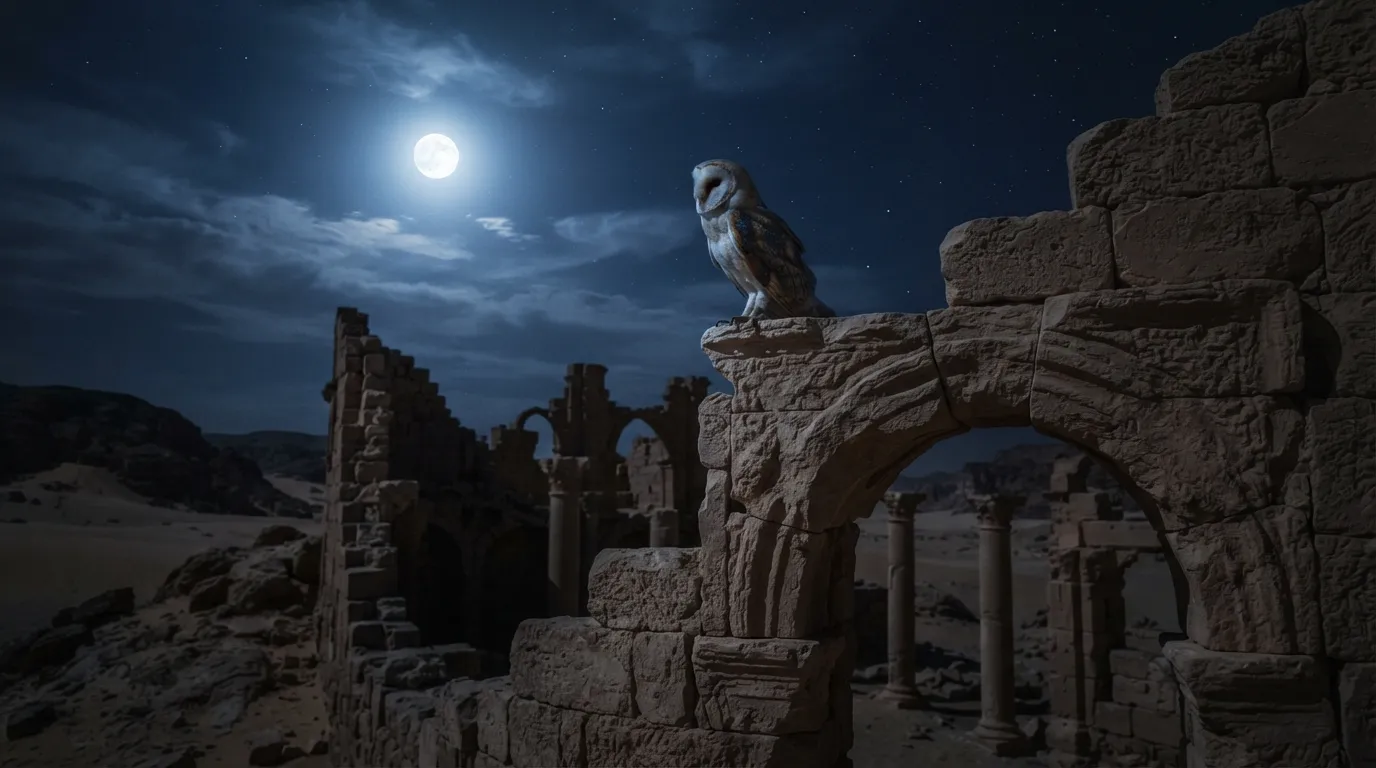
Modern culture pictures a wise old owl in glasses, dispensing gentle advice. Scripture pictures something very different a lonely bird calling out over ruined, abandoned places.
In the Bible, the owl is not a symbol of wisdom, as it is in many modern and folklore traditions.
It appears primarily as an unclean bird under Old Testament law and as a recurring symbol of desolation, loneliness, and judgment in the prophetic books.
Did You Know? 🔍
The Hebrew Bible actually uses several distinct words for different owl species — including yanshuph, kos, and the rare lilith in Isaiah 34:14 — showing that ancient Israelites recognized and distinguished multiple types of owls, rather than using one general term.
Quick Answer 📖
What Does an Owl Mean in the Bible?
In Scripture, owls appear in two main ways: first, as unclean birds forbidden for Israel to eat under the Mosaic Law (Leviticus 11:16-17), and second, as symbols of loneliness, ruin, and desolation in the prophetic books, particularly describing judged, abandoned cities. The Bible does not present owls as symbols of wisdom.
Biblical Meaning of Owl 🌙
Hebrew Meaning
Several distinct Hebrew words are translated “owl” across different passages, including yanshuph (rendered “great owl” in Leviticus 11:17 and Deuteronomy 14:16), kos (“little owl”), and the more mysterious lilith, appearing only once, in Isaiah 34:14, sometimes translated “screech owl” or “night creature.” This variety shows careful, specific attention to different bird species rather than a single generic term.
Literal Meaning
Literally, owls in Scripture refer to actual nocturnal birds of prey native to the deserts and ruins of the ancient Near East, known for their loud, haunting calls — the same eagle-owl species still found frequenting ruins in the region today.
Spiritual Meaning
Spiritually, owls function almost entirely as symbols of what’s absent — human presence, restored order, and covenant blessing. Where owls nest, prophets suggest, life and community have been stripped away, leaving only echoing loneliness behind.
Biblical Significance
The owl’s dual role — dietary exclusion and prophetic imagery — reinforces a consistent Old Testament pattern: what God calls “unclean” often becomes a fitting symbol for what represents brokenness, judgment, or separation from His presence in later prophetic writing.
Key Scripture Reference
Psalm 102:6 — “I am like a desert owl, like an owl among the ruins.”
Historical & Biblical Context 🏜️
Old Testament Usage
Owls are listed among the unclean birds in both Leviticus 11:16-18 and Deuteronomy 14:15-17, part of the broader dietary purity laws distinguishing Israel from surrounding nations. Beyond the dietary lists, owls appear in Job, Psalms, Isaiah, Jeremiah, and Micah, almost always in connection with desolate or ruined places.
New Testament Relevance
Owls are not explicitly mentioned anywhere in the New Testament. However, the broader New Testament themes of spiritual darkness versus light (John 1:5, John 8:12) echo the same contrast the Old Testament draws between owl-inhabited ruins and God’s promised restoration and presence.
Cultural Understanding in Biblical Times
In the ancient Near East, owls were commonly associated with abandoned ruins, since their nocturnal habits and eerie calls made them a natural fit for uninhabited places.
Explorers in the region have long noted how vividly an owl’s hoot echoing through ancient ruins conveys a sense of total desolation — precisely the image biblical prophets were drawing on.
Is Owl Mentioned in the Bible? 📜
Yes, owls appear multiple times across the Old Testament, including Leviticus, Deuteronomy, Job, Psalms, Isaiah, Jeremiah, and Micah.
Why it matters: their consistent presence across so many different books shows this wasn’t an incidental image, but a deliberately reused symbol prophets could count on their audience immediately understanding.
What it teaches: familiar, everyday images from the natural world were regularly used by biblical writers to communicate serious spiritual and prophetic truths.
Spiritual Meaning & Symbolism 🦉
Presence vs. Abandonment
The owl’s biblical symbolism centers on a sharp contrast: thriving, inhabited cities under God’s blessing versus ruined, owl-filled ruins under His judgment. This isn’t a comment on the bird itself, but on what its presence signals about a place’s condition.
God’s Perspective
When prophets describe owls moving into once-great cities like Babylon (Isaiah 13:21) or Edom (Isaiah 34:11), they’re illustrating the seriousness of God’s judgment against persistent unfaithfulness and pride — a warning meant to be taken seriously, not treated as decoration.
Lessons for Today
Modern readers sometimes search for hidden spiritual “messages” in seeing an owl personally. Scripture doesn’t support treating owls as omens or signs meant to be decoded; its actual owl imagery is consistently tied to specific historical judgments against particular cities and nations, not vague personal warnings.
Comparison Table: Owl References Across Scripture
| Reference | Hebrew Term | Context | Symbolic Meaning |
|---|---|---|---|
| Leviticus 11:16-17 | yanshuph, kos | Dietary law | Ceremonially unclean |
| Psalm 102:6 | qa’ath (pelican-like) / owl imagery | Personal lament | Loneliness, grief |
| Isaiah 13:21 | Various owl terms | Judgment on Babylon | Total desolation |
| Isaiah 34:11-14 | Includes lilith | Judgment on Edom | Ruin, abandonment |
Biblical Verses About Owls 📖
Leviticus 11:16-17
“The ostrich, the nighthawk, the sea gull… the little owl, the cormorant, the great owl.” This passage lists owls among the birds forbidden for Israel to eat, part of the broader Mosaic dietary law distinguishing clean from unclean animals.
Deuteronomy 14:15-16
This passage repeats the same unclean-bird list found in Leviticus, reinforcing the same dietary restriction within Moses’s broader restatement of the Law before Israel entered the Promised Land.
Job 30:29
“I am a brother of jackals, and a companion of ostriches” — some translations render the second term as “owls,” with Job using the image to express his profound isolation and suffering during his trials.
Psalm 102:6
“I am like a desert owl, like an owl among the ruins.” The psalmist, in deep personal distress, reaches for the owl as the clearest possible image of loneliness and abandonment.
Isaiah 13:21
Describing the coming fall of Babylon, Isaiah writes that “there the owls will dwell, and there the wild goats will leap about,” picturing total human abandonment of what was once a great city.
Isaiah 34:11
Prophesying judgment on Edom, Isaiah writes that “the owl and the raven will nest there,” reinforcing the same pattern of ruin following divine judgment.
Jeremiah 50:39
Describing Babylon’s coming downfall, Jeremiah writes that “wild beasts… shall dwell there… ostriches also shall dwell in it,” continuing the prophetic tradition of picturing desolate ruins inhabited by wild creatures rather than people.
Micah 1:8
Isaiah 13 offers one of Scripture’s most vivid uses of owl imagery, describing the future fall of Babylon, then the most powerful empire in the region.
Centuries later, historical accounts confirm that ancient Babylon did indeed fall into ruin, matching the prophetic imagery in striking detail.
Life Lessons for Christians ✝️
- Scripture uses ordinary creatures to communicate serious truths. The owl’s biblical role shows how vividly the natural world was used to illustrate spiritual realities.
- Pride and persistent unfaithfulness carry real consequences. Babylon and Edom’s owl-filled ruins stood as concrete warnings, not abstract threats.
- Personal grief has scriptural language available for it. The psalmist and Job both used owl imagery honestly to express real loneliness and suffering before God.
- Biblical symbols shouldn’t be treated as personal omens. Unlike folklore traditions, Scripture doesn’t present owls as messages meant to be decoded from everyday encounters.
- God’s judgment is never the final word for those who turn back to Him. Even prophecies of desolation, including those involving owls, sit within a larger biblical story that ultimately points toward restoration.
Common Misunderstandings ⚠️
A common misunderstanding imports modern folklore’s “wise owl” symbolism into biblical interpretation, assuming Scripture treats owls as symbols of wisdom or insight. It does not — the Bible consistently associates owls with uncleanness, loneliness, and desolation, entirely apart from any wisdom symbolism.
Another misunderstanding treats a personal owl sighting as a spiritual sign or message from God requiring interpretation.
FAQs
What does an owl symbolize in the Bible?
Owls symbolize uncleanness under Mosaic dietary law and, more prominently, desolation, loneliness, and judgment in the prophetic books.
Does the Bible say owls represent wisdom?
No, that association comes from later folklore and mythology, not Scripture. The Bible consistently uses owls as symbols of ruin and abandonment instead.
Why were owls considered unclean in the Bible?
The text doesn’t state an explicit reason, though scholars suggest it likely relates to their status as predatory, flesh-eating birds, which the Mosaic Law generally classified as unclean.
Is seeing an owl a sign from God?
Scripture doesn’t support treating personal owl sightings as coded spiritual signs; its owl imagery is tied to specific historical prophecies, not general omens for individuals today.
What is the “lilith” mentioned alongside owls in Isaiah 34?
It’s a rare Hebrew term appearing only once in Scripture, sometimes translated “screech owl” or “night creature,” and its precise identification remains somewhat uncertain among scholars.
Conclusion
The Bible’s owl imagery tells a consistent, sobering story not one of wisdom, but of what’s left behind when judgment falls and life departs a place.
From Leviticus’s dietary laws to Isaiah’s prophecies against Babylon and Edom, owls mark the difference between God’s blessing and its absence.
Understanding this helps readers engage Scripture’s actual imagery honestly, rather than importing modern symbolism that was never there.

Hello, I’m Michael Bennett. I am passionate about exploring the symbolism, dreams, and spiritual messages found throughout the Bible. My research focuses on understanding how biblical themes connect with faith, personal growth, and everyday life.