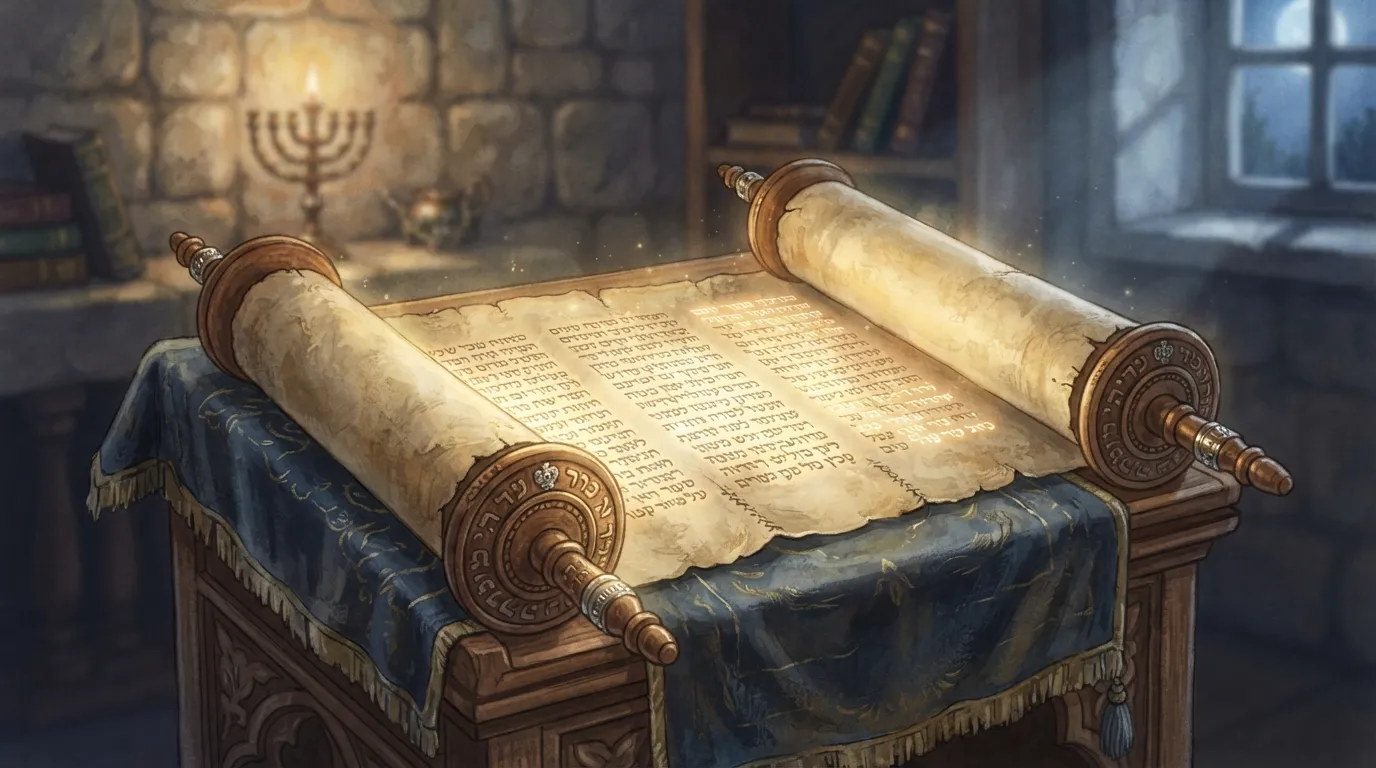
You keep noticing 22. On a clock, a page number, a birthday, a receipt.
Unlike many repeating numbers, 22 connects to something remarkably concrete in Scripture.
The Hebrew alphabet contains exactly 22 letters, the same alphabet used to write the entire Old Testament.
This article explores what 22 truly means in the Bible, grounded in real historical and textual facts, not speculation.
You’ll see where this number appears meaningfully throughout Scripture and how to think about it with genuine understanding.
Quick Answer 🎯
The number 22 doesn’t function as a symbolic code in the Bible, but it holds a genuine, documented connection: the Hebrew alphabet contains exactly 22 letters, and the traditional Hebrew Old Testament is counted as 22 books. Psalm 119, the Bible’s longest chapter, is structured around these same 22 letters.
What Does 22 Mean in the Bible?
In the Bible, 22 connects concretely to the Hebrew alphabet, which contains exactly 22 letters used to write the entire Old Testament.
Early Jewish tradition also counted the Hebrew Scriptures as 22 books, linking this number directly to the structure and language of God’s Word itself.
Biblical Meaning of 22 📖
The biblical meaning of 22 is unusually well-documented compared to many other numbers people search for.
Let’s explore where this number appears and what it genuinely represents.
Numerical Significance in Scripture
The number 22 connects directly to the 22-letter Hebrew alphabet, the foundation of the entire Old Testament’s language.
Early church fathers and Jewish scholars both noted that the Hebrew Scriptures were traditionally counted as 22 books, matching this alphabet.
Psalm 119, the longest chapter in the Bible, is structured as a 22-stanza acrostic, each section built around a successive Hebrew letter.
Literal Meaning
Literally, 22 appears in Scripture as an actual count: years of a king’s reign, an alphabet’s letters, or a psalm’s structure.
Several kings, including Ahab and Jeroboam, reigned for exactly 22 years, giving this number multiple genuine historical anchors.
Spiritual Meaning
Spiritually, 22 is often connected to God’s Word itself, since it’s built from the same 22 letters forming Hebrew Scripture.
Some also see it representing completeness, since the Hebrew alphabet fully expresses everything written in the Old Testament.
Biblical Significance
The significance of 22 rests on its genuine, historical connection to Scripture’s language and structure, unlike purely symbolic numbers.
This makes it one of the more textually grounded numbers people search for.
Key Scripture Reference
Psalm 119, spanning 22 stanzas matching the Hebrew alphabet, declares in verse 105, “Your word is a lamp to my feet and a light to my path.”
Historical & Biblical Context 🏛️
To understand 22 meaning in the Bible fully, it helps to see its documented historical connections.
Old Testament Usage
In the Old Testament, 22 appears as the reign length for multiple kings, including Ahab, Jeroboam, and Jair.
Jeroboam’s 22-year reign led Israel into idolatry, while Jair’s 22-year reign brought relative stability.
This contrast shows the same number producing very different outcomes depending on the leader’s faithfulness.
The book of Genesis also lists roughly 22 generations from Adam to Jacob, according to some genealogical counts.
Psalm 119’s 22-stanza structure remains the clearest, most intentional biblical use of this number.
New Testament Relevance
In the New Testament, the number 22 doesn’t carry the same explicit structural role it holds in Hebrew poetry.
However, early Christian writers like Jerome and Origen continued referencing the traditional 22-book count of Hebrew Scripture.
Jerome specifically compared these 22 books to the alphabet itself, calling them the foundation for instructing believers.
This connection between Scripture’s structure and its language persisted into early Christian scholarship.
Revelation, the Bible’s final book, contains 22 chapters, closing Scripture with a number tied to its own beginning.
Cultural Understanding in Biblical Times
In ancient Hebrew culture, the alphabet itself carried spiritual weight, since it formed the building blocks of God’s revealed Word.
Acrostic poems, like Psalm 119, used this alphabet intentionally, teaching memorization and demonstrating completeness.
Understanding this literary tradition helps explain why 22 carries such genuine textual weight, unlike purely symbolic numbers.
It reflects real ancient Hebrew literary practice, not modern numerology.
Is 22 Mentioned in the Bible? 📜
Yes, the number 22 appears multiple times in Scripture as an actual, literal count.
Several kings reigned for exactly 22 years, including Ahab (1 Kings 16:29) and Jeroboam (1 Kings 14:20).
Psalm 119’s structure intentionally uses 22 stanzas, matching the Hebrew alphabet’s 22 letters.
The traditional count of Hebrew Old Testament books also totals 22, according to early Jewish and Christian sources.
This makes 22 one of the more concretely documented numbers within biblical numerology discussions.
Spiritual Meaning & Symbolism 🕊️
The number 22 carries meaningful symbolism tied to Scripture’s structure and completeness.
Order vs. Disorder
Some scholars note that 22 doubles eleven, a number sometimes associated with disorder in biblical numerology.
Yet Psalm 119 shows 22 producing careful order, structuring the longest chapter in the Bible with intentional precision.
Faithfulness vs. Rebellion
Jeroboam and Jair both reigned 22 years, yet produced opposite legacies, one of rebellion, one of stability.
This shows that the number itself doesn’t determine outcomes. Faithfulness to God does.
God’s Perspective
God’s Word, expressed through the 22-letter Hebrew alphabet, remains complete and sufficient for guiding His people.
Psalm 119 celebrates this sufficiency extensively, praising Scripture’s role in wisdom and daily life.
Lessons for Today
Noticing 22 can serve as a reminder of Scripture’s completeness and its role as a guide for faithful living.
Psalm 119:105 remains one of the clearest expressions of this truth.
Biblical Verses About 22 and God’s Word ✝️
Here are key verses and passages connected to the number 22 throughout Scripture.
Psalm 119:1
This verse opens the Bible’s longest chapter: “Blessed are those whose way is blameless, who walk in the law of the Lord!”
It introduces a psalm structured entirely around the 22-letter Hebrew alphabet.
Each of the 22 stanzas begins with a successive Hebrew letter, moving through the entire alphabet.
This intentional structure reflects the completeness of God’s Word applied to every area of life.
It remains one of Scripture’s most carefully crafted literary achievements.
Psalm 119:105
This well-loved verse states, “Your word is a lamp to my feet and a light to my path.”
It captures the psalm’s central theme: Scripture guiding daily life and decisions.
This verse remains one of the most quoted throughout Christian teaching and worship.
It reflects the practical, guiding role of God’s Word in a believer’s life.
This connects meaningfully to 22’s association with Scripture’s structure and completeness.
1 Kings 16:29
This verse records that “Ahab the son of Omri began to reign over Israel… and reigned over Israel in Samaria twenty-two years.”
Ahab’s reign became infamous for idolatry and opposition to God’s prophets.
This 22-year reign illustrates how the number itself carries no inherent moral weight.
Faithfulness or rebellion determines a leader’s true legacy, not the length of their reign.
This passage offers a sobering historical anchor for the number 22.
1 Kings 14:20
This verse records Jeroboam’s reign: “The time that Jeroboam reigned was twenty-two years.”
Jeroboam led the northern kingdom of Israel into idolatry through golden calf worship.
His 22-year reign established patterns of rebellion that plagued Israel for generations.
This passage shows another historical instance of the number 22 tied to significant biblical history.
It reinforces that character and faithfulness matter more than any numeric pattern.
Judges 10:3
This verse describes Jair, who “judged Israel twenty-two years.”
Unlike Jeroboam, Jair’s reign is remembered for stability, with thirty sons ruling thirty towns.
This contrast between two 22-year reigns highlights how faithfulness shapes legacy, not numbers alone.
It offers a balanced picture of how 22 appears in genuinely different historical contexts.
This passage remains a lesser-known but meaningful biblical reference to the number.
Genesis 22:2
This pivotal chapter records God’s test of Abraham, asking him to offer his son Isaac.
While the number 22 here refers to the chapter itself, the passage carries immense theological weight.
It demonstrates Abraham’s complete trust and foreshadows God’s own provision of a sacrifice.
This connection is often noted due to chapter numbering, alongside the passage’s genuine significance.
It remains one of the most studied chapters in the entire Old Testament.
Revelation 22:2
This verse describes the tree of life, whose “leaves were for the healing of the nations.”
It appears in Revelation’s final chapter, the Bible’s last of 22 chapters in that book.
This vision closes Scripture with imagery of restoration and healing.
The connection to 22 here reflects Revelation’s own chapter count, a fitting close to the biblical narrative.
It offers a hopeful, healing image to conclude the entire Bible.
Psalm 22:1
This messianic psalm opens with words Jesus quoted from the cross: “My God, my God, why have you forsaken me?”
Written by King David, it prophetically describes suffering later fulfilled in Christ’s crucifixion.
This connection between Psalm 22 and Jesus’s own words carries deep theological significance.
It remains one of the most powerful messianic prophecies in the entire Old Testament.
This passage offers profound insight into Christ’s suffering, foretold centuries in advance.
Real-Life Biblical Case Study: Psalm 119’s Careful Craftsmanship 🌟
Ancient Hebrew poets often used acrostic structures, building poems around their alphabet’s letters.
Psalm 119 stands as the most elaborate example, spanning 22 stanzas of eight verses each.
Every stanza begins each of its eight lines with the same successive Hebrew letter, moving through all 22.
This wasn’t accidental. The psalmist intentionally crafted this structure to reflect Scripture’s completeness.
The psalm’s content celebrates God’s law, word, statutes, and commandments throughout its entire length.
This careful craftsmanship shows ancient believers treating God’s Word with tremendous reverence and intentionality.
The number 22, woven into this psalm’s very structure, reflects the fullness of Scripture applied to every situation.
This case study reveals how deeply ancient believers valued Scripture, expressing that value through careful, deliberate artistry.
Life Lessons for Christians 🙏
This topic offers real, practical lessons for approaching Scripture and God’s faithfulness.
God’s Word is complete. Psalm 119’s structure reflects Scripture’s sufficiency for every area of life.
Numbers don’t determine character. Jeroboam and Jair’s contrasting 22-year reigns show faithfulness matters most.
Scripture deserves careful attention. The psalmist’s intentional acrostic structure models genuine reverence for God’s Word.
God’s guidance remains practical. Psalm 119:105 reminds believers that Scripture lights daily decisions.
History carries real lessons. Biblical numbers often connect to genuine historical events worth studying carefully.
Common Misunderstandings ⚠️
Many people assume 22 functions primarily as a mystical “angel number” separate from biblical history.
While modern numerology has adopted this framing, 22’s genuine biblical connections are historical and textual, not symbolic codes.
Others assume every biblical mention of 22 carries identical spiritual meaning.
As Jeroboam and Jair’s contrasting reigns show, context determines meaning far more than the number itself.
Understanding 22 meaning in the Bible correctly means grounding it in Psalm 119, Hebrew Scripture’s structure, and genuine history.
FAQs ❓
Why does the number 22 matter in the Bible?
The number 22 matters because it matches the Hebrew alphabet’s 22 letters, the traditional count of Old Testament books, and Psalm 119’s structure.
Is Psalm 119 really structured around 22 letters?
Yes, Psalm 119 contains 22 stanzas of eight verses each, with every stanza’s lines beginning with a successive Hebrew letter.
Did any biblical kings reign for 22 years?
Yes, both Ahab and Jeroboam reigned 22 years, along with the judge Jair, though their legacies differed greatly based on faithfulness.
Is 22 considered an angel number in Christianity?
No, “angel numbers” come from New Age spirituality, not biblical teaching. The Bible’s genuine connections to 22 are historical and textual.
What is the main lesson from the number 22 in Scripture?
The main lesson is that God’s Word is complete and sufficient, reflected through the 22-letter Hebrew alphabet forming the entire Old Testament.
Conclusion 🌿
Understanding 22 meaning in the Bible starts with its genuine, documented connection to the Hebrew alphabet.
Twenty-two letters form the entire Old Testament, and Psalm 119 celebrates that completeness through careful, intentional structure.
Unlike many popular repeating numbers, 22 carries real historical and textual grounding throughout Scripture.
If you keep noticing this number, let it remind you of God’s Word’s sufficiency for guiding your daily life.
Psalm 119:105 offers the clearest picture: Scripture as a lamp lighting the path ahead.
That truth remains far more meaningful than any numeric pattern on its own.

Hello, I’m Jonathan Reed. I have a strong interest in biblical interpretation and Christian education. Over the years, I have spent significant time studying Scripture and researching its historical context to better understand its teachings and messages.