You keep noticing 888. On a clock, a phone number, a receipt total.
Unlike many repeating numbers, 888 actually connects to something remarkable in the Greek New Testament.
The name “Jesus,” written in its original Greek letters, adds up to exactly 888 using an ancient number system.
This article explores the real history behind 888’s biblical meaning, along with the number eight’s broader symbolism in Scripture.
You’ll see where this connection comes from and how to think about it with genuine biblical understanding.
Quick Answer 🎯
The number 888 doesn’t appear as a verse in the Bible, but it holds a striking connection: in ancient Greek gematria, the letters spelling “Jesus” (Iesous) add up to exactly 888. Biblically, the number eight also symbolizes new beginnings and resurrection.
What Does 888 Mean in the Bible?
In the Bible, 888 isn’t cited as a specific verse, but it connects meaningfully to Jesus’s name through Greek gematria, an ancient system assigning numeric values to letters.
The number eight separately symbolizes new beginnings throughout Scripture, making 888 a fitting, though extra-biblical, reflection point for believers.
Biblical Meaning of 888 📖
The biblical meaning of 888 rests on two separate ideas: gematria and the number eight’s symbolism.
Let’s explore both threads and how they connect.
Numerical Significance in Scripture
Gematria is an ancient practice of assigning numeric values to letters, used in both Hebrew and Greek writing systems.
In Greek, each letter of “Iesous” (Jesus) carries a specific numeric value: iota (10), eta (8), sigma (200), omicron (70), upsilon (400), and sigma (200).
Added together, these values total exactly 888, a genuine feature of the Greek alphabet, not a modern invention.
Literal Meaning
Literally, 888 doesn’t appear as a stated number anywhere in the biblical text itself.
Its connection comes entirely through gematria, a system ancient readers were familiar with, though it isn’t part of the Bible’s actual teaching.
Spiritual Meaning
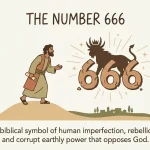
Spiritually, many believers find encouragement in the way Jesus’s name mathematically stands apart from 666, Revelation’s number of the beast.
The number eight also carries its own symbolism of new beginnings and resurrection throughout Scripture.
Biblical Significance
The significance of 888 lies in this dual connection: the historical gematria value of Jesus’s name, and the number eight’s consistent link to new starts.
Both threads point toward themes of renewal, life, and Christ’s victory.
Key Scripture Reference
Genesis 17:12 establishes circumcision on the eighth day, one of the earliest biblical uses of eight marking a new covenant beginning.
Historical & Biblical Context 🏛️
To understand 888 meaning in the Bible fully, it helps to know how gematria and the number eight functioned historically.
Old Testament Usage
In the Old Testament, the number eight consistently marks new beginnings and fresh starts after a completed cycle.
Circumcision occurred on the eighth day, marking entry into covenant just after the completed week of seven.
Noah’s family, eight people total, stepped into a renewed world after the flood’s judgment ended.
This pattern of eight following seven’s completion appears repeatedly throughout Israel’s covenant practices.
Hebrew gematria, called “gematria” in Jewish tradition, was also used to find meaning in Hebrew words and names.
New Testament Relevance
In the New Testament, the Greek language introduced its own numeric letter system, different from Hebrew gematria.
Jesus rose from the dead on the first day of the week, which some early Christians also associated with an “eighth day,” a new beginning beyond the original seven-day week.
Early church writers, including some church fathers, noted the 888 value of Jesus’s Greek name as a meaningful, though not doctrinal, observation.
This wasn’t hidden Scripture. It was simply how the Greek alphabet’s existing numeric values happened to align.
Understanding this helps modern readers appreciate the connection without overstating its authority.
Cultural Understanding in Biblical Times
In the ancient world, letters doubled as numbers in both Hebrew and Greek, unlike modern separate numeral systems.
This meant every written word inherently carried a numeric value, whether intended symbolically or not.
Ancient readers sometimes noticed meaningful patterns this way, much like modern readers notice 888 today.
Understanding this cultural context helps explain why 888 and Jesus’s name connection has circulated for centuries, without being part of Scripture’s actual text.
Is 888 Mentioned in the Bible? 📜
No, the number 888 doesn’t appear as a stated figure anywhere in the biblical text.
Its connection to Jesus comes through gematria, calculated from the Greek spelling of His name, not a direct scriptural statement.
This distinguishes 888 from numbers like 777, which does appear explicitly in Genesis 5:31.
Still, the number eight itself appears in various meaningful contexts throughout Scripture, tied to new beginnings.
Recognizing this distinction helps believers engage with 888 accurately, appreciating its history without overstating its biblical authority.
Spiritual Meaning & Symbolism 🕊️
The number 888 carries meaningful spiritual symbolism through its connection to renewal and new life.
Resurrection vs. Death
Eight often represents new beginnings following a completed cycle, closely tied to resurrection themes.
Jesus’s resurrection, occurring beyond the seventh-day Sabbath, echoes this eighth-day pattern of renewal.
Christ vs. the Beast
The contrast between 888 (linked to Jesus) and 666 (linked to the beast in Revelation) offers a striking symbolic picture.
This contrast, while not explicitly stated in Scripture, has encouraged believers for centuries.
God’s Perspective
God’s pattern of new beginnings, from circumcision’s eighth day to Christ’s resurrection, reflects His consistent character of renewal.
Nothing about His redemptive plan leaves believers stuck in old, completed cycles.
Lessons for Today
Noticing 888 can serve as a gentle reminder of the new life believers have through Christ’s resurrection.
That truth stands firm whether or not you ever consciously notice this particular number.
Biblical Verses About Eight and New Beginnings ✝️
Here are key verses connected to the number eight and the themes surrounding 888.
Genesis 17:12
This verse establishes, “He who is eight days old among you shall be circumcised.”
It sets the eighth day as the marker for entering God’s covenant with Abraham’s descendants.
This pattern of eight following the completed seven-day week appears repeatedly in Scripture.
It reflects new beginning and covenant relationship, themes closely tied to 888’s symbolism.
This remains one of the earliest biblical uses of eight marking fresh starts.
Genesis 7:13
This verse describes Noah entering the ark “with his wife and his three sons’ wives,” totaling eight people.
These eight individuals stepped into a completely renewed world after the flood’s judgment.
Eight, here, marks the beginning of humanity’s fresh start under God’s covenant with Noah.
This connects meaningfully to the broader biblical pattern of eight representing new beginnings.
It remains a powerful picture of survival, renewal, and God’s preserving faithfulness.
Leviticus 9:1
This verse describes “the eighth day,” when Aaron and his sons began their priestly ministry before the Lord.
Following seven days of consecration, the eighth day marked the start of active service.
This pattern reinforces eight’s consistent role marking transitions into new callings.
It shows the number eight woven intentionally into Israel’s worship practices.
This connects naturally to the new-beginning themes associated with 888.
John 20:26
This verse describes Jesus appearing to His disciples “eight days later,” including Thomas this time.
This appearance came after His resurrection, within the broader “eighth day” resurrection theme.
Thomas’s doubt turned to faith in this encounter, marking his own new beginning.
This passage connects meaningfully to the resurrection symbolism often tied to eight.
It remains a powerful story of faith renewed through direct encounter with the risen Christ.
1 Peter 3:20
This verse recalls how “eight persons, were brought safely through water” during Noah’s flood.
Peter uses this Old Testament event to illustrate salvation through Christ.
The number eight here directly connects ancient rescue to New Testament salvation themes.
This passage bridges Old and New Testament use of eight as a marker of God’s saving work.
It reinforces the consistent biblical thread linking eight to renewal and rescue.
Ecclesiastes 11:2
This verse advises, “Give a portion to seven, or even to eight, for you know not what disaster may happen on earth.”
While practical wisdom literature, it reflects the biblical pattern of eight following seven.
This subtle numeric progression appears throughout wisdom literature’s structure.
It reflects the broader biblical rhythm of completion (seven) followed by new beginning (eight).
This connects to the same thematic pattern underlying 888’s symbolism.
Revelation 13:18
This verse instructs, “let the one who has understanding calculate the number of the beast… its number is 666.”
This is Scripture’s clearest direct use of gematria-style numeric calculation.
It provides the contrasting number many associate symbolically with 888 and Jesus.
This verse confirms that numeric calculation of names wasn’t foreign to biblical writers’ original audience.
It offers helpful context for understanding how ancient readers engaged with numeric symbolism.
Romans 6:4
This verse teaches that believers are raised “to walk in newness of life,” just as Christ was raised from the dead.
While not explicitly about the number eight, it captures the resurrection theme closely tied to 888.
This “newness of life” reflects the same renewal represented by the eighth-day pattern throughout Scripture.
It offers genuine, Christ-centered encouragement independent of numerology.
This verse remains a powerful anchor for understanding true spiritual renewal.
Real-Life Biblical Case Study: Noah’s Eight and a New World 🌟
Noah spent decades building the ark according to God’s specific instructions, facing ridicule along the way.
When the flood came, exactly eight people entered the ark: Noah, his wife, his three sons, and their wives.
For months, they waited inside as the flood destroyed the corrupted world outside.
When the waters finally receded, these eight people stepped out into a completely renewed earth.
God established a new covenant with Noah, marked by the rainbow as a lasting sign of His promise.
This story shows eight marking the transition from judgment to renewal, from an old world to a new beginning.
It offers a vivid, historical picture of the same themes many associate symbolically with 888 today.
Noah’s story reminds believers that God’s faithfulness carries His people through judgment into genuine new life.
Life Lessons for Christians 🙏
This topic offers real, practical lessons for approaching numbers and Christ’s identity wisely.
Jesus’s identity stands secure. The 888 gematria connection is a historical curiosity, not the foundation of Christian faith.
New beginnings come through Christ. The number eight’s biblical pattern points consistently toward resurrection and renewal.
Scripture remains the true authority. Interesting numeric patterns should never replace grounded, careful Bible study.
God preserves His people through judgment. Noah’s story shows renewal following faithful obedience, not numeric coincidence.
Christ’s resurrection changes everything. This truth offers far more lasting hope than any calculated number ever could.
Common Misunderstandings ⚠️
Many people assume 888 functions as a hidden biblical code specifically designed to be discovered.
While the gematria connection to Jesus’s name is historically real, it wasn’t presented in Scripture as a secret message requiring modern decoding.
Others confuse 888 with the popular “angel number” trend, assuming it originates from Christian teaching.
The gematria fact is historically grounded, while “angel numbers” as personal spiritual signs come from New Age spirituality, not the Bible.
Understanding 888 meaning in the Bible correctly means separating genuine linguistic history from modern numerology practices.
FAQs ❓
Does the Bible directly mention the number 888?
No, 888 isn’t stated in Scripture. It comes from calculating the Greek letters spelling “Jesus,” which happen to total 888 in ancient gematria.
What is gematria, and is it biblical?
Gematria is an ancient practice assigning numeric values to letters. Revelation 13:18 shows biblical writers using similar numeric calculation for the number 666.
Why does Jesus’s name equal 888 in Greek?
Each Greek letter carries a specific numeric value. Adding the values for “Iesous” (Jesus) totals exactly 888, a genuine feature of the Greek alphabet.
Is 888 the opposite of 666 biblically?
Symbolically, many see this connection, since 888 relates to Jesus while 666 relates to the beast in Revelation, though this contrast isn’t explicitly stated in Scripture.
Should Christians treat 888 as an angel number?
No, “angel numbers” come from New Age spirituality, not biblical teaching. The 888 gematria connection is historical, not a personal mystical sign.
Conclusion 🌿
Understanding 888 meaning in the Bible starts with the genuine history behind Greek gematria.
Jesus’s name in Greek does calculate to 888, a real and fascinating linguistic fact from the ancient world.
Beyond this connection, the number eight consistently represents new beginnings throughout Scripture, from circumcision to resurrection.
If you keep noticing 888, let it remind you of the genuine new life found in Christ’s resurrection.
That truth doesn’t depend on numeric patterns, though the history behind 888 remains a meaningful reflection point.
Christ’s victory over death offers far more lasting hope than any calculated number ever could.

Hello, I’m Michael Bennett. I am passionate about exploring the symbolism, dreams, and spiritual messages found throughout the Bible. My research focuses on understanding how biblical themes connect with faith, personal growth, and everyday life.