Faith is easy to talk about when life is going well. But when prayers seem unanswered, plans fall apart, or the future feels uncertain, trusting God can become difficult.
During those moments, many Christians turn to the Bible for guidance, strength, and hope.
The Bible verses about faith in this guide explain what faith means, why it matters, and how it shapes the Christian life.
They show that biblical faith is more than positive thinking or agreeing that God exists.
It involves trusting Him, listening to His Word, and learning to follow Him even when you cannot see the whole picture.
Scripture also shows that faithful people can experience fear, grief, and doubt. Having questions does not mean you must give up on God.
Instead, you can bring your concerns to Him, seek wisdom, and keep taking faithful steps.
Whether you are new to Christianity or have followed Jesus for years, these passages can help you understand faith and put it into practice in everyday life.
Did You Know? 🔍
Hebrews 11 is often called the Bible’s “faith chapter” because it describes people who trusted God and acted on that trust. It includes examples such as Abel, Noah, Abraham, and Moses. Their stories show faith through action, not merely through words.
Quick Answer: What Does Faith Mean in the Bible? 📖
In the Bible, faith means trusting God, believing His Word, and relying on Him even when the outcome is not yet clear. Christian faith centers on God and Jesus Christ and is expressed through trust, obedience, perseverance, and a life shaped by God’s truth.
Biblical Meaning of Faith ✨
What Is the Biblical Meaning of Faith?
The biblical meaning of faith includes trust, belief, confidence, and faithfulness. Faith means relying on God because of who He is and responding to what He has revealed in Scripture.
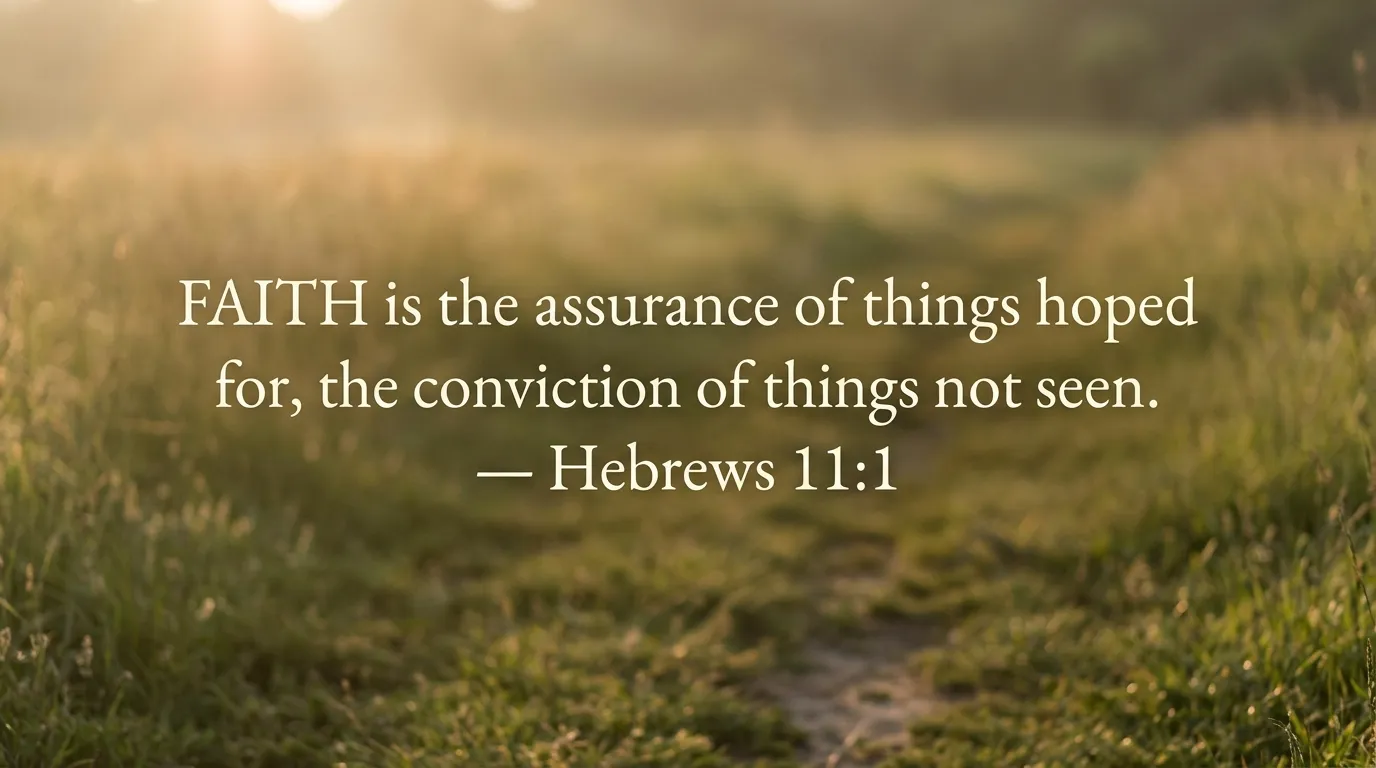
Hebrews 11:1 describes faith in terms of confidence in what is hoped for and assurance about what is not seen. This does not mean Christians must believe every idea they imagine or assume that every personal wish will come true. Biblical faith is directed toward God and understood through His character and Word.
Faith also affects how people live. James 2:17 teaches that faith without works is dead. James is not saying that people can earn salvation through good deeds. He is showing that genuine faith should have a real effect on a person’s choices and conduct.
The Hebrew Meaning of Faith
One important Hebrew word related to faith is emunah. Depending on the context, it can mean faithfulness, firmness, steadiness, or trustworthiness.
This word is related to the Hebrew root ʾaman, which carries ideas of firmness and reliability. The familiar word “amen” is also related to this root and expresses agreement or affirmation.
In the Old Testament, faith is not always presented as an abstract idea. Trust in God is closely connected with His faithfulness and with the faithful response of His people. Habakkuk 2:4, for example, contrasts pride with the life of the righteous, who live by faith or faithfulness depending on the translation.
The exact meaning of a Hebrew word depends on its sentence and setting. It is best to read the whole verse rather than assume one English word captures every shade of meaning.
The Greek Meaning of Faith
The main Greek word commonly translated “faith” in the New Testament is pistis. It can refer to faith, trust, belief, or faithfulness, depending on how it is used.
The related Greek verb pisteuō commonly means to believe or trust. In John 3:16, for example, belief in Jesus is central to the promise of eternal life. In Romans 10:17, Paul connects faith with hearing the message about Christ.
These words show that Christian faith is more than accepting a fact. It includes placing trust in God and responding to the message of Jesus.
Still, Greek words do not carry exactly the same meaning in every verse. Context, grammar, and the purpose of a passage all matter when interpreting Scripture.
The Spiritual Meaning of Faith
From a Christian perspective, faith is a relationship of trust in God. It means relying on His character, receiving the message of Christ, and seeking to follow His ways.
Faith does not require you to pretend that pain is not real. The Bible includes prayers of sorrow, questions, and requests for help. The Psalms often show people speaking honestly to God while continuing to seek Him.
Faith may involve taking a difficult next step without knowing everything that will happen. It may also mean waiting, asking for counsel, admitting uncertainty, or changing direction when wisdom requires it.
Key Scripture: Hebrews 11:1
Hebrews 11:1 offers one of the best-known descriptions of faith. Many translations describe faith as confidence in what is hoped for and assurance about what is not seen.
The verse introduces a chapter filled with examples of people who trusted God. Their faith did not mean that every part of their lives was easy. Some received what they hoped for, while others faced suffering and did not see every promise fulfilled in their lifetime.
The larger passage therefore presents faith as lasting trust in God, not a method for guaranteeing a desired result.
Historical and Biblical Context 🕊️
Faith in the Old Testament
The Old Testament presents faith through stories, prayers, covenants, and the lives of God’s people. Abraham trusted God’s promise in Genesis 15:6. Moses led Israel out of Egypt, and the prophets called the people back to trust and obedience.
These stories include both faithfulness and failure. Abraham trusted God, yet his story also includes fear and poor decisions. Israel witnessed God’s works but sometimes turned away from Him. Such accounts show that faith is important without pretending that faithful people never struggle.
Habakkuk 2:4 is another key passage. It appears during a time when the prophet is troubled by injustice and awaits God’s response. Its teaching about living by faith belongs to a wider discussion of judgment, patience, and trust.
Faith in the New Testament
In the New Testament, faith is closely connected with Jesus Christ. The Gospels describe people who trust Jesus for healing, forgiveness, and help. The apostles teach that people receive God’s grace through faith and are called to live in response to it.
Ephesians 2:8–10 explains that salvation is by grace through faith, not a result of human works. The next verse describes believers as God’s workmanship, created in Christ Jesus for good works. This order matters: good works are a response to God’s grace, not a way to purchase it.
James 2 also emphasizes that genuine faith produces action. Paul and James address different concerns, but both show that faith matters deeply to how a person lives.
Cultural Understanding in Biblical Times
In the biblical world, trust and faithfulness were closely tied to relationships, promises, and loyalty. People depended on family, community, rulers, and patrons in ways that could affect their daily lives.
This background helps explain why biblical faith is often more personal than simply agreeing with an idea. Trust means relying on someone considered worthy of confidence.
For Christians, God is the central object of faith because He is understood as faithful and trustworthy. The New Testament directs this trust toward Jesus and His message.
Is Faith Mentioned in the Bible? 📚
Yes. Faith is a major theme throughout both the Old and New Testaments. The Bible uses different words and examples to describe trusting God, remaining faithful, believing His promises, and responding to His guidance.
Some important passages include:
- Genesis 15:6: Abraham believes God’s promise.
- Habakkuk 2:4: The righteous live by faith or faithfulness, depending on the translation.
- Matthew 17:20: Jesus uses the image of faith as small as a mustard seed.
- Romans 10:17: Faith comes through hearing the message about Christ.
- 2 Corinthians 5:7: Christians are called to walk by faith, not by sight.
- Ephesians 2:8–10: Salvation is by grace through faith, leading to a life of good works.
- Hebrews 11:1: Faith is described in terms of confidence and assurance.
- James 2:17: Faith without works is dead.
These verses should not be treated as if they all answer the same question. Some explain salvation, some describe trust, and others show how faith should shape conduct. Reading them together gives a fuller picture of the biblical teaching.
Spiritual Meaning and Symbolism of Faith 🌿
Faith Versus Fear
Faith does not mean that a Christian never feels afraid. Many biblical figures experienced fear while still turning toward God.
In Mark 4:35–41, Jesus’ disciples become afraid during a storm. Their fear reveals their human weakness, while the story points toward Jesus’ authority. The passage encourages trust, but it does not promise that every storm in life will end in the way we hope.
Faith can mean bringing fear to God and choosing the next wise step rather than letting fear make every decision.
Faith Versus Mere Positive Thinking
Positive thinking focuses on the way a person views a situation. Biblical faith is more specific: it rests on trust in God and the message of Scripture.
Faith does not require you to say that every event is good or that every plan will succeed. Christians can acknowledge pain, seek practical help, and admit when they do not know what will happen.
True faith is not a tool for controlling God. It is a way of trusting Him while seeking to live faithfully.
Faith and Obedience
The Bible often connects faith with action. Noah built the ark in response to God’s warning. Abraham acted on God’s call. The people described in Hebrews 11 responded to what they believed.
These examples do not mean every strong feeling or private idea should be treated as a command from God. Biblical decisions should be tested against Scripture, wise counsel, and responsible judgment.
Faithful obedience involves seeking what is right, even when doing so requires patience or courage.
Faith and Hope
The Faith and hope are closely related, but they are not identical. Faith emphasizes trust and confidence in God; hope looks toward what is expected or longed for in light of His promises.
Romans 8:24–25 discusses hope in relation to what is not yet seen and the need for patience. Christian hope is not the claim that life will always follow a preferred plan. It rests in God’s character and the future He has promised.
Biblical Faith Compared With Other Ways of Thinking ⚖️
| Idea | Meaning | Biblical perspective |
| Faith | Trusting God and responding to His Word | Central to the Christian life |
| Positive thinking | Focusing on hopeful thoughts | Can encourage someone, but is not the same as faith in God |
| Wishful thinking | Hoping something happens without a sound basis | Scripture encourages trust grounded in God rather than unsupported assumptions |
| Faithfulness | Reliability, loyalty, and keeping commitments | Closely related to biblical faith in several passages |
| Obedience | Acting in response to God’s instruction | Often shown as an expression of faith |
| Hope | Looking toward a promised or desired future | Connected with trust in God’s character and promises |
This comparison helps clarify a common misunderstanding: biblical faith is not simply believing strongly enough that a particular outcome must happen.
10 Bible Verses About Faith 📖
1. Hebrews 11:1 — Faith Is Confidence in What We Hope For
Hebrews 11:1 introduces the chapter’s account of people who lived by faith. Many translations describe faith as confidence in what is hoped for and assurance about what is not seen. The verse does not mean that every unseen possibility is guaranteed to happen. Its meaning becomes clearer through the examples that follow, which focus on trusting God and acting on His Word.
The chapter also acknowledges that some faithful people endured suffering and did not receive every promise during their lifetime.
Practical lesson: Trust God with the future while remaining honest about what you do and do not know.
2. Hebrews 11:6 — Faith Matters in Seeking God
Hebrews 11:6 says that without faith it is impossible to please God. It explains that anyone who comes to Him must believe that He exists and that He rewards those who earnestly seek Him.
This verse presents faith as part of a relationship with God. It is not about using belief to force God to grant every request. The wider chapter describes people who trusted Him in very different circumstances, sometimes with great cost.
Practical lesson: Seek God sincerely through prayer, Scripture, and faithful choices, even when you do not yet understand your situation.
3. Romans 10:17 — Faith Comes Through Hearing God’s Message
Romans 10:17 connects faith with hearing the message about Christ. In the surrounding passage, Paul discusses the proclamation of the gospel and the response of people who hear it.
This verse gives Scripture and the message of Jesus an important place in Christian growth. Faith is not something believers must build only through their own effort or imagination. They learn about God through the message of Christ and respond in trust.
Practical lesson: Set aside time to read the Bible, listen carefully to its message, and reflect on what it teaches about Jesus. <Cite refs={[“turn679597search0″,”turn679597search10”]} />
4. 2 Corinthians 5:7 — Walk by Faith, Not by Sight
Second Corinthians 5:7 is part of Paul’s discussion of hope, mortality, and confidence in God’s future. Walking by faith means living in trust even when the whole picture is not visible.
It does not mean ignoring facts, refusing medical care, or making risky choices without thought. Christian faith can include careful planning and seeking wise advice. The verse encourages believers not to treat what they can see at the moment as the only basis for hope.
Practical lesson: When you face uncertainty, pray for wisdom and take the next responsible step instead of demanding complete certainty first.
5. Ephesians 2:8–10 — Saved by Grace Through Faith
Ephesians 2:8–10 explains that salvation is by grace through faith, not something people earn by their own works. The passage then says believers are God’s workmanship, created in Christ Jesus for good works.
This order is important. Christians do not earn God’s grace by becoming perfect. Instead, good works are part of the life that follows from receiving His grace. Faith and action are connected, but action is not a way to buy salvation.
Practical lesson: Receive God’s grace with gratitude and let that gratitude shape how you serve others.
6. James 2:17 — Faith Should Produce Action
James 2:17 says that faith without works is dead. In the surrounding verses, James challenges people who claim to have faith but do not respond when others need practical help.
His point is not that good deeds can replace trust in God. He is asking whether a person’s faith is real if it never affects the way they live. Faith should shape compassion, honesty, generosity, and responsibility.
Practical lesson: Choose one practical way to live out your faith today, such as helping someone in need or keeping a promise.
7. Mark 11:22–24 — Have Faith in God
In Mark 11, Jesus tells His disciples to have faith in God while teaching them about prayer. This passage is sometimes used to suggest that strong belief guarantees any result a person asks for.
That interpretation overlooks the wider biblical teaching about prayer, God’s will, wisdom, and perseverance. Faith is not a formula that places God under human control. It means trusting Him and bringing requests to Him sincerely.
Practical lesson: Pray honestly and confidently, but leave room for God’s wisdom rather than assuming every request must be answered exactly as you wish.
8. Matthew 17:20 — Faith Like a Mustard Seed
Matthew 17:20 uses the image of a mustard seed to describe faith. Jesus speaks to His disciples after they struggle to help a boy who is suffering. The image emphasizes the importance of faith rather than its size as a source of personal power.
The passage should not be turned into a claim that every hardship can be removed if a person simply believes harder. Elsewhere, the Bible includes faithful people who continue to suffer and wait.
Practical lesson: Do not assume your faith is worthless because you feel weak. Bring your need to God and continue to seek His help.
9. Proverbs 3:5–6 — Trust in the Lord
Proverbs 3:5–6 tells readers to trust in the Lord rather than rely only on their own understanding. It encourages people to acknowledge God in their ways and look to Him for direction.
This wisdom does not tell Christians to stop thinking or refuse good advice. It warns against treating personal judgment as the only source of truth. Trusting God can include learning, asking questions, listening to wise people, and being willing to change course.
Practical lesson: Before an important decision, pray, study the facts, consider Scripture, and seek trustworthy counsel.
10. Romans 8:24–25 — Faith and Patient Hope
Romans 8:24–25 connects hope with what is not yet seen and describes waiting with patience. The surrounding chapter discusses suffering, the work of the Spirit, and the hope of future glory.
This passage is especially meaningful during seasons when answers seem slow. It does not tell readers to pretend that waiting is easy. Instead, it presents patience as part of a life that trusts God’s future even while living through present difficulties.
Practical lesson: When you cannot see the outcome, allow yourself to feel the weight of waiting while continuing to pray and act faithfully.
A Biblical Case Study: Abraham Trusts God’s Promise 🌟
Genesis 12 describes God calling Abraham, then called Abram, to leave his country and go to a land God would show him. God also promised to make him into a great nation and bless others through him.
The story unfolds over many years. Abraham’s journey includes trust, uncertainty, mistakes, and waiting. In Genesis 15:6, Abraham believes the Lord, and his faith is counted to him as righteousness. The New Testament later returns to Abraham’s story when discussing faith, including in Romans 4 and Hebrews 11.
Abraham’s story does not teach that a person who has faith will always receive an immediate answer. The promise took time, and the biblical account records moments of weakness along the way.
What this teaches: Faith can involve trusting God’s promise while waiting for its fulfillment. It also involves being honest about failure and continuing to seek God rather than pretending the journey is always simple.
5 Life Lessons for Christians 🌱
1. Build Faith Through Scripture
Romans 10:17 connects faith with hearing the message about Christ. Make time to read Scripture regularly. Focus on understanding the passage rather than reading quickly just to finish a daily goal.
2. Pray Honestly
Faith does not require you to hide fear, sadness, or confusion from God. The Psalms show people bringing their questions and pain to Him. Prayer can include both trust and honest requests for help.
3. Take Faithful Action
James 2 reminds readers that faith should affect their choices. Look for ways to show kindness, practice honesty, keep commitments, and care for people around you.
4. Be Patient With Uncertainty
Not every question receives an immediate answer. Proverbs 3:5–6 encourages trust in God, while Romans 8 teaches patience in hope. Seek wise guidance and take the next responsible step without pretending to know the future.
5. Remember That Struggle Does Not Make You Hopeless
Faithful people in Scripture experienced fear, grief, and failure. When your faith feels weak, return to God’s Word, pray, and seek help from mature Christians you trust. Growth often includes learning to rely on God through difficult seasons.
Common Misunderstandings About Faith ⚠️
“If I Have Enough Faith, Everything I Pray For Will Happen”
The Bible encourages prayer and trust, but it does not teach that faith gives people control over every outcome. Christian prayer includes asking God for help while seeking His will and wisdom.
“Having Doubts Means I Have No Faith”
Questions and uncertainty can occur during a person’s spiritual life. Scripture includes people who struggle to understand what God is doing. Bring doubts into prayer, study the relevant passages, and seek thoughtful guidance rather than hiding every question.
“Faith Means Ignoring Facts”
Biblical faith is not a reason to abandon common sense. Seeking medical care, asking for advice, checking information, and making careful plans can be consistent with trusting God.
“Good Works Earn Salvation”
Ephesians 2:8–10 places salvation by grace through faith before the discussion of good works. Christians are called to do good, but those actions are a response to God’s grace rather than a payment that earns it.
“Strong Faith Always Feels Strong”
Feelings change. A person may feel anxious and still choose to pray, trust God, or do what is right. Biblical faith is not measured only by how confident a person feels at a particular moment.
Expert Insight 💡
When studying a verse about faith, read the surrounding paragraph and ask what kind of faith the writer is discussing. Is the passage about salvation, prayer, perseverance, or practical obedience? Compare translations and cross-reference related passages. This helps you avoid treating one verse as a guarantee that every personal wish will come true.
FAQs About Faith in the Bible 🙋
1. What is the best Bible verse about faith?
Hebrews 11:1 is one of the best-known verses because it describes faith in terms of confidence in what is hoped for and assurance about what is not seen. Romans 10:17 and Hebrews 11:6 are also useful passages for understanding faith.
2. How can I strengthen my faith in God?
Read Scripture regularly, pray honestly, reflect on God’s character, and seek support from mature Christians. Romans 10:17 connects faith with hearing the message about Christ. Put what you learn into practice through small, faithful choices.
3. What does the Bible say about faith during hard times?
Scripture encourages believers to trust God during suffering and uncertainty. Romans 8:24–25 speaks about patient hope, while 2 Corinthians 5:7 encourages walking by faith rather than sight. These verses offer hope without promising that every problem will disappear quickly.
4. What is the difference between faith and belief?
The words often overlap in English. Biblical faith includes belief, but it can also carry the idea of trust, reliance, and faithfulness. James 2:17 emphasizes that genuine faith should affect a person’s actions, not remain only an idea.
5. Does faith mean believing without any evidence?
Biblical faith involves trust in God, not a demand to ignore all evidence or reason. Scripture presents faith through God’s acts, His message, and the testimony of His people. Christians may still have questions and can explore them with care.
Conclusion:
The Bible teaches that faith is more than positive thinking or a feeling of certainty. It is trust in God, belief in the message of Jesus, and a willingness to live according to His truth.
From Abraham’s journey to the teaching of Hebrews 11, Scripture shows faith through both trust and action.
These Bible verses about faith offer encouragement when life is uncertain, but they do not promise that every prayer will be answered in the way we expect.
Instead, they point us toward God’s character and invite us to keep seeking Him through joy, sorrow, waiting, and change.
Choose one passage to read slowly today. Think about what it teaches, pray honestly about your situation, and take one faithful step.
You do not need to know the whole road ahead to seek God for wisdom and strength for the next part of your journey.

Hello, I’m Michael Bennett. I am passionate about exploring the symbolism, dreams, and spiritual messages found throughout the Bible. My research focuses on understanding how biblical themes connect with faith, personal growth, and everyday life.